Maytag Dryer Heating Element Replacement: A Step-by-Step Guide
Learn how to safely replace a heating element in a Maytag dryer with a clear, step-by-step approach. Includes tools, safety, testing, and tips to ensure reliable heat and safer operation.


You will learn how to replace a Maytag dryer heating element safely and effectively. The guide covers recognizing symptoms, gathering the right tools, disconnecting power, accessing the element, testing for continuity, installing a new element, and confirming proper heat. This process reduces drying problems and potential fire risk.
Introduction to heating element failure in Maytag dryers
A failing heating element is a common repair for dryers that won’t heat. When the element stops producing heat, clothes stay damp and the dryer may run longer than usual. The replacement is a practical DIY task for homeowners who want to restore drying performance without a service visit. According to Easy DryVent, addressing heat issues promptly helps prevent further damage to the drum, thermostat, and belt system. Understanding the symptoms and the replacement process can save time and reduce downtime, especially for households that rely on regular laundry cycles.
Safety first: essential precautions before you begin
Working on a dryer involves electrical components and hot surfaces. Always unplug the dryer and disconnect the power at the circuit breaker before starting. Use insulated gloves and eye protection, and work on a cool, dry surface away from water. Fire safety is a priority; lint buildup near electrical components can pose a hazard if you rush. The Easy DryVent team emphasizes slow, deliberate actions and double-checking that power is off at both the wall outlet and the dryer’s terminal block.
Identifying the symptoms and confirming a heating element issue
Typical signs of a heating element problem include no heat despite a functioning motor, longer drying times, and an audible click-or-gap from the element area during operation. If you notice a breaker trip when the dryer is in use or a burnt smell near the rear panel, this can indicate an element or wiring fault. Easy DryVent analysis shows that poor venting, lint buildup, and repeated heat cycling stress the element and related safety switches, accelerating failure. A careful visual inspection for cracks or scorching around the element housing is also advised.
Understanding the heating element’s role in a Maytag dryer
In most Maytag electric dryers, the heating element sits in a sealed housing behind the back panel. When energized, it heats air that is blown through the drum to dry clothes. The element is designed to handle repeated heating, cooling, and vibration, but prolonged stress from restricted airflow or faulty thermostats can shorten its life. Knowing how heat is generated helps you diagnose issues and ensures you replace the component correctly and safely.
How to plan the replacement: parts, tools, and workspace
Before you begin, gather the replacement heating element kit compatible with your Maytag model, a set of screwdrivers, a multimeter, a voltage tester, and heat-resistant gloves. Prepare a clean workspace with good lighting and a shallow container to hold small screws. Clear the area around the dryer so you can fully access the back panel and vent duct. Easy DryVent stresses the importance of confirming compatibility and having spare gaskets or seals to ensure a proper seal after installation.
Safety and testing considerations for the new element installation
Install the new element in a dry, clean environment. Reconnect all wires according to color-coded terminals and ensure no loose strands contact metal surfaces. After seating the element, reassemble the dryer’s back panel, reconnect the vent, and perform a controlled test with no clothes inside. A proper test run on a no-load cycle confirms heat is generated evenly and air is flowing. The testing phase helps confirm that the installation was successful and reduces the chance of a return visit.
Verification: post-install checks and performance validation
Run a brief dry cycle to verify heat output, then run a standard cycle with a load to ensure consistent performance. Watch for unusual sounds, odors, or heat fluctuations. If the dryer doesn’t heat, re-check the element connections and the thermal fuse or high-limit thermostat, since these components can also fail in ways that mimic a bad element. The Easy DryVent team recommends documenting the steps you took and noting any unusual readings or behaviors for future reference.
When to seek professional help and safety reminders
If you’re unsure about electrical testing, or if you encounter a burnt connector, melted insulation, or repeated circuit trips, stop and contact a qualified appliance technician. Some Maytag models require special tools or seals that a pro can supply and install safely. Always prioritize safety when dealing with electrical devices and hot components, and never bypass safety features.
Tools & Materials
- Safety gear (heat-resistant gloves, safety glasses)(Protect hands and eyes from hot surfaces and sharp edges)
- Screwdriver set(Phillips and flat-head for back panel and element housing screws)
- Nut driver or socket set(Remove access screws on back panel)
- Multimeter(Test element continuity and resistance)
- Voltage tester(Double-check power is truly off before touching terminals)
- Replacement heating element kit(Ensure compatibility with your Maytag model; includes element and gaskets)
- Work surface with good lighting(Stable space to lay out screws and parts)
- Lint-free rags and mild cleaner(Wipe away dust and grime from the back panel area)
Steps
Estimated time: 60-90 minutes
- 1
Power down and unplug
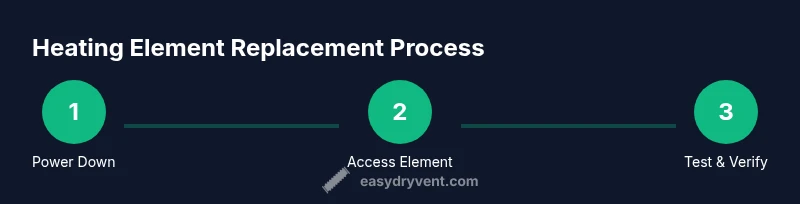
Unplug the dryer from the wall outlet and switch off the circuit breaker to ensure there is no voltage at the dryer. This first step prevents shocks while you work around the heating element housing.
Tip: Double-check with a voltage tester after unplugging to confirm zero power before touching any wires. - 2
Access the heating element housing
Remove the dryer's back panel to reveal the heating element housing. Keep track of screws and set the panel aside in a safe place.
Tip: Take a photo of the wiring layout before disconnecting anything to reference during reassembly. - 3
Disconnect the old element wiring
Carefully note or label the wire connections, then disconnect the leads from the heating element. Avoid pulling wires directly from the element to prevent damage.
Tip: If wiring is brittle, use small pliers to gently loosen clamps rather than tugging. - 4
Test the old element for continuity
Set the multimeter to the continuity or ohms setting and test across the element terminals. A reading of open circuit indicates a failed element.
Tip: Compare readings with a known-good element if available to confirm failure. - 5
Remove and inspect the old element
Unthread or unclip the old element from its housing. Inspect the gasket, insulation, and mounting surfaces for damage or soot buildup.
Tip: Replace any cracked gaskets or soot-soaked insulation to prevent heat leaks. - 6
Install the new element
Position the new element in the housing and reconnect the wires according to the original color code. Ensure the element sits firmly and seals with the gasket.
Tip: Gently seat screws and avoid overtightening to prevent housing cracking. - 7
Reassemble and prepare for testing
Reinstall the back panel, reconnect the vent duct, and ensure no tools are left inside the cabinet. Ground yourself and prepare to test heat.
Tip: Verify that the vent path is clear to prevent overheating during the first run. - 8
Test heat and verify operation
Plug the dryer back in and run a no-load heat test or a short cycle to confirm the element heats evenly. Check for consistent temperature rise and absence of abnormal smells.
Tip: If heat is inconsistent, recheck wiring and thermostat position; a faulty thermostat can mimic a bad element.
Common Questions
Why won't my Maytag dryer heat up after a repair?
There are several possible causes: a failed heating element, a blown thermal fuse, or a faulty high-limit thermostat. Replacing the element may fix the issue, but also check these safety components.
Common causes include a bad heating element, a blown fuse, or thermostat failure. If the element was replaced, test the fuse and thermostat as well.
Can I replace the heating element myself, or should I hire a pro?
Many homeowners can perform a heating element replacement with the right tools and safety precautions. If you’re uncomfortable with electrical testing or disassembly, a licensed technician is a safer choice.
DIY is possible with the proper tools and care, but don’t hesitate to call a pro if you’re unsure.
How long does a heating element replacement take?
Most installations take about an hour or two, depending on the model and whether you need to remove stubborn screws or clear ducting.
Expect 60 to 120 minutes for a complete replacement and test.
Are there safety risks I should be aware of during replacement?
Yes. Electrical shock, burns from hot components, and fire hazards from lint buildup are primary risks. Always unplug the unit and wear protective gear.
The big risks are shock and burns, so follow safety steps and test power before touching parts.
Should I replace other parts at the same time?
If the dryer is old or shows signs of wear, consider inspecting the thermal fuse, thermostat, and drum seals. Replacing worn parts can prevent repeated failures.
Inspect related components like the fuse and thermostat to reduce future problems.
Watch Video
Key Points
- Identify symptoms early to prevent further dryer damage
- Use proper safety steps and confirm power is off
- Match the heating element to your Maytag model for compatibility
- Test heat carefully and verify vent airflow after replacement