Electric Dryer vs Vented Dryer: A Practical Comparison
Explore the key differences between electric and vented dryers, including energy use, installation needs, safety, and maintenance. This guide helps homeowners decide which option fits their space, budget, and lifestyle.


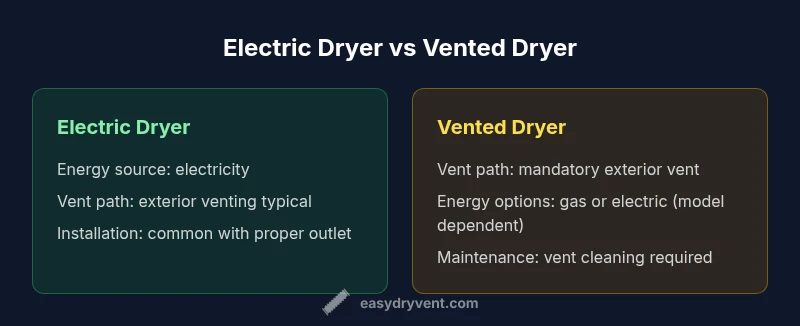
Electric dryers run on electricity and typically vent to the outdoors; vented dryers emphasize the exterior vent path as a design feature. The choice affects installation requirements, energy costs, and maintenance needs, so homeowners should evaluate vent access, power availability, and space before deciding.
What electric dryer vs vented dryer mean in practice
In practical terms, the label electric dryer refers to the dryer’s primary energy source: electricity. A vented dryer refers to the moisture-exhaust path that releases humid air outside the home. The two factors are not mutually exclusive—most electric models are vented to the outdoors in typical households, while vented designs simply describe how the exhaust is handled. Some homes also offer ventless or condenser options, which operate differently but are less common in traditional laundry setups. For DIYers, the distinction matters for planning wiring, duct routing, and space planning. Understanding both dimensions helps homeowners avoid costly retrofits and ensures that the dryer you choose fits your home’s layout and local building codes. Easy DryVent’s guidance emphasizes that practical decisions come from mapping out both power access and venting feasibility before purchasing a unit.
Key takeaways:
- Electric dryers rely on house electricity; vented dryers emphasize the exhaust path.
- Ventless alternatives exist but are less common for standard residential use.
- Your home’s layout largely determines which option is easiest to install and maintain.
Energy use, costs, and efficiency considerations
Energy use and running costs are the primary levers homeowners consider after initial purchase. Electric dryers typically draw a predictable amount of power, but actual costs depend on local electricity rates, load size, and cycle choices. Venting strategies influence how quickly a load dries and how much overall energy is consumed—well-vented systems can reduce heat buildup and shorten cycle times, but only if the vent path remains clear. Easy DryVent analysis shows that the most cost-effective choice depends on how you use the dryer and the efficiency of the model chosen. Modern high-efficiency electric dryers, including some with moisture sensors, can minimize energy use by stopping cycles when clothes are dry. Conversely, vented designs that rely on robust airflow can improve drying speed but may incur higher vent maintenance costs over time.
Practical tips:
- Favor models with moisture sensors and energy-star ratings when possible.
- Factor home electricity rates and typical drying loads into the long-term cost estimate.
- Consider a vent path that remains clear to maximize efficiency and safety.
Drying performance, speed, and fabric care
Drying performance is the balance between heat, airflow, and moisture removal. Electric dryers generally deliver uniform heat, which can protect fabrics by avoiding hot spots, while vented systems benefit from efficient air exchange that can shorten cycles when the vent path is unobstructed. However, performance can suffer if vent ducts become blocked or leaky, causing longer drying times and higher energy use. Fabric care also hinges on dryer settings, drum rotation, and moisture sensing; higher-end models may include multiple fabric care modes, which tailor heat and tumbling to delicate items. For households with mixed loads—towels, cottons, synthetics—choosing a model with adaptive sensors helps maintain fabric integrity and reduces wear. The key is to align drying profiles with typical laundry mixes and to verify that the dryer’s controls respond promptly to changes in load moisture.
Takeaway:
- Sensor-based cycles offer better fabric protection and energy efficiency across diverse loads.
Installation and space implications
Where you install a dryer significantly shapes the decision. Electric models require an appropriate electrical circuit and outlet, plus adequate clearance around the unit for safe operation. Venting considerations include duct routing, exterior vent placement, and potential interference with nearby windows or doors. In multi-family buildings and apartments, getting a compliant vent path can be a constraint, and some jurisdictions cap or regulate vent installations. Vented dryers demand a reliable exhaust route to the outside; if that path is compromised, moisture buildup and mold risk increase. For homes with limited space, a compact or stacked configuration might be preferable, but it should still accommodate venting and airflow. Planning ahead with floor plans and measuring available space reduces post-purchase surprises and helps ensure code compliance. Easy DryVent recommends confirming local building codes and verifying vent routing before committing to a model.
Venting, ductwork, and safety implications
Vent safety is a major factor in dryer ownership. Lint buildup in ducts reduces efficiency and raises fire risk, so regular inspection and cleaning are essential. Exterior vent termination should be free of obstructions, and ducts should be smooth-walled to minimize lint accumulation. In some homes, retrofitting a vent path is necessary, which can add to installation costs and project timelines. For electric-dryer owners, ensuring the electrical and venting installation is performed to code minimizes risk and improves long-term performance. Always check for signs of poor venting, such as excessive heat around the laundry area, unusual dryer noise, or clothes taking longer to dry. A well-planned vent system contributes to safer operation and more reliable drying.
Key safety notes:
- Keep vent paths clear and inspect ducts regularly.
- Use metal ducts of appropriate diameter and minimize length where possible.
- Schedule professional vent cleaning and system checks as part of routine maintenance.
Maintenance cycles: lint, filters, and vent cleaning
Regular maintenance extends the life of any dryer and preserves energy efficiency. The lint trap should be cleaned after every load to maintain airflow. Vent ducts require periodic inspection for lint buildup, kinks, or obstructions; even a small obstruction can dramatically increase drying times and energy use. Dryer models with accessible lint filters and serviceable ducts simplify maintenance for DIY enthusiasts. When you notice longer drying times, overheating, or resistance in airflow, it’s a signal to inspect both the lint screen and the vent path. Easy DryVent emphasizes keeping the exterior vent clean and ensuring there’s no obstruction at the vent cap, especially if the unit is in a high-dust area or near a garage.
Maintenance checklist:
- Clean lint screen after every load.
- Inspect vent hoses and ducts for debris or damage.
- Schedule periodic vent cleaning or professional inspections as needed.
Environmental and health considerations
Moisture management in the laundry area affects indoor air quality and mold risk. A properly vented dryer reduces humidity buildup in living spaces, while poorly vented systems can contribute to dampness and musty odors. Energy efficiency also ties to environmental impact: selecting a high-efficiency model minimizes electricity use and reduces your carbon footprint. Venting choice can influence where moist air goes and how much humidity is introduced into adjacent spaces. Homeowners should consider the climate, airflow patterns, and bathroom or laundry room ventilation when evaluating dryer options. The goal is to achieve comfortable indoor conditions while maintaining practical energy use and safety standards.
Real-world scenarios by home type
- Small apartments with limited exterior exposure: An electric dryer with a compact footprint and a robust venting solution, or a ventless option if the space lacks a suitable vent path.
- Suburban houses with easy exterior access: A standard electric dryer with a straightforward external vent should perform well, balancing cost and reliability.
- Homes with high electricity costs: Prioritize energy-efficient models with moisture sensors and use load optimization features to minimize energy use.
- Older homes with limited duct capacity: Assess the feasibility of upgrading venting and consider ventless alternatives to avoid costly ductwork.
- Homes with high humidity or mold concerns: Focus on vented arrangements that promote strong air exchange, and ensure proper bathroom and laundry ventilation to complement the dryer’s exhaust.
Making the call: step-by-step decision framework
- Map your space: Identify where the dryer will be placed and whether a vent path to the outside is feasible.
- Check power and gas options: Confirm available electrical circuits and gas lines (if considering gas models).
- Compare models: Look for energy-star ratings, moisture sensors, drum capacity, and cycle options that fit your laundry habits.
- Evaluate maintenance: Plan for lint trap cleaning, vent cleaning, and potential duct repairs.
- Make the decision: Choose electric or vented based on vent access, energy costs, and space constraints, then confirm installation with licensed professionals.
This framework helps homeowners approach the decision with a clear, actionable checklist.
Comparison
| Feature | Electric dryer | Vented dryer |
|---|---|---|
| Energy source | Electric heating element powered by household electricity | Requires exterior venting; energy source can be gas or electric depending on model |
| Vent matter | Typically vented to outdoors; ventless variants are uncommon in standard dryers | Must vent to outside; no indoor venting option by design |
| Installation complexity | Common in homes with adequate electrical service and space for venting | Requires duct routing to exterior; may be more complex in apartments |
| Energy efficiency options | Wide range; many ENERGY STAR models exist with sensors to optimize usage | Efficiency varies by model and energy source; newer vented designs can be efficient but depend on proper venting |
| Best for | Homes with ready electrical service and existing venting paths | Homes lacking exterior venting or with limited space; ventless or flexible vent options may be considered |
The Good
- Highlights the key tradeoffs between energy source and venting path
- Helps homeowners plan around existing infrastructure and space
- Encourages consideration of maintenance and safety implications
- Supports budgeting with energy-use awareness
Negatives
- Can be complex for beginners to weigh all factors
- Vent requirements may constrain installation locations
- Maintenance needs for vented systems add ongoing tasks
- Model variability can make apples-to-apples comparisons challenging
Electric vs vented dryers each excel in different home contexts
Choose electric when you have reliable electricity access and a suitable ventilation path. Choose vented when venting is easy, space is ample, and operating costs favor external exhaust strategies.
Common Questions
What is the main difference between electric dryer and vented dryer?
The main difference lies in energy source versus exhaust path. Electric dryers rely on electricity, while vented dryers focus on routing exhaust air outside the home. In practice, many electric models are vented, so the two factors interact based on your home setup.
Electric dryers run on power from your home and usually vent outside; vented dryers emphasize exterior vent routing. The choice depends on your electrical setup and vent access.
Can you install a ventless electric dryer?
Yes, ventless electric options exist, typically using condenser or heat-pump technology. They can be advantageous in spaces without exterior walls, but they may have higher upfront costs and different drying characteristics.
Ventless options do exist, often condenser or heat-pump models. They’re useful when you can’t vent outside, but check performance and cost.
Do vented dryers require regular vent cleaning?
Yes. Regularly inspect and clean the exterior vent and interior ducts to prevent lint buildup and maintain safety. A clogged vent can reduce efficiency and increase fire risk.
Vent cleaning is important—keep the vent clear to maintain safety and performance.
Which is cheaper to operate, electric or vented with gas?
Operating costs depend on local energy prices and model efficiency. In some markets, gas-powered vented dryers may be cheaper to run, while electric high-efficiency models can be cost-effective in others. Compare local rates and model labels.
Costs vary by energy prices and model efficiency; compare local rates and ENERGY STAR ratings.
Is an apartment-friendly option available for this comparison?
Yes. In apartments, vent access can be a limiting factor. Consider electric vented models with compact footprints or ventless alternatives if exterior venting is not feasible.
Apartments may require ventless or compact vented models; plan for limited vent access.
What safety considerations should I prioritize?
Prioritize proper venting, lint maintenance, and electrical/gas connections. Regular inspections reduce fire risk and ensure the system operates within safe limits.
Safety comes from proper venting and regular maintenance. Inspect connections and ducts routinely.
Key Points
- Assess vent access and electrical capacity before buying
- Prioritize models with moisture sensors for efficiency
- Plan vent maintenance to prevent buildup and safety hazards
- Consider your climate and space when weighing options