Vented Dryer vs Electric Dryer: A Practical Guide
A thorough comparison of vented and electric dryers, covering energy use, installation, performance, and costs to help homeowners decide which option fits their home. Easy DryVent provides practical guidance for safer, more efficient drying in 2026.


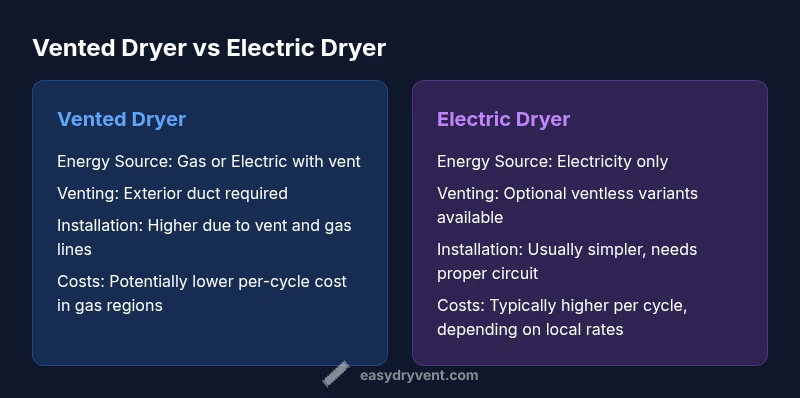
For most homes, the vented dryer vs electric dryer decision hinges on energy costs, installation practicality, and climate. A vented dryer (often gas-powered, though there are electric variants) can offer lower operating costs in regions where natural gas is cheaper, while a dedicated electric dryer typically provides simpler installation and broader availability. This quick comparison helps homeowners identify the key trade-offs before choosing their setup.
Understanding the Core Difference: Venting vs Electric Heating
The phrase vented dryer vs electric dryer points to two fundamentally different approaches to heat generation and exhaust. A vented dryer uses external ventilation to remove hot, moist air, while an electric dryer relies on an electric heating element to create that heat. In many homes, both types may share similar exterior dimensions and drum capacities, but they diverge in energy sources, venting needs, and long-term costs. According to Easy DryVent, the choice often comes down to energy pricing, existing vent infrastructure, and the homeowner’s willingness to manage vent maintenance. In 2026, battements in energy markets continue to influence these decisions, making a straightforward comparison especially valuable for DIYers and homeowners who want to optimize safety and efficiency.
When you hear vented dryer vs electric dryer discussed, think about three pillars: energy source, ventilation, and installation demands. The vented option leverages gas or electricity to create heat and then expels air through a duct, while the electric option uses electricity for both heating and venting, sometimes paired with condensing or heat pump technologies in ventless variants. The Easy DryVent team emphasizes that the right choice depends on your energy mix, duct layout, and local codes.
format
Comparison
| Feature | Vented dryer | Electric dryer |
|---|---|---|
| Energy source | Gas or electric heating with external venting | Electric heating; may require venting if vented model; some ventless options exist |
| Ventilation | Must vent outside; proper duct routing crucial | Often vented in traditional models; ventless alternatives rely on condensation |
| Typical energy costs per cycle | Gas-powered vented units can be cheaper to run in gas-heavy regions | Electric models depend on local electricity rates; usually higher per cycle |
| Installation complexity | Requires gas line (if gas) or dedicated vent path; more complex | Easier to install in many homes; needs proper electrical circuit and venting if vented |
| Drying performance | Performance varies with vent length and ambient conditions; potential quicker cycles with gas heat | Typically consistent performance; less sensitive to outdoor temperature if vented; ventless options stabilize output |
| Upfront price range | Moderate to mid-range for vented units; varies by fuel type and installation | Mid-to-high range for high-quality electric models; ventless variants may differ |
| Best for | Homes with natural gas supply and a convenient vent path | Homes with easy electrical access and limited ventilation requirements |
The Good
- Potentially lower operating costs in gas-favorable regions
- Faster heat development can shorten cycle times in certain setups
- Strong compatibility with existing vent infrastructure and gas lines
- Broad service network for maintenance and parts
Negatives
- Requires exterior venting and ongoing vent maintenance
- Gas models require gas line compliance, carbon monoxide awareness, and vent clearance
- Upfront installation can be more complex and costly
Electric dryers are the default choice for most homes; vented dryers offer advantages where venting infrastructure and energy costs favor gas.
Compare energy prices, ventilation feasibility, and space constraints. For many households, an electric dryer wins on installation simplicity and predictability, while a vented option makes sense if gas is cheap and venting is well integrated into the home.
Common Questions
What is the main difference between a vented dryer and an electric dryer?
The primary difference is energy source and venting: vented dryers use heat from gas or electricity and vent moist air outside, while electric dryers rely on electric heating and often require venting or ventless options. Both types share the same basic drying logic, but their installation and operating costs diverge.
The key difference is energy source and venting: vented dryers vent outside and may use gas, while electric dryers use electricity and may be vented or ventless.
Are vented dryers more energy-efficient than electric dryers?
Efficiency depends on fuel costs in your area. Gas heat can be cheaper to operate than electricity in some regions, but electric dryers offer consistent performance and simpler maintenance. The best choice depends on your local energy mix and installation constraints.
Energy efficiency depends on local gas and electricity prices; your install logistics matter just as much.
Do I need a professional to install a vented dryer?
Yes. Both vented and vented-electric dryers require proper venting paths and, for gas models, safe gas line connections. A professional can ensure code compliance, proper vent length, and safe exhaust routing.
Most homes benefit from professional venting installs to guarantee safety and code compliance.
Can I install a vented gas dryer in a small apartment?
Vented gas dryers in small apartments are possible only if building codes allow a dedicated vent system and safe gas connections. In many cases, apartments favor electric, vented or ventless options to avoid exhaust routing challenges.
In small apartments, electric options are usually easier and safer due to venting constraints.
Is a ventless electric dryer a better option for tight spaces?
Ventless electric dryers can be a good fit for tight spaces since they don’t require exterior venting, but they may have higher upfront costs and different maintenance needs. They also rely on condensation or heat pump technology for drying efficiency.
Ventless can save venting trouble, but check cost and maintenance expectations.
What factors should I consider when choosing between these two?
Consider energy costs, venting feasibility, space constraints, and local codes. Also weigh installation complexity, potential safety concerns, and long-term maintenance requirements. A step-by-step decision guide can help simplify the process.
Energy costs, venting, space, and codes matter—follow a step-by-step guide to decide.
Key Points
- Assess local energy prices and venting feasibility before deciding
- Prioritize installation practicality and safety compliance
- Evaluate climate effects on drying performance and venting needs
- Opt for electric when you value setup simplicity and modularity
- Account for long-term operating costs alongside upfront costs