Gas vs Electric Dryer: A Practical Home Guide
A thorough comparison of gas and electric dryers, covering installation, operating costs, performance, safety, and maintenance to help homeowners choose the right option for their home.


Gas vs Electric Dryer: In most homes, the choice hinges on fuel access, venting feasibility, and long-term costs. Gas models typically dry faster and can be cheaper to operate where natural gas is affordable, but require a gas line and proper venting. Electric dryers are easier to install where no gas line exists and generally have simpler maintenance. Your best pick depends on space, energy prices, and installation constraints.
Introduction: Understanding the gas vs electric dryer decision
Choosing between a gas vs electric dryer is a common decision that affects installation, operating costs, and daily convenience. Your choice will influence how you heat your laundry tasks, how quickly clothes dry, and how you manage venting and safety. According to Easy DryVent, most households start by assessing fuel access, venting feasibility, and space constraints before weighing long-term costs. This guide uses practical scenarios to help homeowners compare performance, consider space and safety implications, and choose a dryer that aligns with their lifestyle. The topic at hand—gas vs electric dryer—remains a practical choice for many households, especially in areas with varying fuel prices and building configurations. By examining installation requirements, cost considerations, and performance trade-offs, readers can make an informed decision tailored to their home environment.
How Dryers Work: Gas vs Electric
Gas and electric dryers rely on different heat sources to remove moisture from clothes. A gas dryer uses a burner to heat a regulator, with exhaust venting carrying combustion byproducts outside the home. An electric dryer uses heating elements powered by a 240-volt circuit to generate heat. Both types rely on a tumble action and a moisture-sensing mechanism or timed cycles to determine drying duration. In practice, the key distinction is heat generation and control: gas provides rapid, high-heat bursts, while electric delivers steady heat with simpler control systems. For homeowners evaluating a gas vs electric dryer, understanding these heating dynamics helps explain differences in cycle length, heat stability, and garment care. This section keeps the focus on real-world usage rather than theoretical efficiency, so you can translate technical details into everyday decisions.
Installation and Venting Requirements
Installation considerations are often the deciding factor when choosing between gas and electric models. A gas dryer requires a dedicated gas line, proper venting to the outdoors, and a nearby shut-off valve. You’ll also want to install CO detectors and ensure adequate clearance around the appliance. Electric dryers need a 240V outlet and appropriate circuit protection, but they typically require less plumbing work and no combustion venting. In both cases, an exterior vent with a smooth duct run minimizes lint buildup and improves efficiency. Easy DryVent recommends a professional inspection to verify vent integrity and to prevent backdrafts or hazardous conditions, especially in older homes. When evaluating a gas vs electric dryer, consider your building’s existing infrastructure, local codes, and accessibility of a vent path.
Performance and Drying Times
Drying performance varies with the model, cycle selection, and load size, but you’ll notice practical differences between gas and electric dryers. Gas models often heat faster and can cut drying times for bulky items, which matters for households with large or frequent laundry needs. Electric dryers generally deliver more consistent heat, which can reduce fabric wear when paired with modern moisture sensors. The choice between gas vs electric dryer affects your weekly laundry rhythm: faster cycles may save time, while steady heat can improve fabric care on delicate loads. Keep in mind that vent length and airflow also influence drying speed, regardless of heat source.
Operating Costs and Efficiency
Operating costs depend on local energy prices, usage patterns, and the efficiency of the specific model. Gas dryers frequently boast lower per-load costs in regions with inexpensive natural gas and high heating efficiency, while electric dryers can be more cost-effective where electricity is affordable or where gas prices are volatile. Easy DryVent Analysis, 2026 suggests that regional price structures and occupancy patterns drive most cost differences; there is no universal winner. When evaluating gas vs electric dryer costs, focus on: (1) fuel price trends in your area, (2) typical load sizes, and (3) the dryer’s energy efficiency rating and moisture-sensing capabilities. In practice, the best choice balances upfront installation costs with long-term energy expenses.
Safety Considerations and Maintenance
Safety remains a central concern for both options. Gas dryers require proper venting to remove combustion byproducts and can pose CO risks if venting is compromised. Electric dryers avoid combustion-related hazards but demand strict electrical compliance and regular lint filter maintenance to prevent fires. Regular vent cleaning, dust removal from the lint trap, and periodic checks of hose connections help maintain efficiency and safety for both gas and electric models. Easy DryVent emphasizes CO detectors, proper venting routing, and routine dryer maintenance as essential practices for a safe laundry space.
Space and Location Considerations
Where you place the dryer matters, especially for gas models. Gas dryers need proximity to a gas supply line and an outdoor vent, which can limit placement and require longer vent runs. Electric dryers offer more placement flexibility if a suitable 240V outlet exists, but you still benefit from a well-vented exhaust path. In apartments or small homes, electric models are often the practical option due to limited gas access and simpler installation. Assess your laundry room layout, nearby gas lines, and potential vent routes before deciding between gas vs electric dryer.
Reliability and Lifespan Differences
Lifespan differences between gas and electric dryers are generally influenced by build quality, usage intensity, and maintenance rather than the heat source alone. Modern models from both camps can last many years with proper care. Gas dryers may incur slightly higher maintenance costs related to vent checks and gas line safety, while electric dryers can require more frequent heating-element or belt replacements on older units. In both cases, choosing a model with good warranty coverage and an efficient moisture sensor helps maximize reliability and minimize unexpected downtime.
Pros and Cons: At a Glance
When comparing gas vs electric dryers, it helps to separate general advantages and disadvantages from per-option specifics. In broad terms, gas models excel in drying speed and long-term operating costs in the right market, while electric models offer installation simplicity and fewer combustion-related concerns. The key factors are fuel availability, venting feasibility, installation costs, and local energy prices. This overview sets the stage for a more detailed, side-by-side look at the two options.
Buyer’s Guide: How to Decide
To decide between a gas vs electric dryer, follow a practical checklist: (1) Confirm fuel availability and venting permissions in your home; (2) Compare upfront installation costs, including any vent retrofitting; (3) Estimate annual running costs using local energy prices and anticipated loads; (4) Consider space constraints and noise tolerance; (5) Review model efficiency ratings and warranty terms; (6) If possible, run performance tests on shortlisted models. A careful price-to-performance analysis tailored to your home will reveal the best choice for your needs.
Common Myths About Gas vs Electric Dryers
Myth 1: Gas dryers always dry faster than electric dryers. Reality: Drying speed depends on model efficiency, drum size, and moisture sensing; some electric models can match or exceed performance with the right design. Myth 2: Electric models are unsafe due to electric shock risk. Reality: Modern electric dryers are designed with robust safety features and proper grounding. Myth 3: Gas dryers are universally cheaper to operate. Reality: Local fuel prices and usage patterns influence costs; in some areas electric may be more economical. Myth 4: Venting is optional for gas dryers. Reality: Venting is essential to remove combustion byproducts and prevent safety hazards.
Conclusion and Next Steps
This article provides a structured framework to compare gas vs electric dryers, focusing on practical decision factors rather than abstract metrics. For most homeowners, the decision comes down to fuel access, installation feasibility, and total cost of ownership. Before purchasing, verify vent integrity, check local codes, and obtain a clear quote for installation if you’re considering a gas dryer. A well-informed choice can improve energy efficiency, reduce drying time, and support a safer laundry space.
Comparison
| Feature | Gas Dryer | Electric Dryer |
|---|---|---|
| Installation & Venting | Requires gas line and outdoor vent | Requires 240V outlet; venting still needed |
| Fuel/Power Source | Natural gas or propane | Electricity (240V circuit) |
| Drying Speed | Typically faster on bulky loads | Usually slower but steady heat |
| Running Cost per Load | Often lower where gas is inexpensive | Depends on local electricity rates |
| Upfront Cost | Higher if gas line installation is required | Lower when existing 240V outlet is available |
| Space & Venting Location | Must be near gas line and vent path | More flexible with outlet proximity |
| Safety Considerations | CO detectors and gas line safety essential | Electrical safety and lint management |
The Good
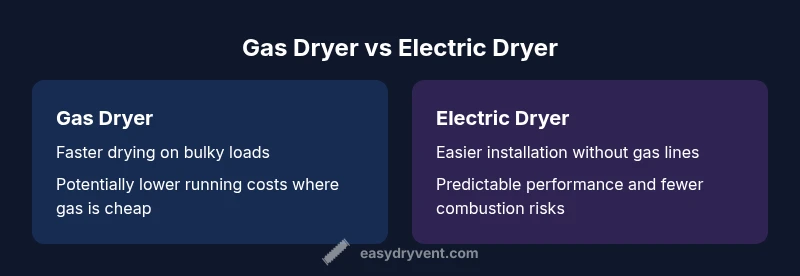
- Gas dryers often dry faster for large loads
- Potentially lower running costs where natural gas is cheap
- Gas setups may support larger drum sizes
- Electric dryers have simpler installation and fewer combustion risks
- Both options offer high-efficiency models
Negatives
- Gas installation requires a gas line and venting
- Gas venting demands CO detectors and regular maintenance
- Gas price volatility can affect costs
- Electric dryers may have longer cycle times in some models
Gas vs Electric Dryer: Choose based on fuel access, venting feasibility, and long-term costs.
The Easy DryVent team notes that neither option is universally superior; assess your fuel access, venting requirements, and local energy prices. In many homes, electric is simplest to install, while gas can deliver faster drying and potential savings where gas is affordable. Do a local cost comparison before buying.
Common Questions
Can I convert an electric dryer to gas after purchase?
Converting an electric dryer to gas is generally not practical or recommended; it involves major mechanical and safety changes and is typically not supported by manufacturers. A new gas dryer is usually the safer route if you have a gas line and local codes permit it.
Converting isn't usually feasible. If you want gas heat, consider purchasing a dedicated gas dryer after confirming gas line access and codes.
Is a gas dryer safer than an electric dryer?
Both can be safe when installed correctly. Gas dryers require proper venting and CO detectors to manage combustion byproducts. Electric dryers avoid combustion risks but require attention to electrical safety and lint maintenance.
Safety depends on proper installation and maintenance; follow manufacturer guidelines and local codes.
Which dries faster, gas or electric?
Gas dryers often heat faster and can shorten drying times for large or bulky loads. Electric dryers may take longer per cycle but offer consistent heat and advanced sensor controls.
Gas can be faster for big loads; electric dryers often offer steady heating and efficiency gains with the right model.
What venting considerations matter for gas dryers?
Gas dryers require an exhaust vent and must comply with ventilation codes to safely remove combustion byproducts. Regular vent inspection reduces fire risk and maintains efficiency.
Vent safety is crucial for gas dryers; keep vents clean and inspected.
What should I consider for apartments or small homes?
Electric dryers are usually simpler to install in apartment settings due to limited gas access and venting constraints. Gas may be feasible where building codes, gas supply, and vent paths permit it.
Electric is typically easier in apartments, but check with building management and code requirements.
Key Points
- Assess fuel access before choosing a dryer
- Factor installation and venting requirements
- Compare total cost of ownership over several years
- Consider local energy prices and maintenance needs
- Always verify vent integrity and safety measures