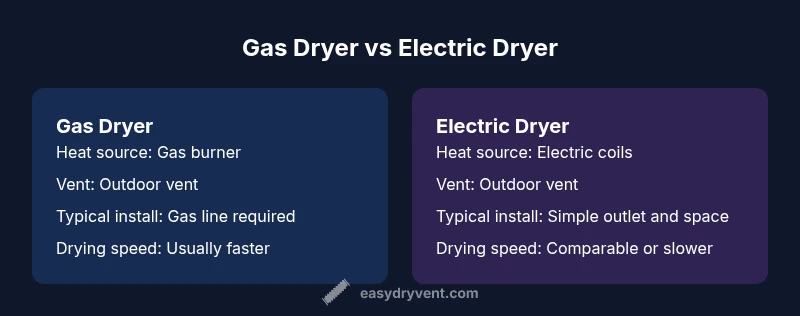
Gas Dryer vs Electric Dryer: A Practical Comparison
Explore the differences between gas and electric dryers, including installation, efficiency, costs, safety, and maintenance. Easy DryVent analyzes each option to help homeowners choose the best dryer for their home.


Gas dryers heat using natural gas or propane, often drying faster and with lower energy costs where gas is affordable. Electric dryers rely on electric heating elements and are generally easier to install and service. This comparison weighs installation, efficiency, safety, and long-term value to help homeowners decide between gas and electric options.
What is a gas dryer vs electric dryer?
Gas dryers heat using combustion to generate hot air, while electric dryers rely on electric heating elements. The drum, blower, and moisture-sensing controls work similarly in both types, but the heat source affects performance, installation, and long-term costs. According to Easy DryVent, the most meaningful differences involve installation requirements, fuel costs, and venting needs. Understanding these basics helps homeowners weigh the practical implications before shopping. Both options are standard in North American homes, but the right choice depends on your existing utility connections and space.
How heating methods impact drying performance
Gas dryers typically reach higher peak temperatures quickly, which can reduce overall drying time for everyday loads. Electric models may heat more gradually, leading to longer cycles in some cases. The intensity and control of heat influence fabric care, lint generation, and risk of overdrying. Easy DryVent's analysis shows that real-world performance varies by model, cycle options, and load size, so always compare rated cycle times and moisture sensors. In practical terms, choosing between a gas and electric option may come down to your typical laundry load and how sensitive your fabrics are to heat.
Energy use and running costs in practice
Running costs depend on local gas and electricity prices, not just the appliance label. In regions with affordable natural gas, gas models can lower per-cycle energy use, particularly for large loads. Electric dryers can be cost-effective when electricity is cheap and the home lacks a gas service. Use your utility rates and expected dryer usage to estimate annual costs. Easy DryVent analysis suggests that the break-even point between gas and electric varies by region, home size, and how often you run multiple loads in a day.
Installation, venting, and space considerations
Gas dryers require a dedicated gas line and proper outdoor venting to safely exhaust combustion byproducts. Electric dryers rely on a suitable electrical circuit and adequate space for venting and clearance. In tight laundry rooms or apartments, electric dryers may be easier to install due to the absence of gas plumbing. Regardless of type, ensure a clean, unobstructed vent path and follow local building codes to minimize fire and gas-safety risks.
Safety considerations and maintenance
Both dryer types demand regular vent cleaning and lint trap maintenance to prevent fires. Gas models introduce additional safety concerns, such as potential gas leaks and carbon monoxide accumulation if vents are blocked or damaged. Install CO detectors in nearby living areas and schedule periodic professional inspections of gas lines. Easy DryVent emphasizes routine checks for gas appliance connections and vent integrity to protect household safety.
Performance, speed, and fabric care
Drying speed varies by model, cycle setting, and moisture level. Gas models often dry faster on standard loads, which can reduce overall cycle time and energy consumption. Electric dryers tend to have excellent control and consistency, especially with advanced moisture sensing. For delicate fabrics, selecting lower heat settings and using sensor-based cycles helps minimize wear regardless of heat source.
Upfront costs, maintenance, and lifespan
Initial costs for gas dryers are typically higher due to gas line connections and venting requirements, while electric models may have lower installation barriers. Ongoing maintenance includes vent cleaning and occasional part replacements such as drum belts or heating elements, depending on usage and model quality. Lifespans are comparable when units are properly maintained, though regional service availability can impact replacement timing.
Environmental impact and emissions considerations
Gas and electric dryers differ in emissions profiles and energy sources. Gas dryers emit combustion byproducts and rely on natural gas or propane, while electric models use electricity that may come from a mix of sources. The environmental footprint depends on local energy generation and efficiency ratings. Homeowners who prioritize low emissions should consider energy-efficient models and regional grid mixes as part of their decision.
Which is best for your home? scenarios
If you have reliable natural gas service and you run large loads frequently, a gas dryer can offer speed and potential long-term cost advantages. If your home is electric-only, or if you want simpler installation and broader appliance compatibility, an electric dryer is often the safer and more convenient choice. In multi-family buildings or urban settings with strict venting rules, electric dryers may present fewer complications. Always compare model efficiency, local energy prices, and installation costs before deciding.
Decision checklist before buying
- Confirm gas service availability or electrical capacity in the laundry space
- Assess venting layout and potential venting restrictions in your building
- Compare energy consumption by model and the local price of gas vs electricity
- Factor installation costs and local codes into the total cost of ownership
- Plan for regular vent cleaning and safety inspections to minimize fire and CO risks
Comparison
| Feature | Gas dryer | Electric dryer |
|---|---|---|
| Energy source | Natural gas/propane | Electric heating elements |
| Vent requirements | Dedicated vent to outdoors | Venting to outdoors (standard) |
| Installation complexity | Gas line + venting; potentially higher install effort | Electrical outlet + space; easier install |
| Upfront cost | Higher due to gas line/venting | Lower upfront generally |
| Operating cost (region-dependent) | Can be cheaper per cycle where gas is affordable | Often higher if electricity is expensive |
| Drying speed | Typically faster for many loads | Often comparable or slower depending on model |
| Best for | Homes with gas service and venting | Homes without gas service or where venting is constrained |
The Good
- Gas dryers often dry faster for large or damp loads
- Potentially lower per-cycle costs in gas-friendly regions
- Good service availability and parts for common models
- Can handle high-load households efficiently
- Useful in rural areas with stable gas supply
Negatives
- Higher upfront installation costs due to gas line and venting
- Requires proper CO-safe venting and gas connections
- Gas supply can vary by region and season
- More complex maintenance and safety checks compared to electric models
Gas dryers often offer faster drying and potential long-term savings where gas is affordable; electric dryers excel in simpler installation and universal compatibility.
Choose gas if you have reliable gas access and expect heavy or frequent loads. Choose electric if you prioritize easy installation, maintenance, and broad compatibility with existing wiring.
Common Questions
What is the main difference between gas and electric dryers?
Gas dryers use a burner and venting for heat, while electric dryers use heating coils. Venting, installation, and energy costs vary by fuel, influencing overall efficiency and safety.
Gas uses a burner and venting; electric uses coils. Check your gas service and electrical capacity.
Are gas dryers more expensive to install?
Gas dryers typically require a gas line and proper venting, which can raise upfront costs. Electric-only installations are generally simpler and cheaper to set up.
Gas install can be more complex due to lines and venting.
Do electric dryers take longer to dry clothes?
Drying times depend on model and load, but gas models often dry faster for typical loads. Electric models can be efficient with modern sensor technology.
Gas may be faster; electric can be efficient with the right model.
Can I convert an electric dryer to gas?
Conversion is rarely feasible and can be unsafe in many homes. It often requires a professional assessment and may not be allowed in some buildings.
Conversion is usually not recommended; consult a pro.
Is venting important for both types?
Yes. Proper venting is essential for moisture removal and safety for both types, with gas requiring additional attention to exhaust byproducts.
Vent properly for safety and efficiency.
Key Points
- Assess local gas and electricity costs before deciding
- Ensure venting and space meet safety requirements
- Factor installation complexity into total ownership cost
- Consider maintenance needs and service availability
- Account for building codes and CO safety when choosing gas