Gas Clothes Dryer vs Electric: An Expert Comparison
An analytical guide comparing gas clothes dryer vs electric models, covering energy efficiency, installation, operating costs, performance, safety, and maintenance for homeowners and DIY enthusiasts.


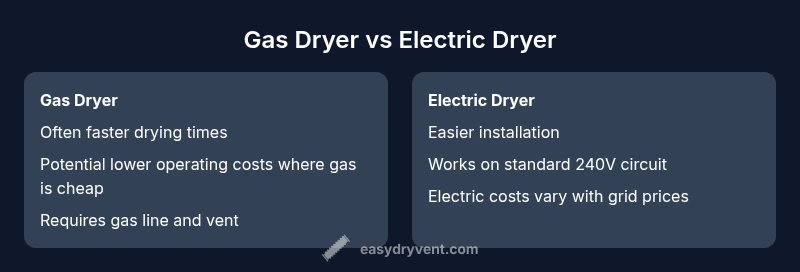
Gas clothes dryer vs electric dryers each have strengths and trade-offs. Gas models typically offer faster drying and potentially lower operating costs in gas-favored regions, while electric models are often easier to install and maintain in homes with standard electrical service. This quick comparison helps homeowners decide which fits their space, budget, and usage.
Gas vs Electric: Core Concepts
The question of gas clothes dryer vs electric revolves around how heat is generated, how quickly clothes dry, and what a home can reasonably support in terms of installation. Gas dryers use natural gas or propane to generate heat, while electric models rely on electric coils. The choice matters for installation, ongoing energy costs, and even the way you vent the appliance. For homeowners evaluating options, consider your local energy prices, existing venting, and how often you run large or bulky loads. According to Easy DryVent, recognizing the fundamental difference in heat source is the first step to a practical decision that aligns with your household needs and safety standards.
The core decision factors include energy cost per cycle, ventilation requirements, space for venting, and long-term maintenance. While gas dryers can deliver faster cycles in many scenarios, electric models provide straightforward installation and broad compatibility with standard circuits. Understanding your home’s infrastructure and your typical laundry load can help you estimate which path offers the best value over the appliance’s lifetime.
How Gas Dryers Work vs Electric Dryers
Gas dryers and electric dryers convert energy into heat differently. A gas dryer uses a burner to heat air that is circulated across tumbling clothes, often resulting in rapid heat up and shorter cycle times. An electric dryer heats coils that warm air circulated by a blower. In practice, many users notice gas models finish cycles sooner, especially with bulky items like comforters or towels. However, electric models can be more forgiving on installation and maintenance, particularly in homes with already robust electrical infrastructure. This section delves into the mechanics, highlighting how each heat source influences drum speed, airflow, and the overall drying profile. For the average household, the difference may feel marginal on small, lightweight loads but significant for large families and frequent laundry days.
From Easy DryVent’s perspective, the heat source choice should align with your home’s energy ecosystem, space constraints, and comfort with routine maintenance. Gas units are often preferred where gas is inexpensive and venting is already established, while electric models shine in homes prioritizing minimal installation complexity and universal compatibility with existing electrical systems.
Energy Efficiency and Operating Costs
When weighing gas clothes dryer vs electric on energy efficiency, the landscape is nuanced. Gas dryers may offer lower operating costs in regions with cheap natural gas, particularly for households that run several loads per week. Electric dryers, by contrast, depend on local electricity prices, which can fluctuate with demand, time of use rates, and seasonal factors. Efficiency also ties to how well the unit utilizes heat, the insulation of the drum, and the quality of the venting system. In practice, you should compare the unit’s energy factor and estimated annual energy consumption, if available, and translate that into your expected monthly bill. For households with tight budgets, running hours and cycle settings will heavily influence total costs. Easy DryVent’s analysis suggests that a careful load strategy (e.g., avoiding over-drying, using sensor-based cycles) can reduce wasted energy for either fuel type, but the impact is larger when you tailor usage to the energy price structure in your area.
A balanced approach evaluates not just per-cycle energy use but maintenance and repair costs over time. Gas units may incur more frequent vent cleaning and periodic checks of gas lines and ignition components, while electric units emphasize electrical safety and vent upkeep. Your choice should reflect both current utility rates and expected future trends, such as changes in natural gas pricing or electricity tariffs.
Installation, Venting, and Space Requirements
The installation demands for gas clothes dryer vs electric vary considerably. A gas dryer requires a dedicated gas line connection and a vent to the outdoors. This often means professional installation to ensure safe gas supply, correct vent routing, and proper CO monitoring. In many homes, retrofitting a gas connection to a laundry area can be a nontrivial project, potentially increasing upfront costs but offering long-term efficiency benefits if gas is inexpensive. Electric dryers, by comparison, usually require a standard 240V outlet and proper ventilation, which is typically simpler and cheaper to arrange. If you already have a vented space for a dryer, switching between fuel types may be more straightforward than you think, but you should still factor in local codes and the need for vent cleaning.
From a practical standpoint, plan for adequate clearance around the appliance and a vent path that minimizes bends. Adequate duct diameter, a clean vent route, and a trap-free path help maintain dryer performance and reduce fire risk. Easy DryVent recommends obtaining a professional assessment for gas installations to verify gas line integrity and venting requirements before purchasing a gas dryer.
Drying Performance and Fabric Care
Drying performance varies with the size of the load, fabric type, and cycle selection. Gas dryers often heat rapidly, delivering strong performance on bulkier items like towels and bedding, which can shorten total cycle time. Electric models may offer consistent performance across a wider range of fabrics, with reliable sensor-based cycles that help prevent over-drying. For delicate fabrics, the choice between gas and electric should consider temperature control, drum motion, and the dryer’s sensor accuracy. In practice, loading correctly, choosing appropriate cycles, and using the right moisture settings can improve outcomes for either option. Easy DryVent emphasizes testing cycles with common household loads to understand real-world performance differences and to tailor settings for your laundry routine.
Both fuel types benefit from regular lint filtering and clean ducts, which sustain airflow and drying efficiency. If you notice damp clothes at the end of a cycle, check for vent blockages or an exhausted lint screen, and consider fabric care tips like separating heavy from light loads to reduce overall cycle times. The goal is to optimize heat transfer and airflow for your particular laundry profile.
Safety, Vent Maintenance, and Emissions
Safety is a core concern in the gas clothes dryer vs electric debate. Gas dryers introduce risks associated with natural gas or propane, including potential leaks and carbon monoxide buildup if not vented properly. Regular vent cleaning, gas line inspection, and CO detectors are essential safety measures for gas models. Electric dryers eliminate combustion risks but require attention to electrical supply and vent cleanliness to prevent lint buildup and fire hazards. Regardless of fuel type, routine maintenance—lint trap cleaning after every use, vent inspection at least annually, and periodic professional service—greatly reduces risk. Easy DryVent notes that keeping the area around the dryer clear, ensuring proper room ventilation, and adhering to local codes are essential steps in keeping your laundry routine safe.
In regions with strict safety standards or older homes with questionable vent paths, a professional assessment is particularly valuable. A properly installed and maintained dryer not only performs better but also minimizes wear on surrounding appliances and reduces the risk of house fires connected to drying equipment.
Environmental Impact and Regional Considerations
The environmental footprint of gas clothes dryer vs electric depends on energy sources, efficiency, and usage patterns. Gas models may have a higher direct emissions profile due to combustion, but their faster cycle times can reduce total energy use in certain scenarios. Electric models depend on the regional mix of electricity generation; in areas with a cleaner grid, electric dryers may have a smaller carbon footprint even if operating cost is higher. Consider your region’s energy mix, insulation, and the availability of renewable electricity when evaluating long-term environmental impact. Easy DryVent’s guidance suggests factoring in local grid emissions, home energy efficiency improvements (like better insulation and sealing), and usage patterns to determine which option aligns with personal sustainability goals.
Other regional considerations include the proximity to service providers, the availability of gas lines for new installations, and building codes that may affect vent routing. If you’re renting a home, you might also weigh the implications of installation flexibility and landlord requirements when choosing between gas and electric options.
Real-World Scenarios: Which Is Best for You?
Choosing between a gas clothes dryer vs electric often comes down to practical scenarios in your home. If your laundry loads are heavy and you want to shorten cycle times, and your home already has a gas line and exterior vent, a gas dryer can be a compelling option. On the other hand, if you prefer a simpler installation, lower upfront complexity, and you’re on a standard electrical circuit without existing gas infrastructure, an electric dryer may be the smarter choice. Consider your annual energy costs, maintenance willingness, and the local price dynamics of gas vs electricity. Real-world decision factors include how often you do laundry, the typical load size, the climate (which affects venting efficiency), and whether you own your home or rent. Easy DryVent recommends creating a side-by-side cost projection that includes installation, maintenance, and energy use to compare options more accurately.
Finally, consider whether you plan to upgrade or relocate soon. If you anticipate moving within a few years, an electric dryer may offer easier relocation and broader resale appeal, while a gas unit might appeal to buyers in regions with favorable gas prices.
Cost Considerations: Upfront and Long-Term
When evaluating the cost of gas clothes dryer vs electric, you should separate upfront purchase and installation costs from long-term operating expenses. Gas dryers typically involve higher initial costs due to gas line work and venting requirements, plus potential installation fees. Electric dryers often present lower upfront costs and simpler installation, but electricity prices can drive higher operating costs over time in regions with expensive power. To make a fair comparison, estimate the total cost of ownership over the appliance’s expected lifespan, factoring in unit price, installation, venting, maintenance, and energy costs. Easy DryVent suggests building a rough five- to ten-year projection using current utility rates and your typical usage to determine which option provides better long-term value for your household.
In addition, consider potential rebates, efficiency incentives, and trade-in programs that may apply in your area. While the precise numbers will vary by region, the decision should be framed around value, reliability, and alignment with your home’s energy strategy.
Maintenance Myths and Truths
A common myth is that gas dryers require significantly more maintenance than electric dryers. In reality, both types require regular lint removal and vent cleaning to maintain safety and performance. Gas models rely on a functioning burner, ignition, and gas line integrity, which may demand periodic professional checks. Electric dryers focus on motor, drum bearing, and sensor calibration, plus consistent vent maintenance. Truthfully, the best maintenance plan is proactive: schedule annual inspections, clean ducts twice a year if you have heavy use, and replace lint screens as recommended by the manufacturer. With a consistent maintenance routine, either fuel type can deliver reliable drying performance for many years.
Transitioning to a New Dryer: What to Prepare
If you plan to replace an older unit, assess your current setup before choosing gas or electric. For gas installations, confirm there is a gas line, safe venting, and adequate clearance. For electric installations, ensure you have a proper 240V outlet on a dedicated circuit. Check the space for ventilation, noise considerations, and access to service technicians in your area. Prepare a checklist that includes verified gas line integrity (if applicable), vent path routing, electrical capacity, and proximity to an exterior vent. By planning ahead, you minimize surprises during installation and maximize your new dryer's efficiency and safety.
How to Decide: Quick Checklist
- Does your home have a functional gas line and exterior vent? If yes, gas may be viable. If no, electric is typically simpler.
- Are energy prices favorable for gas in your region or is electricity cheaper? Use a side-by-side cost estimate.
- Do you value faster cycle times or installation simplicity more? Balance performance against setup realities.
- Is vent maintenance a priority in your area? Gas units may require more frequent checks.
- Will you likely relocate soon? Electric dryers are generally easier to move. Always verify local codes and contractor requirements.
Comparison
| Feature | Gas clothes dryer | Electric clothes dryer |
|---|---|---|
| Energy efficiency and operating cost | Potentially lower operating costs where natural gas is inexpensive | Electric models depend on local electricity prices; costs vary with tariff |
| Installation and venting | Requires gas line and outdoors vent; professional installation often needed | Requires 240V outlet and vent; generally simpler installation |
| Drying performance and cycle times | Typically faster drying times on many loads | Cycle times can be longer but consistent with sensor-based settings |
| Safety and maintenance | Gas leaks and CO risk; regular vent cleaning and gas line checks | Electrical safety concerns; regular lint screen and vent maintenance |
| Upfront cost and lifespan | Higher upfront installation costs; potential long-term savings | Lower upfront cost; may have higher operating costs depending on energy prices |
The Good
- Potentially lower operating costs in regions with cheap natural gas
- Faster drying cycles for many loads
- Gas models can leverage existing gas infrastructure in many homes
- Broad availability of compact or standard models
Negatives
- Higher upfront installation costs due to gas line and venting
- Gas safety requirements and CO monitoring introduce ongoing concerns
- Price volatility of natural gas affects long-term operating costs
- Maintenance may involve more complex service (gas line and vent checks)
Gas dryers excel in speed and potential operating-cost savings where gas is affordable, but require proper installation and safety checks.
Choose gas if you have a ready gas supply and well-vented space, and you value faster cycles. Choose electric if you prioritize installation simplicity and universal electrical compatibility, especially where gas infrastructure is limited or costs are uncertain.
Common Questions
What is the main difference between gas clothes dryer and electric?
The main difference is the heat source: gas dryers use combustion to heat air, often drying faster, while electric dryers heat via electric coils and are generally easier to install. Both types require a vent to the outdoors and regular lint maintenance.
Gas dryers use combustion for heat and often dry faster; electric dryers rely on electric coils and are easier to install. Both require proper venting and lint maintenance.
Are gas dryers more energy-efficient than electric dryers?
Energy efficiency depends on local energy costs and usage. Gas can be cheaper to run where natural gas is inexpensive, but electricity prices and the grid mix affect electric dryers’ efficiency. The best choice varies by region and load patterns.
Gas can be cheaper where gas is inexpensive, but regional electricity prices affect efficiency too. It depends on usage patterns.
Do I need a professional to install a gas dryer?
Yes. Installing a gas dryer requires a gas line hookup, venting, and CO safety considerations. A licensed technician helps ensure code compliance and safe operation.
Yes, a licensed technician should install gas dryers to ensure safe gas connection and venting.
Can I vent a gas dryer through a wall vent?
Yes, but it must be properly routed with appropriate ducting and clearance. Outdoor vent termination must be correct to prevent leaks and moisture issues.
Yes, but ensure proper vent routing and outdoor termination for safety.
What maintenance is required for gas vs electric?
Gas units require vent cleaning, gas line checks, and CO detectors. Electric units require lint screening, vent cleaning, and electrical safety checks.
Gas needs vent and gas-line checks; electric needs lint care and electrical safety checks.
Is a gas dryer worth it in 2026?
Worth it if you have cheap gas, a suitable vent, and high load frequency, aiming for faster drying. If not, electric may offer simpler maintenance and easier installation.
Gas can be worth it where gas is cheap and loads are high; otherwise electric may be simpler.
Key Points
- Assess gas availability and venting before buying
- Compare installation costs alongside energy prices
- Factor regional energy trends and usage patterns
- Prioritize correct vent maintenance and safety practices
- Choose electric for easier installation and relocatability