Electric vs Gas Dryer: A Practical Comparison for Homeowners
An in-depth, analytical comparison of electric and gas dryers, covering installation, costs, safety, performance, and maintenance to help homeowners choose the right option.


TL;DR: Electric or gas dryer choices hinge on installation and ongoing costs. Electric models are easier to install and safer for most homes, with broader availability and fewer venting concerns. Gas dryers often offer lower operating costs if your local gas price is favorable and you already have a gas line and venting in place. Balance upfront price with long-term savings.
Electric vs Gas Dryer: The Core Tradeoffs
Choosing between an electric or gas dryer is a classic home utility decision, and the right pick often depends on your existing infrastructure, local energy prices, and how you use the appliance. When weighing an electric or gas dryer, homeowners should evaluate installation requirements, energy costs, safety considerations, and expected lifespan. Easy DryVent’s framework emphasizes simplicity of setup, reliability of heat generation, and ongoing maintenance when comparing options. In many regions, the decision comes down to whether you already have a gas line and venting in place, and how electricity and gas rates affect monthly bills. The Easy DryVent team notes that even small differences in vent design or dryer capacity can shift total cost of ownership over the appliance’s lifetime. Keep in mind that the phrase electric or gas dryer will appear in this guide to emphasize the central tradeoffs for homeowners and DIY enthusiasts.
Installation and Venting Realities
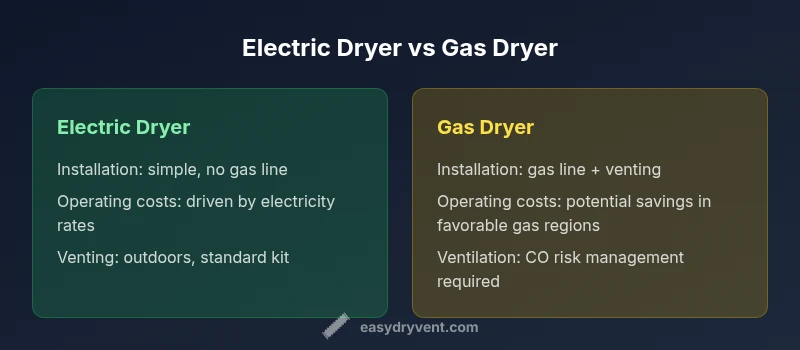
Installation simplicity matters a lot in the electric vs gas dryer decision. Electric models generally require only a dedicated 240-volt circuit and an appropriate outlet, plus a standard exhaust vent. Gas models, by contrast, demand a gas supply line, proper venting for combustion byproducts, and safe clearance from combustible materials. In multi-family buildings or historic homes, HOA rules or local codes may constrain gas installations, making electric options more practical. Venting integrity is crucial for both types, but gas dryers introduce additional safety considerations like combustion air supply and carbon monoxide risks, which demand regular vent inspection and damper maintenance. Proper vent sizing, lint trap cleaning, and a clean exterior vent cap are essential to prevent buildup and energy waste. If you’re retrofitting an older home, plan for potential duct replacements and a professional inspection to avoid expensive retrofits later. As a general rule, the more complex the venting path, the more you’ll want to lean electric unless gas availability is simple, affordable, and compliant with code.
Operating Costs and Efficiency: What Affects Your Bills
Beyond upfront price, ongoing energy costs shape the long-term value of electric vs gas dryers. Electricity charges per kilowatt-hour and local gas rates per therm drive operating costs. In markets with high electricity prices, gas dryers may offer meaningful savings, provided you have a relatively short vent path and good combustion efficiency. Conversely, in regions with low electricity costs or where gas prices are volatile, electric dryers can be the safer, more predictable choice. Efficiency is also affected by model design: moisture sensors, heat pump technology, and drum insulation influence cycle duration and energy use. While gas dryers may heat faster, modern electric models with intelligent sensors often minimize over-drying and energy waste. Remember that installation costs, venting performance, and maintenance frequency can swing the total cost of ownership in either direction. Easy DryVent recommends comparing energy-use labels and calculating annual energy costs using your local utility rates to decide which option is most economical for your household.
Safety Considerations: Venting, CO, and Fire Safety
Safety is a cornerstone of any dryer purchase, and the electric vs gas debate heightens the importance of proper ventilation and installation. Electric dryers do not produce combustion byproducts, reducing the risk of carbon monoxide exposure; however, poor venting still creates a fire hazard and moisture problems. Gas dryers generate combustion byproducts that must be vented outdoors, requiring intact vent channels and regular maintenance to avoid CO buildup. Lint buildup is a risk for both types; regular lint trap cleaning and vent cleaning are essential to reduce fire risk and improve efficiency. In households with small children or pets, extra attention to safe access and cord management is warranted. Use a dedicated circuit with correct amperage for electric models, and ensure gas lines are professionally installed and leak-checked before use. Always follow the manufacturer’s safety guidelines and local codes—safety first in any dryer setup.
Drying Performance and Features: Speed, Sensor Dry, and Care
Drying performance varies by model and design, but there are general tendencies in the electric vs gas dryer conversation. Gas dryers often heat more quickly, which can shorten cycles on high-demand days, while electric models provide consistent heat and may deliver gentler drying for delicate fabrics with modern sensor technology. Sensor-based moisture detection helps prevent over-drying, preserving fabric integrity and reducing energy waste. Advanced features such as steam cycles, wrinkle prevent, reversible doors, and flexible drum textures influence user experience more than a single fuel type. If you prioritize speed, a gas model with robust moisture sensing can be compelling, especially in households with heavy laundry loads. If you prioritize fabric care and zero emissions at point of use, an electric dryer with a high-efficiency heat source and sensor tech may be the better fit. Always compare Energy Star ratings to understand how features translate to real-world savings in your home.
Durability, Lifespan, and Maintenance Needs
Lifespan expectations differ by brand, model, and maintenance routines, but both electric and gas dryers are built to last if properly cared for. Routine maintenance includes lint screen cleaning after every use, periodic vent cleaning every 12–24 months, and annual professional inspections for gas dryers. Hoses, seals, and drum belts deserve periodic checks to avoid unexpected breakdowns; paying attention to unusual noises, longer tumble times, or inefficient drying can prevent costly repairs. The reliability of either fuel type heavily depends on the quality of venting and the dryness of the appliance’s environment—excess humidity and lint buildup can shorten a dryer’s life. If you live in a humid climate, ensure the vent path remains dry and clear, and consider a pre-emptive check to minimize risk. Following manufacturer service intervals and using high-efficiency models improves longevity for both electric and gas dryers.
Pricing, Rebates, and Total Cost of Ownership
Total cost of ownership for electric vs gas dryers includes upfront purchase price, installation costs, energy consumption, maintenance, and potential rebates. Electric models typically have lower installation costs and broader eligibility for standard electrical permits, while gas models may present higher initial costs due to gas line work and venting needs. Rebates or incentives from utilities and energy programs can influence the decision; Energy Star-rated machines often qualify for utilities programs and rebates. Regional energy prices and local codes ultimately determine which option yields the best long-term value. A thorough total-cost-of-ownership calculation should incorporate your region’s electricity and gas rates, climate-related drying needs, and expectations for workload. Easy DryVent’s approach is to guide homeowners through a transparent comparison of upfront costs, ongoing energy use, and maintenance commitments, so you can make an decision aligned with your budget and safety priorities.
How to Choose: A 4-Step Decision Framework
To decide between electric or gas dryer, follow a simple framework: 1) Assess existing infrastructure (gas line and venting vs. electrical panel space). 2) Compare total annual energy costs using your local rates. 3) Consider installation complexity and potential permit requirements. 4) Weigh safety, maintenance, and feature preferences to pick the model that best fits your family’s laundry habits. If you live in a condo or a home without easy gas access, electric is usually the smoother path. If gas lines are already in place and gas is cheap where you live, a gas dryer can be compelling. Always simulate a 5- to 10-year cost scenario to capture long-term savings or expenses. Easy DryVent’s framework emphasizes a practical, numbers-backed approach with an eye toward safety and reliability.
Maintenance Routine: Keeping Your Dryer Safe and Efficient
A regular maintenance routine helps keep an electric or gas dryer operating safely and efficiently. Start with a monthly lint screen check, and schedule a vent cleaning every 12–24 months depending on usage and vent length. Inspect ductwork for kinks and blockages, and ensure the exterior vent cap opens freely. For gas dryers, have a licensed technician perform annual vent and combustion checks to verify safe operation and proper flame quality. Replace worn hoses and seals, listen for unusual noises, and address any heat or odor concerns promptly. A proactive maintenance plan reduces the risk of fires, improves drying performance, and extends the machine’s life. Easy DryVent recommends documenting maintenance tasks and setting reminders to stay on track across busy seasons.
Comparison
| Feature | Electric Dryer | Gas Dryer |
|---|---|---|
| Installation & Venting | Typically requires 240V electrical circuit; vent to the outdoors; no combustion venting | Requires gas line hookup and dedicated venting for combustion byproducts; professional installation likely |
| Operating Costs | Electricity-based costs depend on local rates; generally stable but can be higher in peak-demand areas | Potentially lower long-term energy costs where gas is affordable and usage is high |
| Safety & Maintenance | No combustion byproducts; standard lint maintenance | CO risk if venting is compromised; requires regular vent and line checks |
| Performance & Drying Speed | Modern electric models with sensors deliver consistent heat and efficient cycles | Gas models often heat more quickly; best for large families with heavy loads |
| Lifespan & Reliability | Comparable lifespans with proper maintenance; brand and build quality matter | Comparable lifespan when properly maintained; gas components add complexity |
| Initial Price & Long-Term Value | Usually lower upfront cost and simpler install | Higher upfront cost due to gas line work; potential long-term energy savings |
The Good
- Lower upfront installation friction with electric models
- Gas dryers can offer long-term operating savings where gas prices are favorable
- Electric dryers generally have fewer safety complexities related to combustion
- Sensor-driven electric models can optimize drying and fabric care
Negatives
- Gas installation can be costly and may require permits
- Gas dryers introduce CO and ventilation safety considerations
- Electric dryers may have higher operating costs in regions with high electricity rates
- Availability of gas service may be limited in some homes
Electric dryers are usually the safer, easier choice for most homes; gas dryers can save money where gas is cheap and venting is straightforward
For most households, a modern electric dryer offers reliable performance with simpler installation and lower safety risk. If your home already has gas service and favorable energy rates, a gas dryer can be cost-effective over time, provided proper venting and maintenance are observed.
Common Questions
Is a gas dryer cheaper to run than an electric dryer in most cases?
Costs depend on energy prices in your area. Gas can be cheaper where gas is affordable and usage is high, but electric models with efficient sensors can be cheaper in regions with high electricity prices. Run a side-by-side energy cost estimate based on your rates to decide.
Gas can be cheaper to run where rates are favorable, but electric models with good sensors can offset costs in high electricity regions. Do a local energy cost comparison to be sure.
Can I install a gas dryer in a condo or apartment?
Gas dryer installation in multi-family buildings depends on building codes and HOA rules. It often requires venting that meets safety standards and may need approval. Electric dryers are typically easier to accommodate in condos without gas infrastructure.
Gas installations in condos depend on the building’s rules; electric dryers usually avoid these hurdles.
What are the main safety concerns with gas dryers?
Gas dryers require proper venting to outdoors and regular combustion checks to prevent CO buildup. Ensure a licensed professional handles gas connections and vent installation, and schedule annual inspections.
Gas dryers add combustion safety checks; keep vents clean and inspected by a pro.
Do electric dryers dry faster than gas or vice versa?
Drying speed varies by model. Gas models can heat faster, which may shorten cycles, while electric models with advanced sensors can optimize cycles and prevent over-drying. Check the specific model’s performance ratings.
Gas can heat quickly, but sensor-based electric models can be very efficient. Compare model specs for real-world speed.
What maintenance does either dryer require?
Both require regular lint trap cleaning and intermittent vent cleaning. Gas dryers need combustion vent checks and line integrity inspections. Following manufacturer guidelines helps prevent fires and maintain efficiency.
Clean lint traps often, clean ducts periodically, and service gas lines annually.
Are there rebates or incentives for energy-efficient dryers?
Yes, many utilities offer rebates for Energy Star-rated dryers or high-efficiency upgrades. Check local energy programs and utility portals for current offers and eligibility criteria.
Look for Energy Star rebates from your utility; eligibility varies by region.
Key Points
- Weigh installation complexity before purchase
- Compare long-term energy costs using local rates
- Prioritize safety and regular maintenance
- Sensor drying technology improves efficiency
- Consult local codes for gas installation requirements