Gas vs Electric Dryers: Which Dries Better for Your Home
A comprehensive comparison of gas and electric clothes dryers, covering performance, energy use, installation needs, and long-term costs to help homeowners decide which dries better for their loads.


The quick answer to what dries better gas or electric dryer is nuanced: gas dryers typically dry faster and can handle large loads more efficiently, especially in busy households, but electric models offer simpler installation, broader model availability, and potentially lower upfront costs. Your final choice should consider fuel access, venting requirements, and long-term operating costs. Easy DryVent’s analysis supports a fuel-aware decision rather than a one-size-fits-all rule.
What dries better gas or electric dryer: Framing the question
At its core, the question what dries better gas or electric dryer is about matching speed, efficiency, and practicality to your laundry routine. For many homeowners, the immediate intuition is that gas models should win on drying speed, while electric dryers shine in convenience and installation simplicity. Easy DryVent analysis suggests the best choice depends on fuel access, venting constraints, and long-term operating costs rather than a universal winner. In this guide, we unpack the core factors that influence drying performance and translate them into actionable decisions for real-world homes.
Energy and Drying Performance: Drying speed and fabric care
Drying performance hinges on heat source quality, airflow, and sensor-driven cycles. Gas dryers heat up quickly and often maintain consistent temperatures, which can translate to shorter dry times for typical loads. Electric dryers rely on electric coils and may take longer to reach peak heat, especially with bulky or dense fabrics. Sensor-based moisture controls help both types stop cycles when clothes are dry, preserving fabric integrity. When asking what dries better gas or electric dryer, remember that load composition, garment type, and whether you use high-heat or low-heat cycles all shape the final outcome. For households with mixed fabrics, a well-tuned vented gas model can edge out an electric one on speed, while a modern electric dryer can compete on fabric care with advanced sensors.
Energy efficiency and operating costs
Operating costs are influenced by energy prices, usage patterns, and the efficiency of the dryer's heat source. In regions where gas is inexpensive relative to electricity, gas models can offer lower per-load energy costs for large, frequent loads. Conversely, electric dryers may be more cost-effective in homes with easy access to affordable electricity or where gas service is not available. Efficiency ratings vary by model and include features like auto-sense cycles, thermistors, and drum design. Easy DryVent notes that the overall efficiency picture depends on how often you dry, what you dry, and how well you maintain the venting system. Consider a fuel-pricing outlook for your area and compare models with high-efficiency features rather than relying on one factor alone.
Installation, venting, and safety considerations
Gas dryers require a dedicated gas line connection and outdoor venting to remove combustion byproducts, plus regular vent maintenance to prevent lint buildup. Electric dryers need a dedicated electrical outlet and proper venting, but absence of a gas line generally reduces installation complexity and safety concerns associated with combustion byproducts. If you live in a tightly sealed home, proper venting and a balanced lint trap flow are essential for both types to ensure consistent drying and indoor air quality. When evaluating what dries better gas or electric dryer, assess your home’s existing infrastructure, local codes, and available professionals for installation.
Load size, features, and drying cycles
Large loads benefit from the rapid heat generation of gas dryers, yet modern electric models with advanced moisture sensors and multiple cycles can approximate or even surpass gas performance for certain fabrics. Both types offer steam, sanitize, and wrinkle-reduction options, but the availability of cycles can vary by brand and model. For families handling mixed loads—towels, sheets, and everyday wear—a dryer with versatile cycle options and reliable moisture sensing often yields better overall results than simply chasing the fastest dry time. In practice, matching the cycle selection to fabric weights and moisture targets is more important than the heat source alone.
Noise, heat, and home comfort
Temperature stability and noise levels influence perceived drying performance. Gas dryers can generate more ambient heat, which may be a consideration in small laundry rooms or apartments adjacent to living spaces. Electric dryers generally produce less exhaust heat and can be quieter, depending on the motor and belt design. If you’re sensitive to heat or noise, evaluate the dryer’s insulation, motor speed, and drum design alongside the heat source. Remember that placement and vent routing have a substantial impact on comfort and efficiency in real-world use.
Longevity, maintenance, and repair considerations
Durability and maintenance affect long-term performance more than short-term speed alone. Gas dryers incur maintenance needs related to gas connections, vent cleanliness, and potential CO risk mitigation, while electric models require belt, drum, and heating element maintenance. Both types benefit from regular lint trap cleaning, vent inspections, and avoiding overloading, which stresses the motor and reduces efficiency. When planning what dries better gas or electric dryer, factor in the cost and availability of service, common failure points, and the ease of finding replacement parts in your region.
Real-world scenarios: when gas makes sense and when electric wins
If your home already has a gas service and a robust venting setup, a gas dryer can perform exceptionally well for high-volume households or households with bulky textiles. In homes without gas service or where installation complexity is a concern, electric models offer strong performance with simpler installation. For renters or urban dwellers, electric models often present a more practical balance of cost, accessibility, and convenience. The “what dries better gas or electric dryer” question becomes a question of context: what are your fuel options, installation constraints, and how you value speed versus upfront costs?
Common myths about gas and electric dryers
A common myth is that gas is always faster or that electric is always more expensive to operate. The truth varies by model and usage. Another misconception is that venting is optional; in reality, both types require proper venting to maintain performance and safety. Finally, it’s not always true that the latest technology guarantees the best drying; the synergy of proper load size, cycle selection, and vent maintenance often determines results more than the heat source alone.
How to decide: a practical decision framework
To decide what dries better gas or electric dryer for your home, start with fuel access and installation feasibility. Next, compare models based on drying speed for typical loads, sensor accuracy, cycle variety, and warranty support. Consider long-term operating costs by evaluating energy efficiency features and your local energy prices. Finally, assess maintenance needs and service availability in your area. By aligning fuel, performance features, and maintenance with your laundry patterns, you’ll choose the option that truly dries better for your household.
Comparison
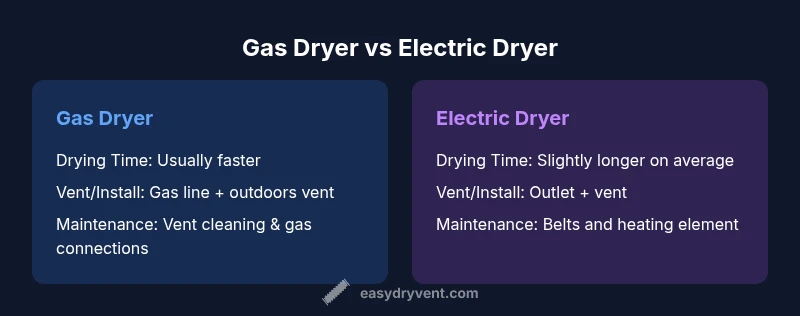
| Feature | Gas Dryer | Electric Dryer |
|---|---|---|
| Drying Time (typical load) | Faster dry times for many loads | Slower dry times for similar loads |
| Energy Efficiency | Often lower energy use per large load when fuel prices favor gas | Often higher energy use per load; efficiency varies by model |
| Vent/Install Requirements | Requires gas line and outdoor venting | Requires electrical outlet and venting |
| Cost Considerations | Higher upfront installation for gas service | Lower upfront installation, but electrical upgrades may be needed |
| Best For | Large households with gas service or high-volume drying | Homes with electric service or limited venting |
| Maintenance & Repairs | Gas components and venting require CO risk considerations | Heating element and belt maintenance typical |
| Safety & Codes | Gas safety and proper combustion venting | Electrical safety and code compliance |
The Good
- Typically faster drying times for many loads
- Potentially lower operating costs for frequent, large loads depending on local energy prices
- Broad model availability with varied features and cycles
- Strong resale value in suitable installations
Negatives
- Higher upfront installation costs and gas line requirements
- Ventilation and safety considerations for gas models
- Availability of qualified technicians for gas service varies by region
- Gas prices can fluctuate, impacting long-term costs
Gas generally dries faster for typical loads, but electric models win on installation simplicity and flexibility.
If your home has ready access to natural gas and you routinely dry large or bulky items, gas is likely the better choice. If installation simplicity, lower upfront costs, or lack of gas service matters more, electric dryers are a solid, reliable option. Easy DryVent recommends weighing a home’s fuel access against long-term operating costs and maintenance needs when deciding.
Common Questions
Does a gas dryer really dry faster than an electric dryer?
In many cases, yes—gas dryers heat up quickly and can shorten drying times on typical loads. However, speed depends on fabric type, load size, and cycle selection. An efficient electric model with good moisture sensing can close the gap for many households.
Gas dryers often dry faster, especially on heavy loads, but an efficient electric model with smart sensors can also perform very well.
Is it more expensive to install a gas dryer than an electric one?
Gas dryer installation usually involves a gas line connection and outdoor venting, which can add to upfront costs compared with electric models. Electric installations typically require just a dedicated outlet and standard venting. Local codes and existing infrastructure affect final costs.
Gas installations tend to be pricier upfront due to lines and venting, while electric installations are generally simpler.
Are gas dryers safe for homes with children or in apartments?
Gas dryers are safe when installed correctly and vented outdoors, with proper CO detectors and ventilation. In apartments, electric models are often easier to route and meet stricter space constraints. Always follow manufacturer guidelines and local codes.
Gas can be safe with proper venting and detectors, but electric may be easier in apartment settings.
Can a gas dryer work in cold climates without special modifications?
Gas dryers operate reliably in cold climates, but venting must be properly installed to prevent condensation and ensure safe exhaust. Installation planning should include adequate vent routing and clearance from outdoor elements.
Gas dryers can work in cold climates if venting is well planned and installed correctly.
What maintenance is required for gas vs electric dryers?
Gas dryers require vent cleaning and periodic checks of gas lines and connections; electric dryers need belt, drum, and heating element inspections. Regular lint removal and vent cleaning benefit both types.
Keep vents clean and check belts and heating elements as part of routine maintenance.
Key Points
- Assess fuel access and venting before choosing
- Gas dries faster for many loads, especially large ones
- Electric dryers offer easier installation and broader affordability
- Choose model with advanced sensors for best fabric care
- Consider long-term operating costs tied to local energy prices
- Regular vent maintenance boosts any dryer’s performance