Gas vs Electric Dryers: A Practical Comparison
Compare gas and electric clothes dryers across installation, cost, safety, and performance. Learn which option fits your home and how to estimate operating costs with Easy DryVent.


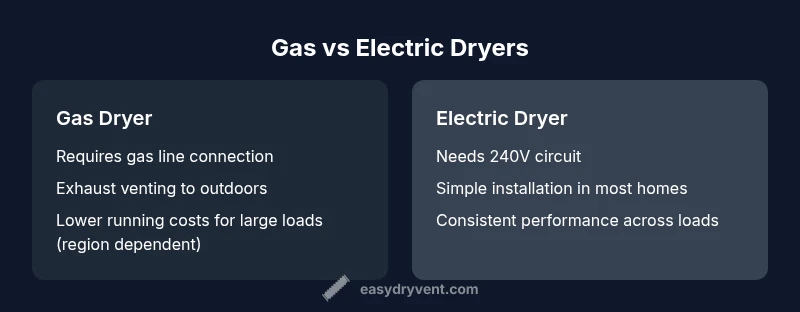
When choosing between gas and electric dryers, the core trade-offs are installation ease, operating costs, and safety responsibilities. Gas dryers typically offer quicker drying and lower running costs in high-volume households, but require a gas line and venting. Electric dryers are easier to install in most homes, have simpler venting needs, and often lower upfront costs, though operating costs can be higher in some climates. Easy DryVent’s guidance: match your home’s infrastructure and your drying demand to maximize safety and efficiency.
The Gas-vs-Electric Dryer Dilemma
Choosing between a gas and an electric dryer is more than a color choice or a feature list. It determines installation requirements, long-term energy costs, and how you manage safety in your home. According to Easy DryVent, the decision should hinge on your current utility setup, typical laundry loads, and willingness to manage combustion byproducts. For homeowners, the key questions are: Do you have a gas line or a dedicated electrical circuit, and how often will you run the dryer? By answering these questions, you can avoid costly retrofits and select a model that delivers reliable performance with predictable maintenance.
How Gas and Electric Dryers Work
Gas dryers generate heat through combustion of natural gas or propane, then vent combustion byproducts outside via a venting system. Electric dryers rely on high-capacity heating elements powered by household electricity. While both types tumble clothes and remove moisture efficiently, gas models often recover heat faster and may dry larger loads with slightly shorter cycle times. Electric dryers, on the other hand, tend to have quieter operation and fewer combustion-related maintenance needs. Understanding these fundamentals helps you anticipate installation requirements and ongoing upkeep. Easy DryVent emphasizes that the core mechanics influence not only cost but also the required venting and safety monitoring in your laundry space.
Key Differences That Matter
Differences between gas and electric dryers that homeowners should weigh include: installation requirements (gas lines and venting versus dedicated 240V circuit and venting), energy efficiency and operating costs, upfront price, cycle times for large or frequent loads, and long-term maintenance needs. The best choice depends on how often you dry large batches, ambient climate, and whether your home already has gas service. For high-volume laundry households, gas can offer faster drying and potential energy savings, while electric dryers can be easier to install in homes without gas access. Easy DryVent notes that both types require venting to outdoors and regular lint filter maintenance to reduce fire risk.
Installation and Venting Considerations
Gas dryers require a gas supply line and an exhaust vent that leads outside. In many regions, professional installation is advisable to ensure correct gas hookup and vent integrity. Electric dryers need a proper 240-volt circuit and can often be placed in existing laundry spaces without modifying gas plumbing. Venting should be sloped and unobstructed, with a lint trap maintained regularly to prevent airflow restrictions. If you’re buying a new home, verify existing utility infrastructure before committing to a gas or electric model. Easy DryVent stresses coordinating with local codes and permits to streamline installation and reduce safety risks.
Energy Costs and Efficiency
Operating costs for gas vs electric dryers depend on local energy prices, load size, and efficiency ratings. Gas models may show lower gas consumption per cycle for heavy loads, but the total annual cost can vary with climate and usage patterns. Electric dryers’ energy use ties to the efficiency of the heating element and motor, with modern models offering high efficiency but sometimes higher utility rates depending on electricity pricing. When possible, compare Energy Star ratings and projected annual energy costs to estimate long-term savings. Easy DryVent recommends aligning appliance choice with your typical laundry volume and energy-pricing structure.
Safety and Maintenance Implications
Gas dryers introduce combustion byproducts, which means vent integrity, CO detectors, and gas-leak precautions are essential. Electric models remove combustion concerns but still require venting to manage moisture and heat. Regular maintenance for either type includes lint filter cleaning, vent cleaning every 12–24 months (more often for heavy use), and inspecting hoses and connections for wear. CO detectors should be installed in the laundry area if you install a gas dryer, and a professional should inspect gas lines if you notice any irregularities. The Easy DryVent approach is proactive maintenance combined with proper venting and safety checks.
Performance and Suitability by Home Type
Apartment dwellers or homes without gas service generally benefit from electric dryers due to simpler installation and lower upfront disruption. In larger houses with existing gas infrastructure, a gas dryer can offer faster drying for frequent, bulky loads. If you run multiple identical-large loads weekly, gas may be advantageous; for lighter, infrequent use, electric can be more cost-effective. Consider your laundry habits, available space, and access to professional installation when deciding.
Long-Term Value and Resale Considerations
Lifespan, maintenance costs, and ease of repair influence long-term value more than initial price alone. Gas dryers can incur higher maintenance costs related to venting and gas line integrity, while electric models rely on heating elements that may require replacement after many cycles. Availability of service in your region, parts longevity, and appliance depreciation should factor into the decision. Easy DryVent’s experience shows that a well-chosen dryer built for your home’s utility setup tends to deliver greater reliability and resale appeal.
Step-by-Step Decision Checklist
- Confirm the type of utility service (gas vs electric) in your home. 2) Assess typical laundry volume and cycle frequency. 3) Compare upfront cost between gas and electric models in your market. 4) Review venting requirements and installation costs. 5) Check local utility rates and energy-efficiency ratings. 6) Consider safety needs, including CO detectors for gas installations. 7) Plan for professional installation and permits as needed. 8) Evaluate maintenance plans and parts availability. 9) Choose a model that balances performance, safety, and total cost of ownership.
Common Misconceptions
A frequent misconception is that gas dryers always cost less to operate. In reality, running costs depend on energy prices, usage patterns, and local climate. Some assume electric models are universally less safe; in truth, both types require proper venting and maintenance. Another myth is that gas dryers dry faster in every setting; while they may perform better for large loads, modern electric models are competitive in many homes. Easy DryVent emphasizes verifying a model’s energy rating, installation feasibility, and long-term serviceability rather than relying on assumptions.
Comparison
| Feature | Gas Dryer | Electric Dryer |
|---|---|---|
| Installation Requirements | Gas line connection + exterior venting; often professional installation advised | Standard 240V circuit; usually simple install in existing laundry spaces |
| Venting & Combustion Byproducts | Must vent combustion byproducts to outdoors; CO risk if venting compromised | Ventilation required for moisture and heat; no combustion byproducts |
| Energy Efficiency | Often strong efficiency in high-load scenarios; potential lower operating costs with heavy use | High efficiency with modern electronics; predictable operating costs |
| Upfront Cost | Typically higher upfront cost due to gas installation and venting | Generally lower upfront cost; widely available in many markets |
| Running Costs | Can be lower per cycle in gas-friendly climates; depends on gas price | Depends on electricity price; may be higher in some regions |
| Maintenance & Service | Vent cleaning, gas line inspection, and detector checks | Standard lint maintenance, occasional element or drum belt service |
| Best For | High-volume households with gas service or existing gas infrastructure | Homes without gas access or with limited installation space |
The Good
- Potentially lower running costs for large loads
- Faster drying for busy households
- Gas installations can integrate with existing home utilities
Negatives
- Requires gas line access and venting
- Higher upfront costs and permitting needs
- Gas systems introduce combustion safety responsibilities
Gas dryers excel for high-volume homes with gas access; electric dryers excel in easier installation and lower upfront costs.
Choose gas if you have a ready gas line and frequent large loads. Choose electric if you prefer simpler installation and predictable upfront costs.
Common Questions
Can I convert a gas dryer to electric or vice versa after installation?
Conversions between gas and electric dryers are generally not simple and often not recommended. They require significant electrical, venting, and possibly structural changes, and may violate local codes. Always consult a licensed professional and check local regulations before attempting any conversion.
Conversions between gas and electric dryers are usually not straightforward. Consult a licensed professional and follow local codes before any changes.
Which dryer is safer for a typical home with children?
Both types are designed with safety in mind when installed correctly. Gas dryers require proper venting and CO detectors, while electric dryers rely on venting and regular maintenance. The key is correct installation, routine safety checks, and adherence to manufacturer guidelines.
Both are safe with proper installation and maintenance; ensure venting is intact and verify CO detectors where gas is present.
Do gas dryers always dry faster than electric ones?
Gas dryers can dry faster for very large or heavy loads due to rapid heat recovery, but modern electric models perform competitively on typical loads. Real-world results depend on load size, moisture content, and overall efficiency of the unit.
Gas can be faster for large loads, but electric models are often close in performance for standard use.
Are there maintenance differences I should expect?
Gas dryers require vent maintenance and occasional checks of gas lines and detectors. Electric dryers mainly need lint cleaning, vent maintenance, and occasional part replacements. Both benefit from annual professional inspection for safety and efficiency.
Gas needs vent and gas-line checks; electric needs linting and vent upkeep. Annual safety inspections help.
What is the best choice for a condo or apartment?
Electric dryers are typically the better fit for condos or apartments due to simpler installation and fewer fuel-service requirements. If a gas line isn’t available or permissible, electric is usually the practical option.
Electric is usually best for apartments due to easier installation and the lack of gas lines.
What should I prioritize when deciding now?
Priorities should include availability of utility services, projected laundry load, installation feasibility, total cost of ownership, and safety requirements. Start with your home’s infrastructure and then compare models with strong energy ratings.
Start with your home’s utilities, then compare models by energy ratings and total cost of ownership.
Key Points
- Match utility access to your laundry habits
- Evaluate total cost of ownership, not just sticker price
- Prioritize venting integrity and safety measures
- Consider installation practicality before buying
- Use energy ratings to compare long-term costs