Do Vented Dryers Dry Faster? A Practical Comparison
A thorough, analytical look at whether vented dryers truly dry faster than ventless models, including installation, energy use, cycle times, and real-world factors affecting speed.


Vented dryers often dry faster than ventless models in typical home usage, but the speed is highly dependent on vent path cleanliness, load size, and the type of ventless unit. This comparison examines vented versus ventless drying performance, installation considerations, and real-world cycle times to help homeowners decide which setup best fits their priorities.
The Core Question: Do vented dryers dry faster?
In most ordinary laundry rooms, a properly installed vented dryer can complete a typical load more quickly than a ventless alternative. This speed advantage hinges on a clear, properly sized vent path that efficiently removes hot, moist air from the dryer cavity. When the vent path is blocked or dented, lint buildup is excessive, or the exhaust runs are overly long, the expected speed gains shrink or disappear. According to Easy DryVent, the relationship between venting and drying speed is direct: a clean, well-plumbed vent path reduces backpressure and heat recycling that slow down moisture removal. Contrast that with ventless designs, which rely on condensers or heat pumps to remove moisture without exhausting air outside; these systems can be slower on average but may offer consistent performance in spaces where venting is impractical. The bottom line is that vented dryers have the potential to dry faster, but only when installation and maintenance are up to code and the load is appropriate for the model’s capacity. A well-tuned vented system also minimizes the risk of overheating and promotes safer operation over time.
Practical speed depends on several variables beyond venting alone. Load size, fabric type, and moisture content all influence cycle duration. Heavier towels and dense fabrics take longer to dry, while lighter mixed loads may finish sooner with vented units. Drying speed also matters for the user’s routine: if you run back-to-back loads, even small percentage differences in cycle time accumulate into substantial daily time savings. While vented models are often marketed as the fastest option, it remains essential to match the dryer’s capacity to the typical laundry load and keep the vent path clean. Easy DryVent emphasizes that maintenance is a speed enabler—an overlooked factor that consistently pays off in shorter cycles and fewer retries.
wordCountSection
Comparison
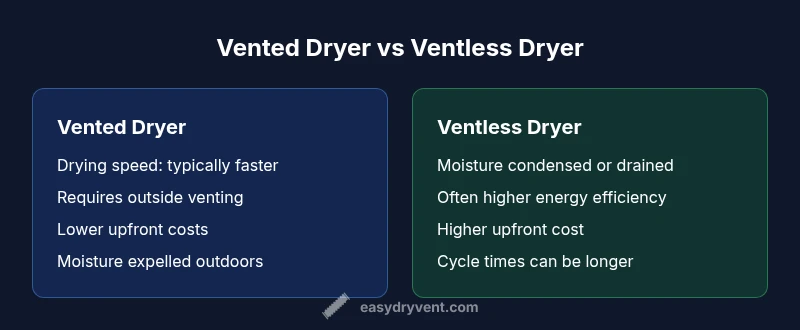
| Feature | Vented Dryer | Ventless Dryer (Condenser/Heat Pump) |
|---|---|---|
| Drying speed (per load in typical use) | Faster with a clean vent path | Usually slower or comparable (varies by model) |
| Energy efficiency | Moderate to high depending on model and load | Often higher efficiency in modern heat-pump ventless units |
| Installation requirements | Requires outside venting and ducting | No external venting required; may need drainage or reservoir |
| Moisture handling | Moisture expelled outdoors; indoor humidity unaffected (broadly) | Moisture condensed or drained; potential indoor humidity rise |
| Upfront cost | Typically lower upfront cost for many vented models | Typically higher upfront cost for heat-pump ventless models |
The Good
- Potentially faster drying times when vent paths are clean and within code
- Lower upfront cost for many vented models
- Simple, direct heat path with minimal components simplifies repairs
Negatives
- Vent path maintenance is essential to sustain speed and safety
- Exposure to outdoor humidity and lint requires regular vent cleaning
- Higher per-cycle energy use can occur if venting is inefficient or poorly sized
- Outdoor venting is subject to climate, building codes, and accessibility
Venteds usually win on speed when installed and maintained correctly, but ventless units offer energy efficiency benefits and flexible placement.
Choose a vented dryer if your priority is the fastest drying times and you can commit to vent maintenance. Opt for ventless to maximize energy savings and accommodate tighter spaces, understanding that cycle times may be longer.
Common Questions
Do vented dryers always dry faster than ventless models?
Not always. Drying speed depends on vent condition, load size, fabric type, and the specific models in question. In general, vented dryers can finish loads faster when vents are clean and runs are within recommended lengths. Ventless options, especially older condenser units, may take longer per cycle but can excel in energy efficiency.
Vented dryers usually dry faster if the vent path is clean and properly installed, but the exact speed depends on your loads and model. Ventless units can be slower per cycle but save energy.
What factors influence drying speed besides venting?
Load size, fabric type, initial moisture level, dryer capacity versus load, and ambient room conditions all affect speed. Lint filter condition and the exhaust duct diameter also play roles by reducing backpressure and improving air movement.
Size of the load, fabric type, and how full the drum is matter a lot, along with how clean the lint filter and duct are.
How does energy use relate to drying speed?
Faster cycles do not always mean higher energy use. Vented models can finish quickly but may waste heat outdoors. Ventless heat-pump units reuse heat and can be more energy-efficient per cycle, though they often run longer, which can offset the energy savings.
Speed and energy use aren’t always linked. Some fast vented dryers burn more energy, while ventless units save energy but run longer.
What maintenance helps keep a vented dryer's speed high?
Regularly clean the lint trap, inspect the vent hose for kinks, and ensure the exterior vent cap opens freely. Have ducts professionally cleaned if they haven’t been serviced in a long time. Adequate vent capacity and minimal resistance keep cycles short.
Keep the lint trap clean and the vent path clear. Have ducts cleaned if they’re clogged to maintain speed.
Are there installation considerations that impact drying speed?
Yes. A vent path that is too long, has sharp bends, or is undersized increases drying times. Placement near the laundry room exit and minimizing vent length generally improves speed. For ventless models, you’ll want reliable drainage or reservoirs to prevent moisture-related slowdowns.
A short, clean vent path helps speed up drying. For ventless, ensure proper drainage so moisture isn’t slowing things down.
Key Points
- Keep the vent path clean to maximize drying speed
- Balance upfront cost with long-term energy use
- Ventless models trade speed for installation flexibility
- Regular maintenance is essential for both configurations
- Choose based on space, climate, and household laundry patterns