Hair Dryer vs Heat Gun: Difference, Uses, and Safety Guide
Explore the difference between a hair dryer and a heat gun, their uses, safety concerns, and how to choose the right tool for DIY projects. Learn which tool fits drying hair versus material heating tasks with practical guidance from Easy DryVent.


According to Easy DryVent, the difference between a hair dryer and a heat gun centers on heat output, intended use, and safety. A hair dryer provides controlled airflow and moderate warmth for hair styling, while a heat gun delivers much hotter air for materials work, paint removal, and plastic shaping. The two tools are built for very different tasks, and mistaking one for the other can lead to damaged surfaces, damaged hair, or unsafe conditions. In this guide, you’ll see practical distinctions to help DIYers choose the right device for the job.
Difference Between a Hair Dryer and a Heat Gun
The difference between a hair dryer and a heat gun is fundamental and practical, yet many beginners confuse their capabilities. The hair dryer is designed for human hair, combining airflow with moderate warmth to dry and style without excessive heat exposure. A heat gun, by contrast, is built for non-hair tasks, delivering a focused and significantly hotter airstream for applications like paint removal, plastic shaping, or loosening adhesives. According to Easy DryVent, recognizing this distinction prevents surface damage and hair injury, and helps DIYers pick the right tool for the job. By understanding the intended purpose, you can avoid a mismatch that leads to suboptimal results or safety hazards.
In real-world terms, think of the hair dryer as a gentle, controllable tool for everyday comfort and styling, while the heat gun is a high-heat instrument meant for heavier remodeling or workshop tasks.
How Each Device Works
Understanding the basic mechanism helps explain why these tools aren't interchangeable. A hair dryer uses a compact heating element and a blower to mix warm air with a soft airflow, typically with settings that range from gentle drying to strong styling heat. A heat gun, in contrast, uses a more powerful heating element and a high-velocity nozzle to deliver a focused, very hot air stream. The result is rapid surface heating that can soften plastics, shrink film, or soften paints. Because the heat gun can reach far higher temperatures, it has a risk profile that differs markedly from a hair dryer, particularly around flammable materials and skin exposure.
From a safety perspective, the hair dryer’s intent is cosmetic and domestic, whereas the heat gun’s intent is material processing. The Easy DryVent team emphasizes respecting each device’s limits to prevent accidental damage.
Real-World Use Cases: Hair Styling vs Surface Heating
In everyday homes, a hair dryer excels at drying and styling hair, smoothing frizz, and setting styles with a cool shot when needed. For DIY enthusiasts, it can be handy for light re-softening of adhesives or softening gentle coatings on small surfaces, but only at safe, moderate temps. A heat gun shines in tasks like paint removal, heat-shaping plastics, loosening wood joints, or thawing frozen components on mechanical assemblies, where controlled high heat is essential. Always assess the task and select the tool that aligns with the required heat and safety considerations. Easy DryVent analysis, 2026, notes a general preference for hair dryers in routine home tasks, while heat guns are commonly reserved for heavier projects.
A practical rule: if the job involves delicate finishes or living tissue, use a hair dryer; if it involves finishes or materials that resist conventional solvents, a heat gun is more appropriate.
Temperature Control and Safety Features
Temperature control differs between the two tools: hair dryers commonly offer multiple heat settings and airflow speeds, sometimes a cool-shot feature, and various nozzle attachments to shape air. Heat guns provide broader temperature ranges and adjustable air pressure, along with narrow precision nozzles that concentrate heat. Safety features matter: hair dryers typically include overload protection and a cool-shot button; heat guns may have thermal cutoffs and adjustable settings, but they demand stricter handling—keep flammables away, wear eye protection, and never use near your skin. Prioritize models with clear temperature guides and stable plugs to minimize overheating and accidental burns.
Material Compatibility and Damage Risk
The right tool minimizes damage to materials and surfaces. Hair dryers are designed for human hair and consumer textiles; using them on paint, varnish, or coatings can lead to chipping or bleaching if misapplied. Heat guns, while excellent for industrial tasks, can scorch wood, warp plastics, or soften adhesives if not carefully controlled. Always test on a small area, maintain a safe distance from the surface, and use the appropriate attachment to distribute heat evenly. For delicate finishes, practice on scrap pieces or inconspicuous edges first.
Maintenance and Longevity: Keeping Tools in Top Shape
Routine maintenance extends tool life. For hair dryers, keep filters clear, wipe away lint, and store them away from moisture. For heat guns, regularly inspect nozzles and heat shields, clean vents, and guard against carbon buildup. Both tools benefit from unplugging while changing attachments, avoiding dropping them, and allowing them to cool before storage. Replacing worn nozzles or damaged cords promptly helps prevent overheating and potential safety hazards. A simple quarterly check can catch blockages or frayed cords before they become problems.
How to Choose the Right Tool for DIY Projects
Start with the task: if you’re drying hair or styling, a hair dryer is the sensible default. If you’re removing paint, shrinking film, or shaping wood, a heat gun is more efficient. Consider heat levels, control options (multiple heat settings vs. adjustable airflow), attachments, durability, and price range. For frequent use, invest in a model with robust safety features and a stable power supply; for occasional tasks, a basic unit may suffice. Finally, follow safety guidelines and wear eye protection when using high-heat tools.
Common Myths and Realities
Myth: A heat gun can be used safely on any material. Reality: High heat can damage many surfaces; always test on a hidden area and use appropriate nozzles. Myth: Hair dryers are only for hair. Reality: They can assist with light workshop tasks but are not substitutes for heavy-duty heating. Myth: All heat guns and hair dryers perform the same. Reality: There are wide variations in heat output, airflow, ergonomics, and attachments that affect task suitability.
Quick-Start Guide: Getting Started with Either Tool
- Identify the task and decide which tool fits best. 2) Read the product manual and confirm safety features. 3) Set the tool to the lowest effective heat and test on a scrap area. 4) Use proper attachments and maintain a safe distance from skin and flammable materials. 5) After use, unplug, cool, and store in a dry place. This approach helps you stay safe and avoid unnecessary damage.
Comparison
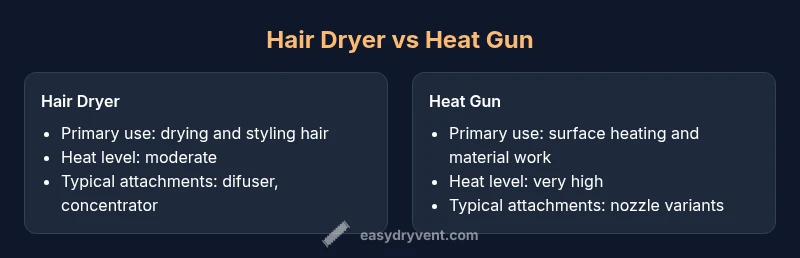
| Feature | Hair Dryer | Heat Gun |
|---|---|---|
| Primary Use | Hair styling and drying | Surface heating and material work |
| Typical Temperature Range (qualitative) | Moderate heat for gentle styling | High heat for rapid surface heating |
| Airflow Focus | Diffuse, adjustable airflow | Directed, high-velocity airflow |
| Safety Considerations | Lower risk with cool-shot and automatic shutoff | Higher burn risk; needs strict handling |
| Nozzle Attachments | Diffuser, concentrator | Nozzle variants for precision heat |
| Common Uses in DIY | Hair styling, light drying | Paint removal, plastic shaping |
| Cost Range | Budget to mid-range options | Mid-range to professional-grade options |
The Good
- Versatile for light DIY tasks beyond hair care
- Low upfront cost for basic models
- Widely available attachments and accessories
- Safe for hair styling when used properly
Negatives
- Limited heat for heavy-duty tasks
- Risk of scorching finishes with heat guns if misused
- Power consumption varies by model and task
- Potential misapplication leading to injury without proper precautions
Hair dryer is best for styling and gentle drying; heat gun excels at high-heat material tasks.
Choose the hair dryer for everyday hair care and light surface work. Reserve the heat gun for tasks requiring high heat and fast material processing; always follow safety guidelines to prevent damage.
Common Questions
What is the primary difference between a hair dryer and a heat gun?
The hair dryer uses moderate heat and airflow for hair drying and styling, while a heat gun delivers much hotter air for materials work. They are not interchangeable for most tasks.
Hair dryers are for hair; heat guns are for materials. They’re not interchangeable.
Can I use a heat gun on hair?
No. Using a heat gun on hair can cause burns and severe damage. Always use a hair dryer or a tool designed for hair styling.
Don’t use a heat gun on hair; it’s dangerous.
Are hair dryers and heat guns interchangeable for DIY tasks?
They are not interchangeable. Each tool is optimized for a different purpose—hair drying versus high-heat material work. Using the wrong tool increases risk and can compromise results.
No—they’re built for different jobs.
What safety features should I look for?
Look for thermal cutoffs, overload protection, adjustable heat settings, and sturdy construction. Wear PPE when working with heat, keep flammables away, and always follow the manufacturer’s guidance.
Seek steady heat control and robust safety features.
What materials can a heat gun safely work on?
Heat guns are used on paints, plastics, wood, and vinyl, but require caution. Always test on a hidden area, keep distance, and use the right nozzle.
Test first, use the right nozzle, and keep distance.
How should I store and maintain these tools?
Store tools in a dry, cool place; clean vents; unplug when not in use; inspect cords regularly. Routine maintenance reduces overheating risk and extends life.
Keep them dry, clean, and unplugged when stored.
Key Points
- Identify the task first to pick the right tool.
- Hair dryers offer safe, controlled heat for hair; heat guns provide high heat for materials.
- Use attachments to control heat direction and distance.
- Avoid applying heat to hair with a heat gun and avoid delicate surfaces with a hair dryer.
- Regular maintenance extends tool life and safety.