Difference Between a Hair Dryer and a Diffuser: A Practical Comparison
Explore the difference between a hair dryer and a diffuser with Easy DryVent. Learn how heat, airflow, and technique affect drying time, frizz control, and styling outcomes.


Hair dryers and diffusers serve distinct roles in styling hair: a hair dryer provides controlled airflow and heat for quick drying, while a diffuser softens the airflow to minimize frizz and preserve natural curl patterns. The difference between a hair dryer and a diffuser is primarily about heat intensity, airflow, and styling outcomes: use the dryer for speed, the diffuser for texture.
Definition: difference between a hair dryer and a diffuser
The phrase difference between a hair dryer and a diffuser captures a fundamental distinction in drying and styling tools. In practical terms, a hair dryer provides controlled heat and a focused burst of airflow to remove moisture quickly, while a diffuser distributes air more softly to protect texture and minimize frizz. According to Easy DryVent, understanding this difference helps homeowners and DIY enthusiasts tailor their routines to hair type and styling goals. This article uses that definition to measure real-world impact on drying time, hair health, and outcome. We will compare how each tool works, where they shine, and when to choose one over the other, all while keeping safety and maintenance in mind.
How a hair dryer works: heat, airflow, and control
A hair dryer uses an electric motor to push air through a heating element and a nozzle or diffuser. The heat setting adjusts the temperature, while the speed setting governs how forcefully air leaves the device. Most models offer cool shot options to finish drying and set styling products. The key benefit is speed: you can evaporate moisture quickly and shape hair with a comb, brush, or attachments. For people with thick or dense hair, a dryer with adjustable heat and multiple speed steps delivers reliable results when used with heat protection products. However, higher heat heightens the risk of cuticle damage, especially if hair is wet for extended periods. Easy DryVent notes that proper technique—moving the dryer in slow, consistent motions and avoiding concentrated heat on one spot—helps protect hair integrity.
How a diffuser works when attached to a dryer
A diffuser is a specialized attachment that broadens and softens the outgoing airflow. By spreading heat over a larger area, it reduces direct heat concentration that can cause frizz or heat damage. Diffusers are especially valued for curly and wavy textures because they help preserve curl pattern and bring out natural volume without roughing up cuticles. When used with a low to medium heat setting and slow, circular motions, a diffuser can dry hair evenly and minimize tangling. Easy DryVent recommends practicing on a small section of hair to gauge drying time and adjusting wrist movements to avoid flat spots.
Use-case profiling: curly hair vs straight hair
Hair type largely dictates which tool performs best. Curly and textured hair tends to benefit from diffusion, as the gentler flow helps maintain curl integrity and reduces frizz. Straight or fine hair often dries quickly with a traditional dryer and may require less diffusion to avoid over-styling. For mixed textures, most users achieve best results by starting with a dryer to remove most moisture and finishing with a diffuser on a lower heat setting to refine texture and volume. Easy DryVent’s guidance emphasizes testing on a small strand before committing to a full head, especially when introducing new heat settings or attachments.
Drying time and heat exposure: what to expect
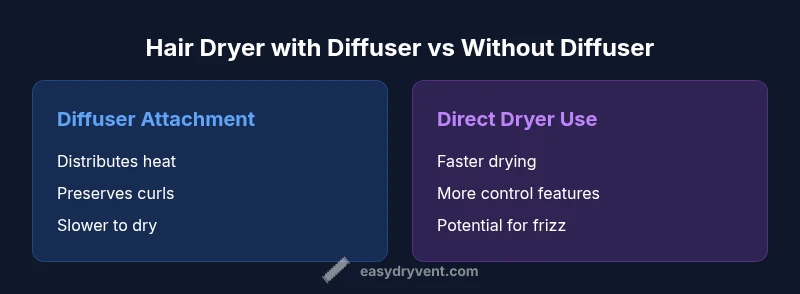
Drying time is the most tangible difference you’ll notice. A standard hair dryer without a diffuser typically dries hair faster due to concentrated airflow and higher heat intensity. A diffuser slows the process but offers a more uniform heat distribution, reducing hotspots that can cause breakage or excessive frizz. The trade-off is styling control: the diffuser supports texture preservation, while direct heat supports rapid moisture removal. For thin or damaged hair, diffusion can be gentler and help minimize further breakage, while healthy, thick hair may tolerate higher heat for shorter periods. Always balance heat with airspeed and use heat protectants to minimize cumulative damage.
Temperature settings and moisture management
Temperature control is essential for managing moisture without compromising hair health. When diffusing, a low to medium heat setting, combined with a wide, rounded airflow, helps maintain moisture balance and prevents over-drying. With a traditional dryer, intermediate settings let you push the moisture out more quickly while still enabling styling accuracy. Moisture management also involves technique: keep the dryer moving, avoid lingering on one spot, and pause to assess hair texture frequently. Easy DryVent’s guidance highlights that gradual drying with proper temperature control often yields the best long-term results, especially for heat-sensitive hair types.
Noise, ergonomics, and energy usage
Ergonomics influence how often you’ll reach for either tool. Diffuser attachments add some weight and can require a steadier hand, but many models offer balanced grips and low-noise operation. Energy usage tends to track drying time and heat intensity: faster drying with high heat consumes more energy, while diffusion-focused drying uses less aggressive heat and can be gentler on the energy bill over repeated sessions. Users should consider the balance of comfort, noise tolerance, and long-term energy costs when choosing between a diffuser-enabled dryer and a standard dryer.
Practical drying workflows: step-by-step examples
To optimize outcomes, start with a high-velocity, lower-heat approach to remove most moisture, then switch to a diffuser on a lower heat setting for final shaping. For curly hair, section hair and use rotating, inward motions with the diffuser to encourage curl separation and reduce frizz. For straight hair, use the concentrator nozzle to target damp zones and create smoothness, finishing with a cool shot to lock in shine. Adapting your workflow to your hair type and environmental humidity will yield the most consistent results. Easy DryVent recommends keeping a spray bottle handy for quick moisture adjustments during diffusion.
Maintenance, cleaning, and safety habits
Regular maintenance extends the life of both devices. Clean lint filters after every few uses and wipe the exterior with a soft cloth to prevent product buildup. Check diffusers for cracks or loose attachments, and replace worn components promptly. Safety habits include never using damaged cords, avoiding water exposure near electrical outlets, and allowing the unit to cool before detaching attachments. Routine inspection of plugs, cords, and nozzles reduces the risk of overheating or electrical faults. Easy DryVent emphasizes keeping your tools clean and stored in a dry, well-ventilated area to maintain performance and safety.
When to choose a diffuser attachment vs a dedicated hair dryer
The decision hinges on your goals. If curl definition, frizz control, and gentle drying are priorities, a diffuser attachment paired with a dryer is often best. If speed, versatility, and broad styling options are paramount, a dedicated hair dryer without diffusion may be preferable. For many households, a two-step approach—drying with a standard heater and finishing with a diffuser for texture—offers the best balance of efficiency and hair health. Easy DryVent advises evaluating your routine, hair texture, and climate to determine which setup provides the most reliable results for your family.
How to buy: features to look for in each option
When buying a hair dryer or diffuser, consider heat range, motor type, weight, cord length, and compatibility with diffusers. Look for multiple heat settings and a cool-shot feature for finishing. For diffusers, assess compatibility with your existing dryer model, the diffuser’s size relative to your hair volume, and the airflow pattern it provides. Material quality and easy cleaning access are practical indicators of durability. Easy DryVent suggests reading user reviews and checking for certification marks about safety and energy efficiency to make an informed choice.
Real-world tips from Easy DryVent for safe styling
Always protect hair with a heat-protectant product before applying heat, and adjust your approach based on your hair’s condition. Practice with different heat levels and diffuser sizes to find the sweet spot that minimizes breakage while delivering desired texture. Remember that consistency matters: small adjustments over multiple sessions help you achieve reliable, salon-like results at home. The Easy DryVent team recommends documenting your preferred settings and techniques to reproduce successful styles across days with similar humidity and hair conditions.
Comparison
| Feature | Hair Dryer with Diffuser Attachment | Traditional Hair Dryer (no diffuser) |
|---|---|---|
| Primary purpose | Diffuse airflow to protect curls and minimize frizz | Direct heat for rapid drying and styling |
| Airflow control | Diffuser spreads air for even distribution | Concentrated airflow for speed and targeting moisture |
| Heat levels | Moderate heat with diffuser to reduce hotspots | Higher heat and stronger airflow (faster drying, higher risk) |
| Best for | Curl definition and frizz control | Straight hair or quick drying with volume |
| Price/Availability | Commonly available as an accessory or included | Wider range, from budget to premium dryers |
The Good
- Clarifies the role of each tool for safer styling
- Helps tailor routines by hair type and texture
- Supports curl-friendly drying with a diffuser when used correctly
- Encourages heat-control practices to protect hair
- Offers practical guidance on maintenance and safe use
Negatives
- Diffuser attachments can add drying time and require technique
- Some brands vary in diffuser compatibility
- Fixed heat limits of a dryer can constrain styles
Hair dryer with diffuser is the more versatile option for most users; a diffuser alone is best for curl care and gentle drying.
Choose the dryer when speed and general styling are priorities. Opt for a diffuser to protect curl pattern and reduce frizz; use together for best results in many cases.
Common Questions
What is the main difference between a hair dryer and a diffuser?
The main difference is that a hair dryer provides direct heat and focused airflow for fast drying, while a diffuser spreads air to soften heat and protect texture. The diffuser is not a replacement for a dryer but a styling aid.
A hair dryer dries quickly with direct heat, while a diffuser distributes air to protect curls; use the diffuser with the dryer for best results.
Can I use a diffuser without a hair dryer?
Diffusers are typically designed as attachments for a hair dryer rather than standalone devices. Without a dryer, a diffuser won't produce the required airflow to dry hair effectively.
Diffusers usually attach to a dryer; without a dryer, they won't dry hair on their own.
Is using a diffuser gentler on hair than a regular dryer?
Yes, a diffuser distributes heat more evenly and reduces direct heat exposure, which can lessen frizz and breakage when used with low to medium heat settings.
Diffusers are gentler on hair because they spread heat more evenly.
Which is better for drying curly hair quickly?
A dryer with a diffuser dries curly hair while preserving curl pattern more reliably than air drying alone, though it may take longer than straight-hair methods. If speed matters, use a dryer with careful technique.
For curls, a diffuser helps preserve shape while drying, though it may take longer than non-diffused drying.
Are diffusers safe to use on wet hair?
Diffusers are safe when used with low to moderate heat and proper technique. Avoid high heat on very wet hair to prevent damage.
Yes, with proper heat control; don't overheat.
Key Points
- Choose the tool by hair type and desired style
- Diffusers help preserve curls and reduce frizz
- Combine dryer + diffuser for efficient, controlled drying
- Always prioritize heat control to protect hair