Is a Blow Dryer the Same as a Heat Gun? A Practical Comparison
Explore whether a blow dryer is interchangeable with a heat gun, their key differences, safety considerations, and practical tips for DIY home projects.


In short, a blow dryer and a heat gun are not the same tool. A blow dryer uses lower heat and gentler airflow designed for hair and fabrics, while a heat gun delivers concentrated, high-temperature heat for plastics, paint removal, and heavy-duty work. Use each tool only for its intended purpose to avoid damage.
is a blow dryer the same as a heat gun
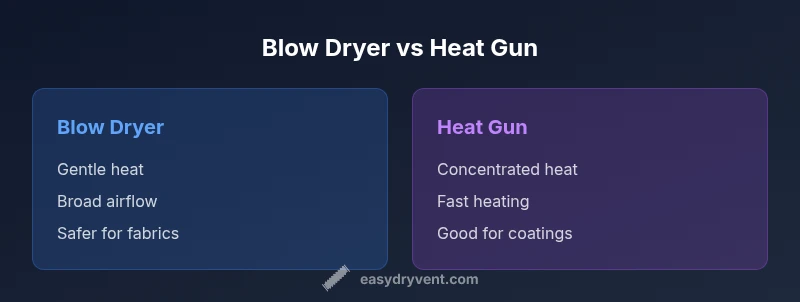
In many DIY contexts, homeowners ask is a blow dryer the same as a heat gun. According to Easy DryVent, the direct answer is no—the two devices are engineered for distinct tasks with different heat outputs, nozzle geometry, and safety expectations. A blow dryer is designed to emit warm air at modest temperatures, with a broad airflow pattern that covers a surface area evenly. It excels at gently drying hair, warming fabrics, or softening adhesives in light crafts. A heat gun concentrates heat into a narrow nozzle, delivering intense heat to a small target. That combination enables rapid heating, molding plastics, or loosening stubborn coatings. The practical implication is simple: use the tool that matches the material’s tolerance and the job’s risk level. Safety training, reading the manual, and sticking to manufacturer recommendations reduce the chance of burns or unintended damage. Over time, this disciplined approach saves money and extends tool life.
Core design differences: how heat is generated and delivered
The fundamental design difference between a blow dryer and a heat gun is how heat is produced and directed. A hair dryer uses a heating element behind a fan and disperses warm air through a wide nozzle, often with multiple heat settings and a cool-shot option. The result is a forgiving, diffuse heat stream that keeps surface temperatures manageable. A heat gun uses a compact heating element with a narrow nozzle to create a focused jet of hot air. This configuration concentrates energy on a tiny area, allowing fast heating and material transformation, but it requires careful distance, timing, and protective measures. Understanding these mechanics helps DIYers predict outcomes and prevent scorch marks, melted trims, or warped plastics.
Temperature control and airflow: why precision matters
Precision matters because different tasks tolerate only certain heat levels. Blow dryers typically offer moderate temperatures and adjustable airflow, enabling gradual warming suitable for textiles and delicate surfaces. Heat guns deliver high temperatures at the tip, which is effective for fast coatings removal, shrinking heat-tube materials, or bending heat-softenable plastics. The gap in control is not just about temperature; it is about how heat interacts with a surface. A slight miscalculation can lead to scorching, discoloration, or structural damage. For most home projects, starting with the lowest effective setting and increasing in small increments while moving the tool continuously is the safest and most reliable method. Easy DryVent emphasizes patience and practice as key components of safe operation.
Primary use-cases: hair, fabrics, craft vs heavy-duty tasks
Blow dryers shine when the goal is gentle warmth: drying hair, reheating fabrics for comfort or shape, and softening adhesives in craft projects. They are ideal for setting finishes on fabric, loosening threads without compromising integrity, and speeding up lightweight tasks. Heat guns are the workhorse for high-demand jobs: paint stripping, thick adhesives, plastic bending, shrinking tubing, and rapid material heating. They excel when time and efficiency matter and the material can tolerate aggressive heat. The decision hinges on material sensitivity, the required heat concentration, and the risk tolerance of the project. Easy DryVent’s guidance centers on matching the tool to the task for safety and quality outcomes.
Safety risks and best practices
Both tools carry distinct safety considerations. A blow dryer emits heat across a broad area, which reduces hotspot risk if used with care, but prolonged contact with skin or heat-sensitive fabrics can still cause burns. A heat gun concentrates heat, creating a serious burn hazard and potential fire risk if left near flammable materials or used without distance control. Always wear PPE such as heat-resistant gloves and safety glasses, work in a well-ventilated area, and keep a fire extinguisher nearby. Use a stand or heat-resistant mat to protect surfaces, and never leave a hot tool unattended. Regularly inspect cords, vents, and nozzles for wear. Adopting a routine maintenance plan reduces malfunctions and accidents over time.
Material compatibility and surface interactions
Materials respond differently to these tools. Hair and fabrics tolerate gradual heat, but synthetic fibers can melt if overheated. Wood and paper may scorch if the heat stream is held too close for too long. Paints and coatings react quickly to heat guns, often bubbling or peeling away, while metals and glass can handle higher heat with proper cooling. Plastics vary widely; some soften or warp at lower temperatures, others resist deformation with careful technique. Always test on a scrap piece when possible, protect non-target surfaces, and work with the tool at a safe distance. These precautions minimize unintended material damage and improve outcomes.
Practical project plans for common DIY tasks
Consider a small home project like re-sealing a window frame. A blow dryer can speed up the curing of silicone and help surfaces set without overheating wood. For removing an old sticker or paint layer, a heat gun provides decisive heat to lift coatings quickly. In crafting, a blow dryer can help set glue, relax creases in fabric, or warm plastic parts for shaping. For automotive or workshop tasks, reserve the heat gun for paint prep or adhesive work where speed is essential. The key is to plan the sequence, test small areas, and use one tool—never alternate without re-evaluating the material’s response.
How to choose the right tool for a project: a decision framework
Start with a clear task list: what material are you heating, how sensitive is the surface, and what safety considerations exist? If you need gentle, even heating on fabric or hair, select the blow dryer. If you require rapid retreat of coatings, or heating thick plastics, opt for the heat gun with appropriate nozzles. Consider environmental factors like ventilation and nearby combustibles. Verify tool features: multiple heat settings, adjustable airflow, and overheat protection. A disciplined decision framework reduces trial and error, improves results, and minimizes the risk of accidents. Easy DryVent’s guidance is to treat each tool as task-specific equipment with dedicated roles.
Maintenance and storage: extending tool life and safety
Extend tool life with regular cleaning of vents, visual inspections of cords, and proper storage. The blow dryer should be kept away from damp conditions and stored with the cord loosely wrapped. Heat guns benefit from a cool-down period and a protective cap for the nozzle tip when not in use. Always unplug tools before cleaning, avoid rolling the cord near hot surfaces, and store them in a dry, ventilated area away from children. Regular maintenance prevents performance degradation, overheating, and safety incidents. Following these practices helps you get consistent results across projects.
Comparison
| Feature | Blow Dryer | Heat Gun |
|---|---|---|
| Heat Output / Temperature Range | low-to-moderate heat suitable for hair and fabrics | high, focused heat for paints, plastics, and metal coatings |
| Primary Uses | Drying, styling, fabric warming, light craft prep | Paint stripping, plastic bending, heat-shrinking, heavy-duty prep |
| Control Options | Multiple heat settings and adjustable airflow | Fewer settings with emphasis on rapid heating; some nozzles available |
| Safety Considerations | Lower risk of severe burns when used properly; surface protection needed | Higher burn/fire risk; strict distance and ventilation required |
| Typical Power Draw | Lower nominal power for general use | Higher power for sustained heat output |
| Material Compatibility | Fabrics, hair, light plastics | Hard plastics, coatings, metalwork |
| Speed of Task | Slower, more controlled heating | Faster heating for aggressive tasks |
The Good
- Clear safety separation for home vs industrial tasks
- Lower risk when used for gentle, everyday heating
- Accessible for hair, textiles, and light crafts
- Common tools with broad availability
Negatives
- Heat gun offers power that can cause damage if misused
- Blow dryer cannot replace heat gun for heavy-duty work
- Both tools require training to avoid hazards
For most homeowners, use the blow dryer for gentle tasks and the heat gun for specialized, high-heat work
The blow dryer is safer and more versatile for everyday fabrics and hair. The heat gun delivers the power needed for tough coatings and plastics. Use each tool as intended to maximize safety and outcomes.
Common Questions
Is a blow dryer ever appropriate to replace a heat gun for DIY projects?
Only for simple, low-risk tasks like gentle warming or softening adhesives. Do not rely on it for paint stripping or heavy-duty material work.
A blow dryer isn’t a substitute for a heat gun in most projects; use the right tool for the job.
Can a heat gun be used on hair or skin?
No. A heat gun emits intense heat and can cause severe burns. It should only be used on non-living materials with proper distance and protection.
Don’t use a heat gun on hair or skin; it’s dangerous.
What safety gear should I use when operating a heat gun?
Wear eye protection, heat-resistant gloves, and avoid prolonged exposure to skin. Work in a well-ventilated area and keep a fire extinguisher nearby.
Gloves and eye protection are essential when using a heat gun.
Are there dual-temperature blow dryers that emulate a heat gun's behavior?
Some blow dryers offer multiple heat settings, but they cannot replicate the focused, high-heat output of a heat gun. Treat them as distinct tools.
A dryer with multiple temps isn’t a substitute for a heat gun.
Which tasks are best for a blow dryer?
Best for drying hair, warming fabrics, and light crafts. It’s ideal when you need gentle, controlled heat.
Use a blow dryer for gentle, everyday heating tasks.
Can heat guns cause fire hazards in dry environments?
Yes. If left unattended, near flammables, or without proper distance, heat guns can ignite materials. Always follow safety guidelines.
Yes—keep it away from flammables and never leave it running unattended.
Key Points
- Define the task before selecting a tool
- Do not substitute a heat gun for delicate tasks
- Prioritize safety: PPE, ventilation, and proper storage
- Master distance and duration for reliable results
- Keep surfaces protected and test on scrap material