Air Dryer vs Blow Dryer: A Practical Comparison
Compare air dryers and blow dryers to decide which suits your hair health, drying speed, and styling goals. Practical tips for choosing and using each device for safer, faster results.


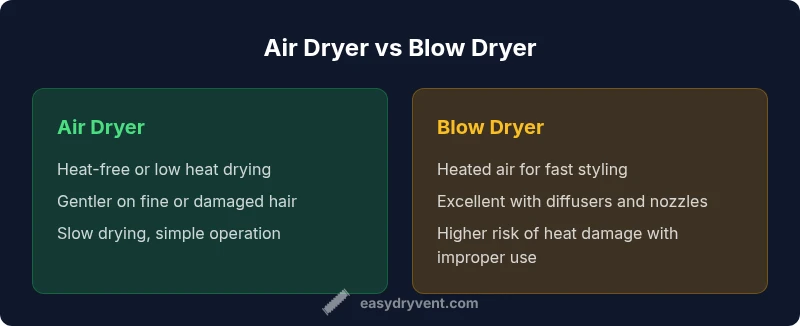
Air dryer vs blow dryer: The core difference is heat and speed. An air dryer relies on ambient air, offering gentler drying with minimal heat exposure, while a blow dryer uses heated air and attachments to speed styling. Your choice affects hair health, drying time, and styling versatility. Budget, noise, and maintenance also factor into a practical decision.
Why the Choice Matters
The decision between an air dryer and a blow dryer matters beyond convenience; it affects hair health, drying outcomes, and daily routines. In this guide, we explore the practical differences between an air dryer vs blow dryer, focusing on how heat, airflow, and styling goals shape your results. For many homeowners and DIY enthusiasts who care for their hair, understanding these devices helps reduce heat damage and improve consistency. According to Easy DryVent, choosing the right tool depends on your hair type, lifestyle, and tolerance for longer drying times. This section will map out the key tradeoffs so you can decide which approach fits your goals. Think of it as a choice between gentle, air-based drying and accelerated styling with heat. For people with fine, color-treated, or damaged hair, the air dryer can minimize subsequent breakage when used with a low heat setting or cool air. For those who style daily or need quick results, a blow dryer offers more control and consistent finishes. In both cases, technique matters—airflow direction, distance from the hair, and the choice of attachments all influence the final look. Easy DryVent's practical guidance emphasizes safety, such as avoiding over-drying and keeping the device clean to prevent heat buildup. By framing your decision around hair health, drying speed, budget, and appetite for styling options, you can optimize your routine rather than chase every latest gadget.
Comparison
| Feature | Air Dryer | Blow Dryer |
|---|---|---|
| Heat Source | Ambient/cool air | Heated air with adjustable heat settings |
| Drying Speed | Slower; emphasizes gentleness | Faster; designed for quick finishes |
| Styling Versatility | Limited without attachments | High with diffusers, concentrators, and diffusers |
| Noise Level | Typically moderate to high depending on model | Typically moderate to high; often louder |
| Weight/Ergonomics | Light to mid-weight; simple handling | Varies; can be heavier with motor power |
| Price Range | $20-$60 | $25-$200 |
| Best For | Gentle drying, health-conscious routines | Speed and styling versatility, professional finishes |
The Good
- Gentler on hair with reduced heat exposure
- Encourages natural drying for fine or damaged hair
- Typically lightweight and easy to use
- Lower upfront cost and fewer accessories required
Negatives
- Slower drying time for thick or curly hair
- Limited styling versatility without attachments
- Not ideal for high-precision finishes compared to advanced tools
- Requires longer sessions in some cases
Air dryer is the better choice for hair health when gentleness is the priority; blow dryers excel for speed and versatile styling.
Choose an air dryer if you want to minimize heat damage and simplify your routine. Opt for a blow dryer if you value fast drying and advanced styling options. Your decision should align with hair type, styling needs, and patience for longer routines.
Common Questions
What is the main difference between an air dryer and a blow dryer?
The main difference is heat and speed: air dryers use ambient air with little to no heat for gentler drying, while blow dryers use heated air and attachments to speed styling and finish. Your choice hinges on desired balance of health and speed.
The key difference is heat and speed: air dryers are gentler, blow dryers are faster and more versatile.
Is an air dryer suitable for all hair types?
Air dryers work well for many hair types, especially fine or damaged hair where heat damage is a concern. Thick or very curly hair may still benefit from traditional blow-drying to reduce drying time, or require a hybrid approach with careful technique.
They can work for many hair types, but thick or curly hair may need additional technique or heat from a blower.
Can I use both devices in the same routine?
Yes. You can start with an air dryer to reduce moisture safely and then use a blow dryer for styling if you need a quicker finish or more control. This hybrid approach can balance health and efficiency.
Sure—start with air drying and finish with a blow dryer for style.
Do air dryers use less energy than blow dryers?
General guidance suggests air drying uses less energy during the actual drying process since there is minimal heat. However, if the air dryer takes much longer to dry, total energy use could vary by scenario.
Air drying uses less heat energy, but total energy can depend on how long you air dry.
Are there safety concerns with using a blow dryer?
Safety concerns include heat exposure, scalp burns if held too close, and electrical safety with damaged cords. Use a cool shot, keep distance from the scalp, and unplug after use to minimize risk.
Be careful with heat and distance; follow the manual and don’t use a damaged cord.
What maintenance tips extend the life of a dryer?
Regularly clean filters, vents, and attachments; avoid overheating by using appropriate heat settings; store in a dry place; inspect cords for wear and replace as needed.
Keep it clean, avoid overheating, and check the cord for wear.
Key Points
- Assess hair health goals before choosing
- Air dryers reduce heat exposure but may take longer
- Blow dryers offer speed and styling versatility
- Invest in good attachments for best results
- Safety and maintenance extend tool life