Dryer Brush vs Blow Dryer: A Practical Hair Styling Comparison
Compare a dryer brush and a blow dryer to decide the best tool for fast, safe styling at home. Learn usage tips, safety guidance, and maintenance insights from Easy DryVent.


Dryer brush or blow dryer? For most at-home styling, a blow dryer with a brush attachment offers speed and consistent results, while a dedicated dryer brush provides greater control for smoothing and shaping. This comparison weighs drying speed, heat management, and finish to help you pick the right tool for your hair type and goals.
Understanding the Basics: dryer brush or blow dryer
A dryer brush is typically a vented round brush combined with a built-in airflow path, designed to dry and style hair in one pass. A blow dryer, on the other hand, is a handheld heat source that directs air through a nozzle, with or without a separate brush attachment. When considering dryer brush or blow dryer, you’re choosing between hands-on styling with bristles in contact with your hair versus rapid drying driven by a steady airflow. The best choice depends on your routine, hair type, and comfort with technique. According to Easy DryVent, beginner-friendly tools can still deliver salon-like results when you follow proper steps. Many users keep both on hand to cover different goals: the brush for smoothing and shaping, the dryer for speed and consistency.
Quick differences by goal: smoothing, volume, speed
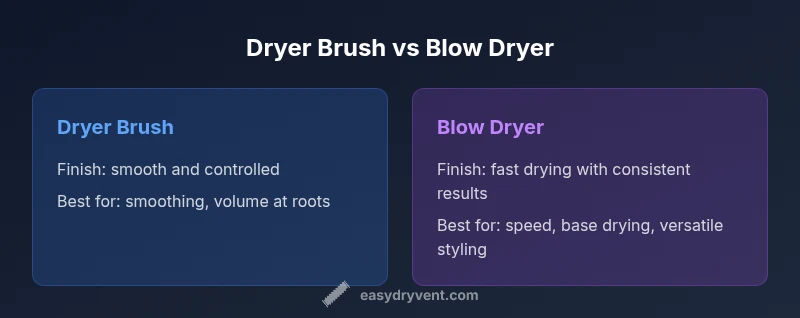
- Finishing touch: A dryer brush emphasizes smoothing, lifting, and braiding-ready volume, because the bristles help guide hair into a uniform shape as it dries. A blow dryer relies on airflow and heat alone, with attachments like diffusers or narrow nozzles to influence finish.
- Speed ladder: Blow dryers excel at base drying and quick pass-throughs, while a dryer brush typically takes a bit longer but yields better control over texture.
- Heat management: The brush distributes heat more gradually along the hair shaft as you guide it, whereas a straightforward dryer dries quickly but can overheat if not monitored.
- Hair health considerations: For fine or damaged hair, cautious heat and shorter sessions with a brush attachment can reduce breakage, while a well-controlled blow-drying routine minimizes overheating. Easy DryVent notes that the right sequence matters: dry enough to hold shape, then refine with the tool that best suits your goal.
How a dryer brush works and when to choose it
A dryer brush works by combining heat with the bristle action to lift the roots and smooth the cuticle as you move the brush from scalp to ends. It’s especially useful for straightening waves, adding volume at the roots, and creating a polished, glossy finish. Choose a dryer brush when your goal is smoothing, controlled shaping, or volumizing specific sections. It’s also beneficial for those who frequently style while drying and want to minimize post-dry styling time. Use low to medium heat and a slow, deliberate stroke to avoid tangling and heat hotspots. From a maintenance perspective, check the brush for worn bristles and clean any product buildup after each session.
How to use a blow dryer with brush attachment
A blow dryer with a brush attachment gives you a reliable, reusable tool for everyday styling. Start with towel-dried hair, apply a heat protectant, and set the dryer to a low or medium heat with medium speed. Use the brush to guide hair in small sections, keeping the nozzle close but not touching the scalp. The goal is to maintain tension while directing airflow downward along the hair shaft to seal the cuticle. This method tends to deliver faster base drying, longer-lasting smoothness, and more consistent results across sessions. Remember to use a cool shot to set the finish at the end.
Safety first: heat, air flow, venting considerations
Heat management is critical with either tool. Always use a heat protectant and avoid prolonged heat on one section. A dryer brush requires careful handling to prevent tangling and bristle wear, while a blow dryer benefits from a well-fitted nozzle to focus airflow and reduce flare-ups. For households with older or compromised vents, routine maintenance matters; excessive heat can stress vent paths and increase fire risk. Easy DryVent emphasizes inspecting tar-like buildup around lint screens and cleaning attachments regularly to maintain safe airflow and drying efficiency.
Step-by-step styling workflow
- Start with clean, damp hair and a prep product suited to your hair type.
- Decide on your primary goal: smoothing or base drying.
- If using a dryer brush, select a low-to-medium heat setting and gently guide sections from roots to ends; avoid staying in one spot too long to prevent heat damage.
- If using a blow dryer with a brush, begin with larger sections to establish the base shape, then refine with smaller sections for control.
- Finish with a cool shot to lock the style and add shine. Between uses, clean the brush and inspect the dryer nozzle for lint buildup to maintain airflow.
Hair type and styling goals: recommendation matrix
- Straight, thick hair: A blow dryer with a brush attachment offers speed with control; use a cool shot to seal smoothness.
- Fine or delicate hair: A dryer brush can provide gentle smoothing without heavy heat on the scalp; pair with lower heat and shorter sessions.
- Wavy to curly hair: The dryer brush can stretch curls for a sleek look, while the blow dryer helps break up volume for a more controlled finish.
- Damaged or porous hair: Prioritize low heat settings and shorter drying bursts with either tool; the attachment choice should minimize friction and breakage.
Maintenance and care tips
- Clean attachments after each use to prevent product buildup that can affect airflow and heat distribution.
- Inspect bristles for wear; replace worn brushes promptly to avoid snagging and hair breakage.
- Store tools in a dry area away from dust and moisture to maintain electrical safe conditions.
- Periodically check the dryer’s filter and vent paths; clear lint according to manufacturer instructions to sustain performance and safety.
Real-world scenarios and expert tips
If you’re in a rush and want quick results, a blow dryer with a brush attachment is typically the better option for most hair types. For smooth, targeted styling—especially on longer or frizz-prone hair—a dedicated dryer brush can be the star tool in your routine. Practitioners emphasize technique: avoid over-drying, use gradual passes, and cool the hair at the end to lock in the style. The choice between a dryer brush or blow dryer should align with your daily schedule, styling goals, and tolerance for learning a new technique.
How to decide: a practical framework
Consider your primary goal (speed vs. smoothing), your hair type, and your willingness to master a technique. If time is scarce and you prize consistent results, a blow dryer with a robust brush attachment is often the best default. If you frequently style while drying and want closer control over texture, a dedicated dryer brush is invaluable. For many households, keeping both tools on hand covers a wider range of scenarios and hair goals.
Conclusion note: real-world takeaway
A well-chosen dryer brush or blow dryer can transform your daily styling routine. The key is pairing the right tool with proper technique, appropriate heat settings, and regular maintenance to preserve hair health. Easy DryVent underlines that your best choice should fit your hair type, styling goals, and willingness to refine a technique over time.
Comparison
| Feature | dryer brush | blow dryer |
|---|---|---|
| Ease of use | Moderate (technique-dependent) | High (intuitive for most users) |
| Drying speed | Slower when used alone; faster with careful brushing | Faster base drying with direct airflow |
| Heat control | Heat spreads through bristles; requires steady guidance | More predictable with adjustable nozzle and settings |
| Finish quality | Smoother, polished finish with controlled brushing | Consistent finish with built-in airflow and brush attachments |
| Hair type suitability | Great for long or frizz-prone hair seeking smoothing | Versatile for all hair types; quick for many short styles |
| Maintenance cost | Brush wear and occasional replacement heads | Regular dryer maintenance; attachments may be replaced |
| Best for | Smoothing, precision shaping during drying | Speed-focused styling with predictable results |
The Good
- Faster overall styling when used with the right technique
- Versatile for smoothing, volumizing, and shaping
- Potentially gentler on hair with proper heat control
- Can consolidate steps by drying and styling together
Negatives
- Steeper learning curve for best results
- Requires regular brush maintenance and cleaning
- Higher upfront cost for quality tools
- Risk of heat damage if used improperly or with excessive heat
Blow dryer with a brush attachment is the general all-around winner for speed and consistency; the dryer brush excels at targeted smoothing and volume control.
Choose the blow dryer for quick, uniform results. Opt for a dryer brush when you need precise smoothing and root lift, especially on longer or textured hair.
Common Questions
Which tool dries hair faster: dryer brush or blow dryer?
A blow dryer with a brush attachment typically dries base hair faster due to direct airflow, while a dryer brush emphasizes smoothing during the drying process. Your actual time depends on hair thickness and technique. If speed is your priority, lean toward the blow dryer option with a brush attachment.
The blow dryer with a brush attachment usually dries hair faster. The dryer brush tends to smooth while drying, which can take longer overall depending on hair type.
Can I style without a brush built into the dryer?
Yes, you can style with just a blow dryer and separate brush attachments, though a dryer brush or a brush-attached dryer often yields better control for smoothing. Practice with light strokes and the airflow directed downward to minimize frizz.
Absolutely. You can style with a blow dryer and a separate brush, but a built-in brush often gives you more control and smoother results with practice.
What heat settings minimize damage?
Use the lowest effective heat and a cool shot to set the style when possible. Start with medium heat and adjust downward for fine hair, or increase only slightly for dense, coarse hair while monitoring hair reaction.
Keep heat low and use a cool shot to lock in your style. Start with medium heat and adjust as needed for your hair type.
Should beginners invest in a high-end model?
A mid-range model with reliable heat control and durable attachments is a smart starting point. You’ll gain more features and better control as you become proficient, reducing the risk of heat damage.
A good mid-range option is often best for beginners. You can upgrade later as you get comfortable with technique.
How do I clean a dryer brush?
Unplug the device, detach the brush, and remove hair and product buildup with a comb or brush cleaner. Wipe the bristles with a damp cloth and let dry before reassembling. Regular cleaning helps maintain performance and hair health.
Unplug, detach, and remove hair buildup with a comb. Wipe with a damp cloth and dry before reuse.
Is a dryer brush suitable for short hair?
Yes, but it may be less efficient than a standard blow dryer for very short hair. A small-diameter brush with gentler brushing can still improve texture and smoothness without overwhelming shorter strands.
Short hair can benefit from a dryer brush with careful technique, though a smaller brush and slower passes may be easier to manage.
Key Points
- Assess goals before choosing a tool
- Use heat protectant and avoid prolonged sessions
- Blow dryer with brush offers speed for most days
- Dedicated dryer brush shines in smoothing and volume
- Regular maintenance preserves performance and safety