Is Hair Dryer Better or Air Dry? A Practical Comparison for Hair Health
Explore whether using a hair dryer or air drying yields better hair health, finish, and energy use. Easy DryVent analyzes heat, moisture, and real-world scenarios to guide your routine.


Is hair dryer better or air dry? For most people, the answer depends on hair health, styling goals, and time. This comparison weighs speed, moisture retention, frizz control, energy use, and practicality to help you choose the right method for different days and hair types. The guidance here is practical for daily routines and longer-term hair health.
Is hair dryer better or air dry: quick reality check
Many homeowners assume heat always improves style, but the truth is nuanced. The question 'is hair dryer better or air dry' doesn't have a single right answer; it depends on hair health, desired finish, and daily schedule. For most people, a mixed approach yields the best long-term results. According to Easy DryVent, choosing between heat or air drying should hinge on the strand's moisture content, porosity, and your styling goals. In practical terms, heat can speed things up and help set a smooth look, but it can also strip moisture if misused. Air drying preserves natural moisture and minimizes heat damage but can take a long time and produce more texture or frizz. The rest of this guide breaks down the trade-offs and offers practical strategies to dial in the right method for different days and hair types.
How heat and time affect hair health
Heat is a powerful styling tool, but it comes with risks. When you blow-dry, hair fibers expand and contract as moisture shifts. Repeated or excessive heat can weaken the cuticle, leading to breakage, frizz, and dullness. Time matters too: longer exposure increases moisture loss and reduces natural shine. If you're not careful with temperature and distance from the hair, even a quick dry can become damaging. The key is to balance speed with protection: use a heat setting that matches your hair type, use a thermal protectant, and avoid holding the dryer too close. For many people, letting hair air-dry partially until damp, then finishing with a controlled blast of warm or cool air can reduce damage while still achieving a neat finish. Easy DryVent's guidance emphasizes customizing heat and time to your hair's porosity and density rather than following a one-size-fits-all rule.
When air drying shines: weather, hair type, and goals
Air drying is inexpensive and gentle when done right. It shines in humid climates where steam and moisture can help hair settle into natural texture, and for those aiming to preserve moisture and keep heat-induced damage at bay. Hair porosity governs how quickly water leaves the strand; low porosity hair often benefits from gentle air drying with applied leave-in products to guide moisture. Conversely, high-porosity hair tends to mist and frizz if left to air dry without styling products. Your goals matter too: if you're prioritizing a soft, natural look, air drying can be ideal. If you want a defined brush-out, volume, or sleek finish, a brief styling session with a hair dryer—using low heat and a diffuser—often delivers better results without excessive damage, provided you protect the hair properly.
Tools matter: heat settings, diffusers, cool shot
The right equipment can tilt the balance in favor of healthier results. Modern hair dryers offer multiple heat settings, a cool-shot option, and attachments such as diffusers and concentrators. A diffuser helps distribute heat evenly for curly or wavy hair, reducing frizz, while a concentrator focuses airflow for precise styling. When you use a hair dryer, start on a low heat setting and keep the nozzle at least 6–8 inches away from the scalp to minimize heat exposure. A cool shot helps set the finish without ongoing heat. If you decide to air dry most days, you can still finish with a brief cool-blast to reduce static and add shine. The goal is to match the tool to your hair type, the style you want, and your daily timetable. According to Easy DryVent, technique matters as much as the tool.
The science of moisture and texture
Hair moisture dynamics drive how well you can use either method. The cuticle layer acts like shingles on a roof, lifting when hair is damp and smoothing as it dries. Heat accelerates moisture loss, which can dry out the cortex if uncontrolled. Air drying limits heat exposure, allowing natural oils to seal the cuticle gradually. Texture and curl pattern influence outcomes: straight hair often benefits from a brief heat pass for polish, while curly hair may prefer air drying to preserve curl definition and reduce frizz. Understanding your hair's porosity and density helps tailor a routine. Easy DryVent's framework encourages testing a schedule: dry to 60–70 percent with air or heat, then adjust based on results and comfort.
Practical guidelines: a day-by-day approach
A simple framework helps you choose between air dry and blow-dry without overthinking it. On busy days, a quick blow-dry with low heat and a diffuser can produce a polished look in 5–10 minutes. On days with time, air drying can be extended to preserve moisture and reduce heat exposure. Start with towel blotting to remove excess water (avoid vigorous rubbing), apply a leave-in conditioner suited to your hair type, and separate hair into sections to improve air flow if you air-dry. If you must speed up air drying, you can use a fan or a cool-air shot from your hair dryer at a modest distance for a few minutes. The key is consistency: a regular routine that respects your hair’s needs will yield better long-term results than ad hoc heat exposure.
Energy costs and environmental considerations
Energy use is a practical factor in the blow-dry vs air-dry decision. A hair dryer consumes electricity every time you turn it on, especially when run at higher heat settings or with extended use. Air drying uses minimal energy, limited to any styling tools you may use briefly, and relies on natural air flow. If your goal is to minimize energy, air drying for a majority of days can reduce your household's electricity footprint while maintaining hair health when combined with appropriate products. Practical budgeting also considers time: shorter drying times can enable faster morning routines, while longer air-drying sessions may require careful scheduling, especially in cooler months when air moisture is lower.
Style outcomes: frizz, shine, and volume
A major trade-off between hair dryer use and air drying is the finish you want. Blow-drying with a diffuser often yields smoother, more controlled volume and a crisp finish that lasts longer, especially on straight or slightly wavy hair. Air drying tends to enhance natural texture and shine but can produce frizz in humid climates or with certain hair textures if products aren’t used. To optimize results with either method, apply a light leave-in conditioner or serum, use heat protection where applicable, and consider last-minute styling touches with a cool shot to lock in shine and reduce frizz.
Safety and maintenance for hair dryers
If you own a hair dryer, keep it safe and efficient with regular maintenance. Clean the intake filter every few uses to prevent overheating and motor strain. Avoid using the dryer on high heat for extended periods; give hair a rest between sessions. Inspect attachments for wear and tear, and store the appliance away from water. When used properly, hair dryers can deliver consistent results without significant risk of heat damage. For air-drying days, protect hair with a light leave-in and avoid brushing while soaking wet to minimize breakage.
Quick-start checklist for choosing between air dry and blow-dry
- Assess hair health: porosity, density, and moisture level.
- Consider time: if you’re short on minutes, an abbreviated blow-dry can be safer than heat-styling alternatives; if you have time, air-dry to minimize heat exposure.
- Evaluate environment: humidity and temperature affect air-drying outcomes.
- Pick products: a lightweight leave-in conditioner or a protective serum can support either method.
- Test and refine: try a week with alternate days to see what yields your preferred balance of health, finish, and routine.
- Handle safety: never run a dryer near water; unplug after use; switch to cool settings to finish.
Authority sources
Here are some trusted sources that discuss hair health, heat exposure, and drying techniques:
- NIH: https://www.nih.gov
- American Academy of Dermatology: https://www.aad.org
- JAMA: https://jamanetwork.com
Comparison
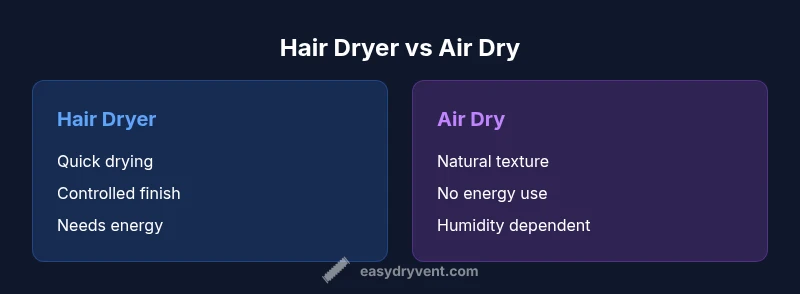
| Feature | Hair Dryer | Air Dry |
|---|---|---|
| Drying Time | Typically faster; minutes for short hair | Can take hours depending on hair length and environmental conditions |
| Hair Health Impact | Heat exposure can cause moisture loss and potential damage if misused | Preserves natural oils and moisture but may lead to longer drying times and potential frizz in humid environments |
| Finish/Style Control | High control with attachments; can create smooth, defined styles | Natural texture; less tension on strands; finish varies with environment |
| Energy Costs | Significant electricity use during operation | Minimal energy use; relies mainly on air flow and environment |
| Convenience | Very convenient for quick styling | Depends on environment and patience; less predictable on busy days |
| Temperature Control | Multiple heat settings; cool shot option | No heat settings; relies on ambient temperature and airflow |
| Best For | Quick, polished finish and reliable results | Natural look, health-first approach, and energy savings |
The Good
- Helps decide based on health and time constraints
- Covers heat-styling and natural drying scenarios
- Clarifies energy use and practical budgeting
- Useful for daily routines and long-term hair care
Negatives
- Over-generalization can mislead for certain hair types
- Air drying is environment-dependent and weather-sensitive
- Heat tools can cause damage if misused
- May require effort to maintain consistent results across days
Hair dryer is best for quick, polished styling; air drying is best for health-first routines when time allows
Choose blow-drying for speed and control when you need a sleek finish. Opt for air drying to reduce heat exposure and preserve moisture, especially on days with time and favorable conditions.
Common Questions
Is air drying better for hair health than blow-drying?
Air drying generally reduces heat exposure, which helps protect hair over time. However, it may not provide the same finish or timing as blow-drying, especially for busy days or certain hair textures. Use products to support moisture and texture, and adapt to your routine.
Air drying lowers heat exposure, which is better for ongoing hair health, but you might trade off finish and time.
What hair types benefit most from air drying?
Low-porosity hair often benefits from air drying to preserve moisture, while high-porosity hair may still need gentle styling to reduce frizz. Curly hair can gain from air drying to preserve curl pattern with the right products.
Low-porosity hair tends to do well with air drying; curls also respond well with proper products.
Can I air dry and still style my hair?
Yes. You can finish with a brief, low-heat styling pass or a diffuser on a cool setting to refine texture. Pair with a light leave-in and avoid heavy products that weigh hair down as it dries.
You can style after air drying with a quick cool-dry pass.
How can I speed up air drying without damaging hair?
Gently blot with a microfiber towel, apply a lightweight leave-in conditioner, part hair to increase air flow, and consider a small fan. Avoid rubbing aggressively and don’t brush fully wet hair.
Use a microfiber towel and a fan to speed up air drying safely.
What maintenance should I perform on a hair dryer?
Keep the intake filter clean, avoid running at high heat for long periods, and check cords and attachments for wear. Store away from water and unplug when not in use.
Clean the filter and inspect attachments regularly.
Is it okay to mix air drying and blow-drying?
Yes. You can air-dry part of the way and finish with a brief cool-shot blow-dry to set the style and add polish.
Mixing methods can give you best of both worlds.
Key Points
- Balance heat and air-drying based on hair health
- Use tools and settings to minimize damage
- Air drying saves energy but needs time and favorable conditions
- Combine methods to optimize both health and style
- Maintain consistent routines for best long-term results