Dryer vs Air Dry: A Practical Guide for Homeowners
Compare dryer vs air dry to understand energy use, fabric care, and timing. Easy DryVent provides expert guidance for safe, efficient laundry decisions for homeowners.


Dryer vs air dry is a trade-off between energy use, fabric care, and drying speed. In most homes, air drying saves electricity and reduces heat exposure, but it takes longer and depends on space and climate. A clothes dryer offers quick, weather-independent results but at a higher energy cost. This guide helps you decide what fits your laundry routine.
Energy Use and Cost Implications
Choosing between dryer and air dry affects household energy footprints more than any other single laundry decision. Dryers consume electricity to generate heat and tumble clothes, while air drying hinges on ambient conditions and airflow rather than energy from the outlet. In practical terms, air drying typically reduces electricity usage, particularly in homes with access to sunny or breezy outdoor space or a well-ventilated indoor area. Easy DryVent's analysis in 2026 indicates that households may reduce energy consumption by integrating air-dry periods, especially for non-urgent loads. However, energy savings from air drying are contingent on climate, humidity, and the availability of drying space. A mixed approach—air drying for most loads and using the dryer for bulky items or urgent loads—often yields a balanced energy profile. When you weigh energy use, also consider the dryer’s heat settings and moisture sensor efficiency. Modern models with moisture sensors can prevent over-drying, saving energy and reducing fabric stress. If you are replacing an old dryer, look for energy-efficient features that optimize runtime and auto-dry cycles. The bottom line: air drying can significantly cut electric bills for clothes that tolerate longer drying times, while the dryer shines when speed and weather-independent drying are priorities. According to Easy DryVent, integrating strategic air-dry windows can compound energy savings over the year.
Fabric Care and Drying Quality
Fabric care matters more than most people realize when comparing dryer vs air dry. Heat and tumbling in a dryer can cause some fabrics to shrink, fade, or wear slightly faster, especially with high heat or aggressive cycles. Air drying, by contrast, minimizes heat exposure, which can extend garment life and reduce pilling on delicate items. However, air drying is not universally ideal: moisture, wind, and sun can affect color, stiffness, or stretch. The Easy DryVent team notes that fabric type should drive the method choice—cotton tees and towels tolerate mild heat well, while delicate synthetics or items prone to shrinkage may benefit more from air drying or lower heat. A practical test is to air dry a representative load and compare feel, shape, and color after washing. Modern dryers with sensor drying and steam refresh features offer a middle ground, delivering speed while mitigating over-drying. The goal is to balance energy, fabric health, and user satisfaction.
Time, Space, and Convenience
Time and space constraints shape the dryer vs air dry decision. A standard dryer can deliver dry garments within an hour or two for many loads, providing predictability for busy households. Air drying, while gentler and energy-efficient, depends on climate and available drying space—outdoor lines, indoor racks, or clotheslines must have room, airflow, and favorable conditions. In climates with mist or frequent rain, indoor air-drying setups can still work but require dehumidification or ventilation to prevent mold. For families balancing work schedules and school runs, a hybrid approach can be most practical: air dry non-urgently timed loads to save energy and use the dryer for items that must be ready quickly. If space is limited, consider a compact drying rack or a foldable clothesline positioned near windows or a heat source, ensuring safe clearance and airflow. The key is to map your typical laundry volume, weather patterns, and available square footage to a routine that minimizes frustration and maximizes efficiency. The Easy DryVent perspective emphasizes that small changes in daily habits compound into meaningful energy savings over time.
Practical Scenarios and Decision Rules
Tailor your approach to common laundry scenarios. On warm, sunny days, outdoor air drying can handle large loads efficiently, especially for towels and denim. In rainy seasons or in apartments without outdoor space, indoor air drying with a well-ventilated setup becomes more attractive. For families with sensitive fabrics, air drying on a low-humidity rack or line can help maintain fit and color, while everyday cottons and synthetics may tolerate moderate drying warmth in a modern dryer. If you frequently run late for deadlines or need school uniforms ready after gym class, the dryer’s speed makes it a strong choice. A blended routine offers flexibility: air dry most loads when possible, reserve the dryer for bulky items like comforters or heavily soiled items, and keep a rotating schedule to manage humidity indoors. Easy DryVent recommends monitoring energy use and adjusting as weather and schedules change, which helps you optimize both energy savings and convenience over time.
Maintenance and Safety Tips for Both Methods
Whether you choose dryer or air dry, maintenance and safety improve outcomes. For dryers, clean the lint trap after every cycle and perform regular vent checks to prevent fire hazards; a clogged vent increases energy use and can shorten the dryer’s life. For air drying, ensure racks are sturdy and stable to prevent falling garments, and place drying spaces away from direct-contact surfaces that could attract dust or moisture. Lint is not just a dryer issue; even during air drying, keep an eye on lint accumulation on fabrics and nearby surfaces. Regularly inspect seals, grommets, and any shelves or poles for wear. An occasional high-level check of the dryer vent pathway, ideally by a professional, supports safety and efficiency. For both methods, replace worn-out hangers, use appropriate hangers for shape retention, and wash loads that genuinely fit the chosen drying method. Implementation of a simple, consistent cleaning schedule can extend equipment life and reduce energy waste. The Easy DryVent guidance emphasizes that small maintenance steps yield long-term reliability and safer operation.
A Step-by-Step Plan to Implement Your Choice
- Assess your climate, home layout, and typical laundry volume. 2) Decide on a primary method (drying or air drying) based on energy goals and time constraints. 3) Invest in essential gear: a sturdy drying rack or line, a clothesline outdoors if possible, and a modern energy-efficient dryer with moisture sensors. 4) Create a weekly schedule that prioritizes energy-saving loads for air drying and uses the dryer for urgent or bulky items. 5) Monitor results over a month; track fabric feel, drying time, and energy use to adjust. 6) Maintain gear: clean lint screens, inspect vents, and refresh racks. The result should be a practical routine that aligns with your space and energy priorities.
Common Myths and Realities
Myth: Air drying can ruin fabric shapes. Reality: Proper hangers and racks preserve shape when used correctly. Myth: Dryers are always energy hogs. Reality: Modern, energy-efficient dryers with sensors can minimize energy while delivering quick results. Myth: Indoor air drying causes mold. Reality: With proper ventilation and humidity control, indoor air drying can be safe and effective. Constant evaluation of load types and climate ensures you choose the best method for each scenario. The Easy DryVent team emphasizes that a thoughtful approach beats blanket assumptions about one method being universally better than the other.
Comparison
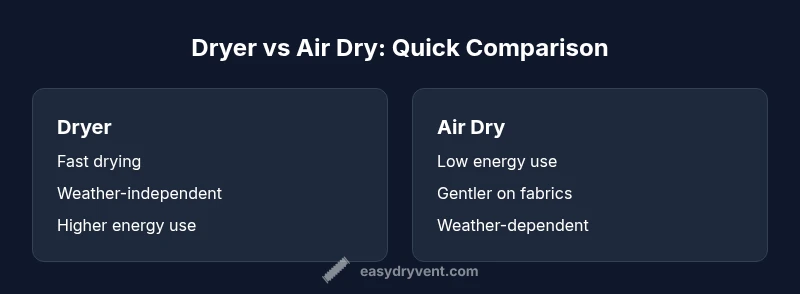
| Feature | Dryer | Air Dry |
|---|---|---|
| Energy use | Moderate energy consumption | Low energy use |
| Drying speed | Fast but energy-dependent | Slow and climate-dependent |
| Fabric care impact | Controlled heat; potential wear with harsh cycles | Gentler on most fabrics; less heat exposure |
| Space requirements | Requires dedicated space with venting | Needs drying space (rack/line) |
| Reliability in bad weather | Weather-independent with power supply | Weather-dependent; indoor settings help |
| Best for | Busy households needing speed | Energy-conscious households with space |
The Good
- Air drying reduces energy bills and heat exposure
- Gentler on many fabrics, reducing wear
- Dryer offers speed and weather independence
- Hybrid approaches balance energy use and convenience
Negatives
- Air drying is weather- and space-dependent
- Drying takes longer for many loads
- Indoor air drying can require ventilation and humidity control
- Dryers still consume energy and can stress fabrics if misused
Use both methods strategically for best results
Air drying excels for energy savings and fabric longevity when space and climate permit. A modern dryer wins for speed and weather independence, especially for busy households. A blended approach tailored to loads and conditions typically provides the most balanced outcomes.
Common Questions
Is air drying always the most energy-efficient option?
Air drying generally uses less energy than running a clothes dryer, but its effectiveness depends on climate and available drying space. In temperate, sunny environments, it can dramatically reduce electricity use for many loads. For optimal results, combine air drying with selective dryer use for urgent items.
Air drying usually saves energy, especially in sunny climates, but it depends on space. A mixed approach often works best.
How long does air drying typically take, and does climate change that?
Air drying duration varies with humidity and temperature. In warm, dry weather, most items can dry within several hours; in humid or cold conditions, it can take longer. Plan around weather windows and use indoor racks if outdoor drying is impractical.
Drying time for air drying depends on climate; it can range from a few hours to a full day.
Can I use both methods in the same laundry load?
Yes. Sort loads by fabric type and urgency. Dry delicate items with air drying when possible, and reserve the dryer for bulky or heavily soiled items or when timing is critical. This blended approach often yields energy savings without sacrificing convenience.
Absolutely—air dry most items when feasible, and use the dryer for urgent or bulky loads.
What fabrics benefit most from air drying versus machine drying?
Delicates, wool blends, and items prone to shrinking or color fading often benefit from air drying. Cotton towels and sturdy textiles tolerate dryer heat well, but can still be dried on low heat or air if space allows.
Delicates and shrink-prone fabrics often do best with air drying; sturdy items can tolerate the dryer.
Does indoor air drying risk mold or odors?
Indoor air drying can pose mold or odor risks if humidity is high and ventilation is poor. Use a well-ventilated area, a dehumidifier if needed, and avoid stacking garments in closed spaces. Regularly clean drying areas and ensure airflow.
If the area is ventilated and dry, indoor air drying is safe; otherwise, manage humidity and airflow.
How can I reduce energy use when using a dryer?
Choose modern, energy-efficient models with moisture sensors, avoid over-drying, and run full loads. Lower heat settings for regular loads can also save energy and extend fabric life.
Use an energy-efficient dryer with sensors, and avoid over-drying for best energy savings.
Key Points
- Assess energy priorities before choosing method
- Air drying saves energy but needs space/climate
- Use a dryer for quick turnaround and bulky items
- Maintain ventilation and lint management for safety
- Experiment with a hybrid routine to maximize benefits