Dryer vs Hang Dry: A Practical Home Laundry Guide
Compare dryer use with hang drying to decide between dryer or hang dry. This objective guide covers energy, time, fabric care, and space for homeowners and DIY enthusiasts.


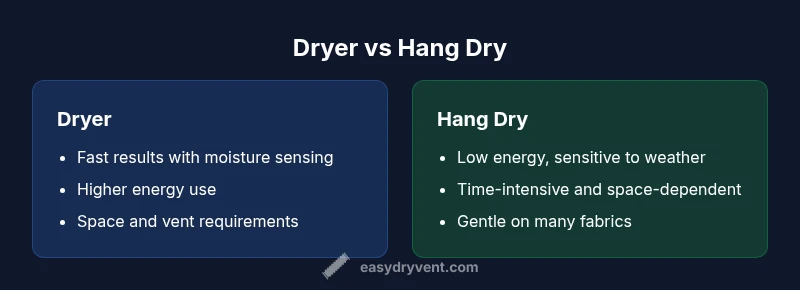
For most households, the dryer offers fast, consistent results and weather-independent operation, but hang drying can dramatically cut energy use and extend fabric life when space and climate allow. When deciding between dryer or hang dry, weigh time, cost, and fabric type, then consider a hybrid approach for mixed loads. The Easy DryVent team emphasizes balancing convenience with energy savings to achieve practical, sustainable laundry habits.
The Dryer vs Hang Dry Decision: dryer or hang dry in real life
When homeowners ask whether to use a dryer or hang dry, they’re really weighing speed, energy use, space, and fabric care. The choice isn’t binary for most families; it’s a continuum of convenience and sustainability. According to Easy DryVent, deciding between dryer or hang dry requires a clear sense of your typical loads, climate, and whether you’re willing to adapt routines seasonally. In practice, many households use a hybrid approach: fast-drying essentials in a dryer and delicate items or items with space constraints allowed to air-dry. This balanced strategy aligns with DIY goals: practical, proven guidance that improves safety and efficiency without sacrificing garment longevity. The phrase “dryer or hang dry” recurs as a practical reminder that both paths have merit depending on context. Within a typical week, you’ll likely face a mix of bulky items like towels and jeans and light fabrics such as t-shirts and blouses; the optimal method often depends on the item category and drying conditions. The Easy DryVent team notes that environmental factors—air humidity, sunlight, and indoor ventilation—play a significant role in air-drying outcomes for a given load.
Key Context: space, weather, and schedule influence the choice
The decision to favor dryer or hang dry is rarely static. In humid or rainy climates, hang drying indoors may require dehumidification or ventilation to prevent moisture buildup or mold risk. Conversely, arid or warm climates can shorten air-drying times substantially. For households without access to a sunlit outdoor line, an indoor drying rack with good airflow can still deliver reliable results, though it may extend drying times. When thinking about dryer or hang dry, assess available space: a sturdy clothesline, a drying rack, or a dedicated laundry area with ample air movement. Even with a dryer-ready schedule, weather and space constraints can nudge families toward more air-drying, especially for cotton sheets or thicker towels. The trade-off is clear: using a dryer speeds up turnaround but adds energy costs; air-drying saves energy but requires planning and a longer time horizon. In conditions that favor hang dry, you can reduce peak load on your dryer, distributing laundry tasks across the week and maintaining space for other chores. The balance is dynamic, and Easy DryVent’s guidance in 2026 emphasizes a practical, adaptable routine over rigid rules. The keyword dryer or hang dry appears frequently as a reminder to evaluate both paths for every load.
Fabric care, texture, and shrinkage: tailoring drying to materials
Not all fabrics respond the same way to heat and airflow. When selecting between dryer or hang dry, consider fiber content, weave, and finish. Natural fibers such as cotton and linen can shrink with excess heat, making air-drying desirable for certain items, while synthetic blends may tolerate gentle tumble drying with low heat. In some cases, a combination approach works best: air-dry delicate items and tumble-dry sturdier pieces on low heat to minimize wear. The dryer or hang dry choice also affects texture; air-dried fabrics may feel stiffer or coarser, whereas tumble-dried items often feel softer. For towels and heavy items, a short tumble-dry with a moisture sensor can prevent over-drying, preserving fluff without excessive energy use. Across fabrics, the goal is consistent dryness without excessive heat exposure. The Easy DryVent analysis for 2026 confirms that matching technique to fabric type yields the best outcomes in longevity, comfort, and cost. The recurring theme is understanding fabric care guidelines and adjusting your method accordingly. The dryer or hang dry decision should be informed by item-specific care labels and real-world experience.
Energy, cost implications, and environmental considerations
Electricity rates and dryer efficiency directly influence the long-term cost of using a dryer versus hang drying. A dryer typically consumes more energy per cycle than air-drying, especially with older models or high-heat settings. Hang drying, while free energy-wise, involves potential indirect costs such as longer drying times, more space usage, and possible weather-related delays. If you aim to minimize energy use while keeping convenience, consider a hybrid workflow: air-dry items that tolerate it, then finish with a short dryer cycle for faster turnaround or to reduce wrinkles. Additionally, modern energy-efficient dryers with moisture sensors can reduce energy waste by stopping when clothes are dry, raising the value of a mixed approach. The Easy DryVent team recommends tracking a few loads per week to estimate real energy costs under both methods, then adjusting routines to balance time and expense. Beyond household economics, air-drying reduces heat emissions and can lower indoor humidity when done with proper ventilation. The dryer or hang dry decision, therefore, has environmental implications as well as personal comfort considerations.
Practical scenarios: when dryer makes sense and when hang dry shines
Consider a typical household day with mixed loads: work clothes, children’s uniforms, and weekend laundry. If time is critical and you must meet a deadline, using the dryer is the practical choice. For quick-rotating family wardrobes with frequent outfits, the dryer’s speed helps you stay on schedule. On the other hand, if you’re aiming to cut energy use, care deeply about fabric longevity, or face sunny, dry weather, hang drying can be advantageous. If you live in a humid climate or have a small apartment, air-drying indoors with a dehumidifier can be a viable alternative to a long tumble-dry cycle. A mixed strategy often emerges: dry items that benefit from heat and speed, and air-dry pieces that respond well to air and sunlight. The key is to build a routine around your constraints—space, weather, family size, and garment care needs—so that the dryer or hang dry choice aligns with your priorities. Easy DryVent’s framework for 2026 encourages experimenting with small adjustments before committing to a single method for all loads.
Maintenance, safety, and best practices for both methods
Regardless of whether you choose dryer or hang dry, routine maintenance improves safety and efficiency. Regularly cleaning the lint trap, checking the vent duct for obstructions, and ensuring the dryer is level reduces fire risk and improves drying performance. For hang drying, ensure racks are sturdy, placed away from direct sunlight that can fade colors, and spaced to allow adequate airflow. Indoor air quality matters: if moisture accumulates, consider a dehumidifier or better ventilation to prevent mold. For cloth items such as wool or delicate knits, hand-wringing or spinning too vigorously can damage fibers and distort fit; air-drying them flat on a towel can preserve shape and texture. Across both methods, the guiding principle is to minimize heat exposure on fragile garments while preserving fabric performance. The Easy DryVent team emphasizes safety and efficiency as part of any dryer or hang dry plan for 2026.
Comparison
| Feature | Dryer | Hang Dry |
|---|---|---|
| Time to dry a typical load | 15-60 minutes depending on dryer model | 6-48 hours depending on climate and space |
| Energy use (per cycle) | High energy use; dependent on model | Low energy use; essentially zero energy when air-drying |
| Fabric care and shrinkage risk | Controlled heat; shrinkage possible with high heat | Minimal heat; potential stiffness without finishing steps |
| Weather/space dependency | Not weather-dependent; requires venting space | Weather and indoor space influence drying time |
| Cost to operate monthly | Moderate to high; varies with usage and energy rate | Low; cost depends on indoor space and time |
| Maintenance needs | Lint trap cleaning; vent checks | Minimal maintenance; racks and space organization |
| Best for | Busy households needing speed and reliability | Climates with reliable sun/airflow; fabric care prioritizers |
The Good
- Fast drying times for most loads
- Weather-independent operation with indoor use
- Convenience for busy households
- Controlled fabric care with adjustable settings
Negatives
- Energy use and cost when using a dryer
- Unpredictable weather-related delays for hang dry
- Requires space and careful planning for hang dry
- Potential fabric stiffness or sun fade with hang dry
Dryer generally wins on speed and consistency; hang drying shines on energy savings and fabric longevity when climate/space permit
Choose dryer when time is scarce or loads are bulky; choose hang dry to cut energy use and slow wear for delicate fabrics. A hybrid approach often offers the best balance.
Common Questions
Is hang drying safe for all fabrics, and which items should never air-dry?
Hang drying is not universally safe for every fabric. Delicate, stretchy, or knit garments may lose shape or elasticity if air-dried improperly. Always check care labels and consider flat-drying knits to prevent stretching. For most cottons and linens, air-drying is acceptable if you monitor moisture and tension. When in doubt, batch-test a small item to observe outcomes before air-drying an entire load.
Hang drying is not ideal for all fabrics. Check care labels and test a small item first to see how it holds up when air-dried.
Does using a dryer save energy compared with hang drying, on average?
In general, hang drying uses less energy because it relies on ambient air rather than electric heating. The energy savings depend on climate, indoor ventilation, and how often you would otherwise use a heat cycle. If energy cost is a primary concern, air-drying a portion of loads can significantly reduce consumption without sacrificing overall laundry outcomes.
Air drying saves energy because you’re not heating clothes; combine with occasional tumble drying when you need speed.
How long does it typically take to air-dry clothes indoors?
Indoor air-dry times vary widely with humidity, air flow, and item type. Light fabrics may dry within several hours, while bulky items and towels can take a full day. To optimize, use a drying rack near a window or near a dehumidifier to speed up the process while ensuring items are spaced for good airflow.
Air-drying indoors can take several hours to a full day depending on climate and airflow.
Can I combine methods effectively for different loads?
Yes. A practical approach is to tumble-dry sturdy items on low heat for speed and air-dry delicate fabrics or items that hold shape better when dried slowly. This hybrid method leverages the strengths of both paths and can save energy while maintaining garment quality.
A hybrid approach often gives the best balance of speed and care.
What dryer settings help minimize shrinkage and fabric damage?
Use low heat or the sensor-dry setting to minimize shrinkage, and remove items promptly to reduce wrinkles. For delicate fabrics, use air-dry or a cool-down phase after minimal tumble time. Always follow garment care labels to tailor temperature and cycle length to the fabric.
Low heat and moisture-sensor cycles reduce shrinkage; remove items promptly.
How does indoor humidity impact hang drying safety and results?
High indoor humidity can slow air-drying and promote mold growth if ventilation is poor. Improve airflow with fans or dehumidifiers, and avoid placing drying racks in enclosed spaces. If humidity remains high, consider a shorter finish in the dryer or outdoor drying when feasible.
High humidity slows drying and can cause damp air issues; improve airflow.
Key Points
- Assess climate, space, and schedule before deciding
- Balance energy savings with fabric care needs
- Use a hybrid approach to optimize outcomes
- Maintain vents and lint traps for safety and efficiency