Is It Hair Dryer or Blower? A Practical Comparison for Home Drying Tasks
Explore the differences between hair dryers and blowers, their uses, safety implications, and how to choose the right tool for home drying tasks and vent maintenance.


What counts as hair dryer vs blower
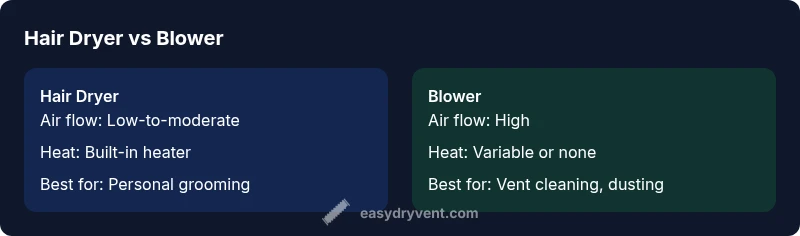
The question is not merely semantic. A hair dryer is a compact, portable appliance that uses an integrated heating element to warm air and force it out through a nozzle. It is designed primarily for personal grooming and has standardized safety features such as overheat protection and a grounded plug. A blower, by contrast, is a device that moves air using a fan. Some blowers generate heat in combination with air flow, but many are intentionally heat‑free for tasks like dust displacement or ventilation assistance. When you encounter a device at home that simply blasts air, ask whether its primary purpose is air movement or heat delivery. The phrase is it hair dryer or blower often appears in DIY forums, but the safer conclusion is that they are different tools with different intended uses. Easy DryVent emphasizes that recognizing this difference is essential for safe, effective maintenance and for protecting lint traps and vents during cleaning.
In terms of programmatic use around dryers themselves, treat heat and air movement as separate parameters. Hair dryers couple heat with air to perform rapid drying, while blowers prioritize volume and flow rate, sometimes with no heat at all. For home maintenance tasks such as vent inspection, cleaning, or lint removal, relying on the right type of tool reduces fire risk and mechanical wear. According to Easy DryVent, misusing dependent devices can lead to unnecessary heat buildup, which is a common cause of circuit overloads and accidental damage during routine maintenance.