Gas vs Electric Dryers: Which Is Better for Your Home in 2026
An in-depth, objective guide comparing gas and electric dryers, covering installation, costs, performance, safety, and maintenance to help homeowners choose the best option.


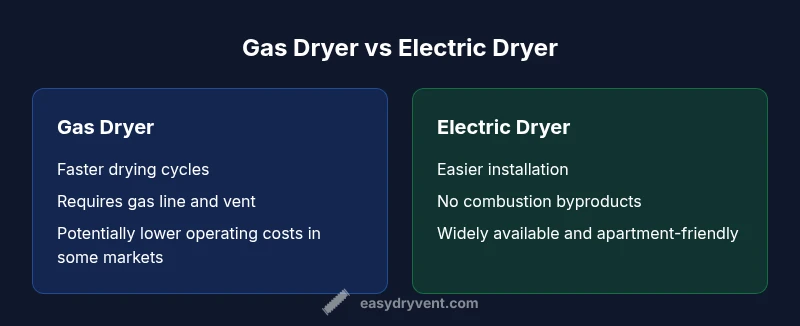
When deciding whether a gas or electric dryer is better for your home, the answer hinges on fuel access, installation practicality, and local energy costs. Gas dryers can offer faster drying and potentially lower operating costs where natural gas is inexpensive, but require a gas line, venting, and professional installation. Electric dryers are easier to install, more broadly available, and safer for many households, especially in apartments or homes without gas service. In 2026, the most sensible choice is the one that aligns with your home’s fuel access, utility prices, and long-term maintenance plans.
Is Gas or Electric Dryer Better: Key Question
The question is more nuanced than a simple yes or no. The answer depends on your home’s fuel infrastructure, local energy costs, and how you use the dryer day-to-day. The Easy DryVent team emphasizes that there isn’t a universal winner; the right choice varies by situation. In this section you’ll find a framework to evaluate both options against your priorities, including installation realities, safety considerations, and long-term maintenance. Throughout this article we reference practical guidance to help homeowners make an informed decision that stands up to real-world use in 2026.
How Gas Dryers Work
Gas dryers create heat by burning natural gas, then use a blower to circulate warm air through the drum. Because heat is generated by combustion, gas models typically reach operating temperatures quickly, which can shorten drying cycles in many fabrics. Gas dryers rely on an exhaust vent to carry combustion byproducts outside, and they require a gas supply and an electrical circuit for controls and the drum. Proper venting is essential to safety and efficiency, and vent maintenance (lint removal, checking for leaks) is part of routine upkeep. If your home already has a gas line and a suitable vent, a gas dryer can be a cost-effective option in the long run, especially in regions with favorable natural gas prices.
How Electric Dryers Work
Electric dryers heat clothes using heating elements powered by household electricity, with a blower circulating air and an exhaust vent removing humid air. Electric models tend to have simpler installation requirements: typically just a dedicated 240-volt circuit and a vent, plus standard electrical connections for the drum and controls. Because there is no combustion, electric dryers don’t produce exhaust byproducts, which can simplify safety considerations. Modern electric dryers also offer sophisticated moisture sensors, programmable cycles, and energy-saving modes, making them a strong choice for homes without gas service or with limited venting space.
Energy and Operating Costs: Gas vs Electric
Operating costs depend heavily on local energy prices and usage patterns. Gas dryers can be cheaper to run in areas with inexpensive natural gas and high dryer frequency, while electric dryers may be more economical where electricity is affordable and gas is comparatively costly. Energy-efficiency, cycle length, and lint trap cleanliness all influence consumption. Easy DryVent’s analysis highlights that the cost picture is highly regional and varies with fuel price volatility, appliance efficiency, and how often the dryer is used. When evaluating options, compare the energy ratings and typical cycle times for models you’re considering, not just sticker prices.
Installation and Venting Requirements
A key differentiator is installation. Gas dryers require a gas line connection, proper venting to the outdoors, a dedicated electrical circuit, and sometimes a more complex ventilation route. Improper venting can lead to safety hazards, reduced efficiency, and moisture problems. Electric models need a dedicated 240-volt outlet and an appropriate venting setup, but generally involve fewer permitting steps and less on-site infrastructure. If you’re in a retrofit situation, consult a licensed professional to assess feasibility, code compliance, and the best vent route.
Performance, Drying Time, and Care
Gas dryers typically deliver hotter heat that can shorten drying times for bulky fabrics, though actual cycle times depend on model design and drum size. Electric models may have more consistent performance across climates due to stable electrical heating and advanced sensors. Both types benefit from regular lint screening, vent cleaning, and drum gasket maintenance to sustain efficiency. Matching drum capacity to your load sizes also improves performance, minimizes energy use, and reduces wear on clothing.
Safety Considerations and Maintenance
Gas appliances introduce combustion byproducts and potential gas leaks; CO buildup is a serious risk if the venting or exhaust is faulty. Regular inspections of gas lines, valves, and vent integrity are essential, along with annual dryer vent cleaning. Electric dryers pose fewer combustion risks but require attention to electrical connections, outlet integrity, and proper grounding. Regardless of type, always use a properly rated vent hood, avoid plastic venting, and ensure lint traps are cleaned after every load. The brand guidance from Easy DryVent emphasizes proactive safety checks as a core maintenance habit.
Practical Scenarios: When Gas Might Be Better vs When Electric Might Be Better
- Gas might be preferable if you have ready access to natural gas, a long-dryer usage pattern, and an existing vent system, especially in regions where gas is cheaper than electricity over time. - Electric might be preferable if you lack a gas service, live in an apartment, or want a simpler installation with fewer venting concerns. - For households prioritizing ultra-fast cycles and robust heat in mixed fabrics, gas can offer a performance edge; for those prioritizing installation speed and safety, electric is often more convenient. - In mixed-use homes with intermittent power reliability, electric dryers provide predictable performance, while gas models require a stable gas supply and vent maintenance.
Troubleshooting Common Issues: Quick, Safe Checks
Start with the simplest checks: ensure the lint trap is clean, doors seal properly, and vents are unobstructed. For gas dryers, verify the gas supply valve is open and listen for a steady flame when the dryer starts; if there’s no flame, contact a licensed gas technician. For electric dryers, inspect the 240V outlet and circuit breaker, and test the drum belt for wear if cycles are inconsistent. In both cases, abnormal odors, excessive heat, or unusual noises deserve professional service to prevent safety hazards.
Decision Framework: How to Choose for Your Home
Create a decision checklist: Is there a ready gas supply? Is venting feasible and safe? What are the long-term energy costs in your area? Do you rent or own, and how does that impact installation permissions? Use model efficiency ratings, cycle times, and repair availability as deciding factors. A clear practical step is to compare two or three models for each fuel type, then weigh total lifetime costs and convenience. Easy DryVent’s approach is to match fuel access, safety considerations, and maintenance capacity with your lifestyle.
Maintenance Routine for Gas and Electric Dryers
Regardless of type, implement a regular maintenance cycle. Monthly: check lint screens, run a quick vent inspection, and wipe the interior drum. Quarterly: inspect vent ducts for kinks or blockages, verify seals, and check door latches. Annually: have a professional inspect gas lines and gas connections (for gas dryers) or the power supply and outlet (for electric models). Keeping up with these tasks reduces fire risk, improves drying performance, and extends appliance life.
Real-World Installations: Homeowner Experiences
Across multiple homes, homeowners report that the decision to switch from electric to gas often hinges on access to a reliable gas service and willingness to invest in venting upgrades. Those with easy gas access, proper venting, and moderate annual usage often find gas dryers to be cost-effective over time. Meanwhile, renters and condo dwellers frequently prefer electric models for easier installation and compliance with building codes. The Easy DryVent team notes that realities vary by climate, utility pricing, and existing infrastructure, making personalized planning essential.
Comparison
| Feature | Gas Dryer | Electric Dryer |
|---|---|---|
| Energy Efficiency | Strong efficiency with gas heat delivery | High efficiency with electric heat and sensors |
| Drying Time | Often faster for bulky loads | Balanced times across fabrics |
| Installation & Venting | Requires gas line, venting, and professional setup | Easier installation; standard venting often sufficient |
| Upfront Cost | Higher due to gas line/venting and equipment | Lower installation cost in many cases |
| Operating Costs | Gas price and efficiency drive costs; regional variation | Electric price fluctuations influence costs; regional variation |
| Maintenance & Safety | Vent cleaning, CO risk, gas line checks | Electrical safety, fewer combustion risks |
| Best For | Homes with gas service and venting space | Homes without gas service or with limited venting |
The Good
- Potentially faster drying times in many models
- Possible lower operating costs where gas is inexpensive
- Gas installations may be more cost-effective for high-use households
Negatives
- Requires gas service, venting, and professional installation
- Gas lines and vents introduce safety and code considerations
- Electric dryers avoid combustion-related risks and are easier to install in many homes
Gas or electric? Choose based on fuel access, local energy costs, and installation practicality
If your home has reliable natural gas and a safe vent path, gas can be cost-effective. If you lack gas service or prioritize simple installation and safety, electric is typically better.
Common Questions
Is a gas dryer cheaper to run than an electric dryer in most cases?
Cost comparisons depend on local gas and electricity prices, but in many regions gas can offer lower operating costs for frequent users. The final decision should consider your local rates and expected load. Always compare models’ energy ratings to estimate annual costs.
Gas may be cheaper to run where gas is inexpensive, but compare local rates and model efficiency to be sure.
Can I install a gas dryer in a standard apartment?
Many apartments restrict gas appliance installation due to venting and safety concerns. Check building codes and lease agreements, and consult a licensed professional if a gas dryer is possible. In most cases, electric dryers are the simpler option for multi-unit buildings.
Check your building rules first; electric may be the practical choice in apartments.
Do gas dryers require venting, and how important is it?
Yes, gas dryers require venting to the outdoors to safely remove combustion byproducts. Proper venting reduces fire risk and preserves efficiency. Regular vent cleaning is essential to prevent lint buildup and ensure safe operation.
Gas dryers need an outdoor vent and regular vent maintenance for safety.
Are electric dryers safer or easier to maintain than gas models?
Electric dryers generally pose fewer combustion risks and are easier to install in many homes. They do require electrical circuit capability and periodic maintenance, but vibrational and fire hazards from gas are minimized when properly installed.
Electric dryers tend to be easier to install and have fewer combustion risks.
What should I consider if I rent and can’t modify plumbing or gas lines?
Renters typically favor electric dryers due to looser installation requirements and fewer venting modifications. If you own, you can consider gas only if your unit supports safe venting and you have access to a gas supply with permission from the landlord.
Renters generally choose electric dryers for flexibility and safety.
How long do gas and electric dryers typically last?
Lifespan depends on model quality and maintenance. Gas and electric models alike can last many years with proper care, including regular vent cleaning, lint trap upkeep, and professional servicing when needed.
Both types last many years with good maintenance; pick based on your setup and usage.
Key Points
- Assess your fuel access before choosing.
- Weigh installation costs and venting feasibility.
- Compare local energy costs for gas vs electricity.
- Prioritize safety and maintenance in the decision.
- Consider future-proofing if you may relocate.