Gas Washer and Dryer vs Electric: Comprehensive Comparison
Compare gas washer and dryer vs electric options to decide which setup saves energy, fits your home, and keeps your family safe. Easy DryVent analyzes installation, costs, and maintenance for informed choices.


Gas washer and dryer vs electric is a decision rooted in energy availability, installation costs, and long-term operating expenses. In most homes, electric washers and electric dryers are the most straightforward, while a gas dryer can offer lower running costs where natural gas is affordable and venting is properly installed. The Easy DryVent team notes that the best choice balances initial setup with ongoing energy use, safety, and local codes.
gas washer and dryer vs electric: The Core Differences
Gas dryers heat air with natural gas, while electric dryers rely on electric heating elements. Washers are largely electric, heating water through the home’s supply or an internal heater. The critical decision between gas and electric hinges on gas availability, local energy costs, installation constraints, and safety considerations. According to Easy DryVent, this choice affects your installation workload, annual energy spend, and maintenance routines. The Easy DryVent team found that vent sizing, duct cleanliness, and professional installation matter as much as sticker price when planning a full laundry upgrade.
Beyond the dryer, understand how your home’s energy infrastructure shapes performance. A gas option can reduce running costs in regions with cheap natural gas but demands a dedicated gas line and proper venting. An electric setup, while typically easier to install and more renter-friendly, depends on electricity tariffs and circuit capacity. Keep in mind that household hot water heating also influences overall energy use, especially if you heat water with gas or electricity.
2-3 sentences
gas washer and dryer vs electric: The Core Differences
Gas dryers heat air by burning natural gas, while electric dryers use heating coils powered by electricity. Washers are usually electric and heat water from the home’s hot water supply. The choice affects installation, energy use, and maintenance, with venting and safety as ongoing concerns.
https://example.com/intro-block-brand
gas-washer-and-dryer-vs-electric intro
Comparison
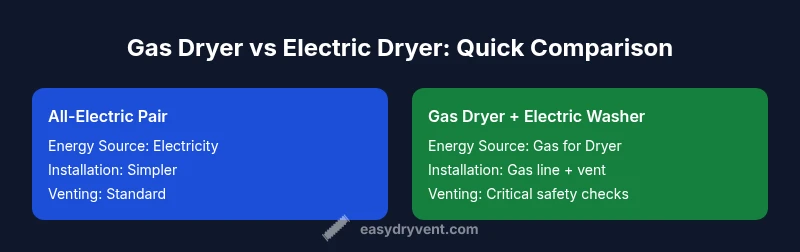
| Feature | All-Electric Laundry Pair (Electric Washer + Electric Dryer) | Gas Dryer + Electric Washer |
|---|---|---|
| Energy Source | Electric-powered washer and dryer | Gas-powered dryer with electric washer |
| Installation Complexity | Moderate (240V outlet + standard venting) | Higher (gas line and venting) |
| Ventilation Requirements | Regular venting and duct cleaning | Gas venting and gas line safety checks |
| Initial Cost Range | Lower upfront cost for electric pair | Higher upfront cost due to gas setup and venting |
| Operating Costs | Electricity costs depend on tariffs | Gas can be cheaper where natural gas is affordable |
| Maintenance Needs | Fewer combustion components; simpler servicing | Gas components require leak checks and vent maintenance |
| Best For | Homes with easy electricity access and renters | Homes with reliable natural gas and venting capacity |
The Good
- Potentially lower ongoing energy costs with natural gas
- Gas dryers can offer faster drying in some setups
- Electric washers and dryers are widely available and simple to replace
- Easier to install electric-only systems in rental properties
- Broad service and maintenance networks for electric appliances
Negatives
- Higher upfront costs for gas line installation and venting
- Gas appliances require venting and ongoing safety checks
- Gas supply may not be available in all homes
- Gas venting adds maintenance and code compliance considerations
- Electric dryers can sometimes have longer drying cycles in high-humidity climates
All-Electric Pair is the safer, simpler baseline for most homes; gas with proper venting is worth it where natural gas is cheap and installed correctly.
Electric laundry pairs are typically easier to install and maintain, with broader service support. Gas with an appropriately vented setup can reduce operating costs where gas is inexpensive, but it requires careful installation and ongoing safety checks.
Common Questions
Is a gas washer practical for most homes, or are electric washers the standard?
Gas washers are uncommon; most homes use electric washers. If you have an existing gas line and prefer gas heating for hot water, you might explore gas heating options. For most households, electric washers paired with an electric dryer are the simplest and most reliable choice.
Gas washers are not common; electric washers are the standard for most homes. If you have a gas line and want to explore, check local codes and ensure proper venting for any gas dryer.
What drives the decision between gas and electric for the dryer?
The decision hinges on gas availability, installation cost, and long-term energy costs. Gas dryers can lower energy bills in areas with cheap natural gas but require proper venting and gas line installation, which adds upfront costs. Electric dryers are easier to install and service but may cost more to operate in high-tuel tariffs areas.
Your gas or electric choice mostly depends on gas access and energy costs, plus upfront installation. Gas can save on operating costs if gas is cheap, but needs venting and a gas line.
Are there safety concerns with gas dryers?
Yes. Gas dryers involve combustion byproducts that must vent properly to the outdoors. Regular vent cleaning and gas line inspections are important, and installation should follow local codes. A qualified technician should verify vent integrity and gas connections.
Gas dryers require proper venting and gas line safety checks; always use a licensed pro for installation.
Can electric dryers perform as well as gas dryers?
Electric dryers perform well and are reliable, with drying performance largely similar to gas in many homes. Differences in energy source affect cost and environmental footprint rather than basic capability. In regions with humid climates, electric dryers might take longer to dry if venting is restricted.
Electric dryers work well; the main differences are cost and venting, not drying quality.
What should I ask a retailer when comparing options?
Ask about required venting, whether a gas line is needed, available efficiency ratings, installation costs, and any permits. Verify service networks for maintenance and look for local reviews of installers.
Ask about venting, gas line needs, efficiency, and installation costs when shopping.
Is it cheaper overall to run an all-electric or gas-dryer setup?
Running costs depend on local energy prices and gas tariffs. In some areas, gas dryers cost less to operate; in others, electric may be cheaper. Consider a total cost over several years, including installation, venting, and maintenance.
Total cost varies by location; compare energy tariffs and installation costs to decide.
Key Points
- Assess gas availability and venting before buying
- Consider total ownership cost, not just sticker price
- Electric washers/dryers are easiest to install in renters
- Gas dryers may save money where natural gas is cheap and reliably available
- Plan for regular vent cleaning and safety inspections