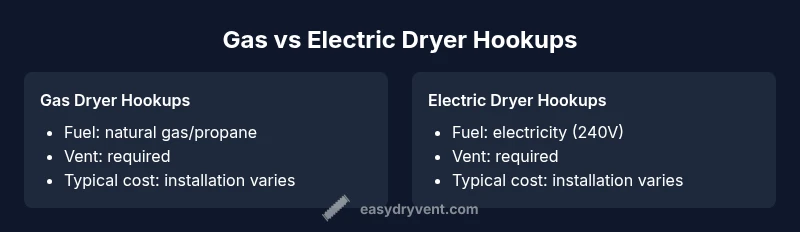
Gas vs Electric Dryer Hookups: A Practical Home Guide
Compare gas dryer vs electric dryer hookups: venting, fuel sources, installation steps, safety, and costs. Easy DryVent offers a practical, code-aware guide for homeowners seeking reliable dryer setups.


Key takeaway: gas dryer vs electric dryer hookups determine venting requirements, fuel supply, safety clearances, and long-term operating costs. This comparison helps homeowners assess viability, code compliance, and installation practicality before purchasing a new unit. Easy DryVent’s analysis emphasizes local codes, venting options, and how fuel choice affects resale value.
Understanding gas dryer vs electric dryer hookups
Choosing between gas and electric dryer hookups is more than a simple preference. The two options hinge on the availability of a gas line or a 240V electrical circuit, as well as how each setup handles heat generation, venting, and safety. The phrase gas dryer vs electric dryer hookups captures the central decision: will your laundry room rely on a gas supply or pure electricity? According to Easy DryVent, the answer starts with assessing what’s already present in the home (existing gas line, electrical panel capacity, and venting routes) and ends with confirming code-compliant installation performed by a qualified professional. Homeowners should also consider long-term operating costs, maintenance needs, and the impact on future home improvements. This section lays the groundwork for a deeper, practical comparison.
Understanding gas dryer vs electric dryer hookups
Choosing between gas and electric dryer hookups is more than a simple preference. The two options hinge on the availability of a gas line or a 240V electrical circuit, as well as how each setup handles heat generation, venting, and safety. The phrase gas dryer vs electric dryer hookups captures the central decision: will your laundry room rely on a gas supply or pure electricity? According to Easy DryVent, the answer starts with assessing what’s already present in the home (existing gas line, electrical panel capacity, and venting routes) and ends with confirming code-compliant installation performed by a qualified professional. Homeowners should also consider long-term operating costs, maintenance needs, and the impact on future home improvements. This section lays the groundwork for a deeper, practical comparison.
Quick context on the two options
Gas hookups typically rely on a dedicated gas supply line (natural gas or propane) and a vented exhaust to the outdoors. Electric hookups require a 240-volt circuit and a properly wired outlet. In many homes, the decision is limited by what already exists: a gas line favors gas dryers, while a robust electrical service favors electric models. Budget considerations include not just the appliance price, but also the cost to install or upgrade lines, run vents, and obtain necessary permits. Safety concerns—carbon monoxide risk with gas, electrical inspection for electric—are real and must be addressed up front. Easy DryVent emphasizes planning and professional guidance to avoid common installation pitfalls.
Safety and compliance basics
Ventilation plays a central safety role for both types of hookups. A gas dryer releases combustion byproducts that must be vented correctly to prevent CO buildup indoors, which makes CO detectors and proper vent ducting essential. Electric dryers, while lacking combustion byproducts, still require correct electrical grounding, proper breaker sizing, and correct outlet placement to avoid shock or fire hazards. Codes vary by jurisdiction, but the core principles are universal: keep the dryer clear of flammables, ensure accessible shutoffs, and schedule professional inspection when dealing with gas lines or major electrical work. Easy DryVent recommends documenting all permits and keeping a maintenance log for future reference.
Venting requirements and layouts
Vent design affects performance and safety. Gas dryers generally require robust venting due to higher exhaust temperatures and potential moisture buildup. Electric dryers also vent, but the risk of lint buildup and backdraft remains. A typical configuration includes a rigid metal vent, a smoothly curved duct path, minimal length, and clean-out access. Avoid plastic flexible ducts, which can accumulate lint and pose a fire hazard. Local codes often specify minimum vent diameter and maximum length; if the run is long, you may need multiple elbows or a vent booster. Easy DryVent notes that optimizing vent design can reduce drying times and energy use, regardless of hookup type.
Fuel supply and appliance connections
Gas dryer hookups depend on a safe gas supply line with correct pressure and a dedicated shut-off valve. Propane systems may require conversion kits and regulator adjustments. Electric hookups demand a dedicated 240V circuit, typically on a 30-amp or 40-amp breaker, with correct gauge wiring and a grounded outlet. The appliance’s installation manual will specify clearances and gas or electrical inlet sizes. Mismatches between the appliance inlet and the building supply are a frequent source of installation delays. Easy DryVent advises verifying compatibility between the chosen dryer model and the existing fuel and electrical infrastructure before purchase.
Electrical vs gas code compliance for installation
Code compliance is the backbone of a safe installation. Gas installations often require a licensed plumber or gas technician for line routing, leak testing, and pressure checks, plus local permits. Electric installations may require a licensed electrician to verify correct circuit sizing, GFCI protection in damp locations, and proper grounding. In some jurisdictions, permits must be obtained for any gas line work or electric panel upgrades. Noncompliance can void warranties and lead to safety hazards. Easy DryVent emphasizes that professional installation not only meets code requirements but also ensures the dryer operates efficiently and safely.
Costs and long-term operating considerations
Initial costs for gas vs electric hookups vary with existing infrastructure. Gas line installation or relocation plus venting can add substantial upfront costs, especially in older homes lacking proper vent runs. Electric installations may require upgrading the electrical panel or wiring to handle a 240V circuit, which can also incur significant one-time expenses. On the operating side, gas dryers may offer lower energy costs in regions where natural gas is cheaper than electricity, but this depends on fuel price volatility. Electric dryers can be cheaper to purchase and install in homes without gas access, but electricity costs and dryer efficiency come into play. Easy DryVent notes that total cost should be evaluated over the appliance’s lifetime.
Installation steps and whether DIY is feasible
The typical sequence begins with a site assessment, followed by securing permits if needed, and then arranging for gas line or electrical work. Gas line work must be pressure-tested and leak-checked; electrical work requires breaker sizing and wiring verification. After utility work, the dryer is positioned, vented, and connected, and a final safety test is performed. DIY attempts without the proper tools or knowledge can lead to leaks or shocks; thus, professional installation is often the safer option. Easy DryVent recommends obtaining a detailed written plan from your installer before any work begins.
Appliance compatibility and common errors
Not all dryers are equally compatible with every hookup. Some models are certified for natural gas only, others prefer propane, and many electric models assume a standard 240V supply. A common mistake is mismatching gas type or overestimating vent capacity, which reduces efficiency and increases fire risk. Check the dryer’s manual for inlet size, vent requirements, and fuel type compatibility. Ensure the chosen unit matches your home’s gas pressure or electrical service. Easy DryVent stresses thorough cross-checking of the appliance specs with the home’s infrastructure before purchase.
Maintenance and safety reminders
Regular maintenance improves safety and prolongs dryer life. For gas dryers, schedule annual vent inspection and cleaning, check for gas leaks, and keep detectors functional. Electric dryers benefit from lint trap cleaning after every cycle and periodic vent inspection to maintain airflow. Regardless of hookup type, keep the surrounding area free of flammable materials and ensure the exhaust path isn’t blocked. Easy DryVent highlights that proactive maintenance reduces the risk of fires and improves drying efficiency.
Real-world scenarios: when gas is better vs electric
In urban areas with reliable gas service and affordable natural gas, a gas dryer hookup can offer cost savings and faster drying times. In markets with high electricity reliability and limited gas access, electric hookups may be the most straightforward path to a dependable laundry setup. Rural homes with propane access often align naturally with gas dryers but require careful regulator and line management. Easy DryVent suggests evaluating local fuel prices, availability, and the cost of potential upgrades to determine which path aligns with your home’s realities.
Comparison
| Feature | Gas Dryer Hookups | Electric Dryer Hookups |
|---|---|---|
| Fuel Source | Natural gas or propane supply | Dedicated 240V electrical circuit |
| Vent/Exhaust | Outdoor venting required for combustion byproducts | Exhaust venting required for moisture and lint |
| Installation Cost Range | $500-$2,500 | $350-$1,800 |
| Reliability in Power Outages | Operates if gas line available during power outages | Requires electrical supply; may be affected by outages |
| Best For | Homes with gas infrastructure and venting capacity | Homes with strong electrical service and no gas line |
The Good
- Gas dryers can offer potentially lower operating costs where gas is cheaper than electricity
- Gas hookups leverage existing gas lines in many homes, enabling easy integration
- Electric hookups are widely available and often easier to install without modifying fuel lines
- Both systems can dry effectively if venting is well-designed and maintained
Negatives
- Gas installations require a licensed professional and permits, increasing upfront costs
- Gas combustion produces CO; requires proper venting, detectors, and maintenance
- Electrical upgrades may be needed to support a 240V circuit and dedicated breaker
- Improper venting or leaks can pose safety risks and reduce dryer efficiency
Gas hookups suit homes with existing gas lines and venting, while electric hookups shine in gas-free, simple installs.
If your home already has gas, a gas dryer is often cost-effective but requires careful venting. If you lack gas access or want a simpler install, electric hookups are typically safer to implement and widely available.
Common Questions
What is the main difference between gas and electric dryer hookups?
The primary difference is the energy source and venting: gas hookups use a gas line and exhaust combustion byproducts, while electric hookups rely on a 240V circuit and exhaust moisture. Both require proper venting and safety measures, and local codes dictate installation requirements.
Gas uses a gas line and venting; electric uses a 240V circuit and venting. Both require safe installation and adherence to code.
Can I convert an existing electric dryer to gas?
Conversion is not something you should attempt without professional assessment. Converting an electric dryer to gas requires gas line work, proper regulators, and code-compliant venting. In many cases, it’s more practical to replace the appliance with a model compatible with your available hookup.
Converting is a job for a professional; it often isn’t cost-effective and may require a full appliance upgrade.
Do gas hookups require CO detectors?
Yes. Gas dryers produce combustion byproducts, so CO detectors near the laundry area and in adjacent living spaces are recommended. Venting must be properly maintained to minimize risk, and detectors should be tested regularly.
Yes—CO detectors protect your family; keep them tested and vents clear.
What permits are typically required for gas line work or electrical upgrades?
Most jurisdictions require permits for gas line work and for electrical upgrades tied to major appliance installations. An inspection by a licensed professional is usually part of the process. Check your local building department for exact requirements.
Permits and inspections are common for gas or electrical upgrades; check with your local authority.
Are there safety concerns with long vent runs for gas or electric dryers?
Yes. Long or poorly designed vents can increase lint buildup, reduce airflow, and raise fire risk. Regular vent cleaning and proper duct sizing minimize hazards and keep drying times efficient.
Long vents can be risky; keep them clean and well-sized.
What maintenance is required for gas vs electric dryers?
Gas dryers require vent inspection, gas line checks for leaks, and detector maintenance. Electric dryers focus on lint trap cleaning, vent cleaning, and electrical safety checks. Regular maintenance reduces fire risk and improves efficiency.
Keep vents clean and detectors tested; regular checks prevent issues.
Key Points
- Assess fuel access before choosing a hookup type
- Plan venting carefully to ensure safety and efficiency
- Hire licensed professionals for gas lines and electrical work
- Factor long-term operating costs into the decision
- Obtain permits and keep documentation for future resale