Gas Dryer vs Electric Dryer Cost: A Practical Guide
A thorough, data-driven comparison of gas vs electric dryer cost, covering upfront, installation, operating costs, efficiency, and tips to reduce bills for homeowners and DIY enthusiasts.


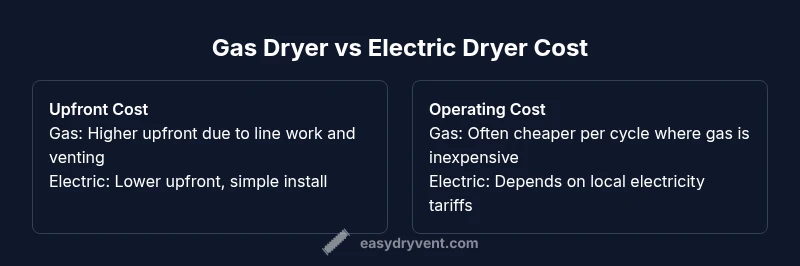
Gas dryer vs electric dryer cost depends on your fuel source, usage, and local rates. While gas models often have higher upfront costs due to venting and installation, they can offer lower per-cycle energy costs in regions with cheap natural gas. Electric dryers usually cost less to buy and install, but electricity prices can raise operating costs over time. A clear cost comparison helps homeowners choose wisely.
Gas vs Electric Dryer Cost: Key Concepts
Choosing between gas and electric dryers hinges on more than sticker price. The primary cost drivers are upfront purchase price, installation or venting requirements, and ongoing energy costs per load. Gas models typically cost more to buy and install because they require a gas line connection, venting, and possibly permits. However, natural gas tends to be cheaper per unit of energy in many regions, which can lower operating costs per cycle. Electric dryers usually come with a lower upfront price and simpler installation, but electricity rates and efficiency limits can raise long-term costs, especially for frequent heavy-use loads. In addition, venting length and ductwork, lint suppression, and dryer capacity all influence total cost over the appliance’s life. For homeowners, understanding gas dryer vs electric dryer cost means weighing fuel access and energy prices. The Easy DryVent team emphasizes a practical approach: map out your expected loads for a year, estimate per-cycle energy and fuel costs, and add typical installation charges for your home.
Upfront Costs and Installation Realities
Gas models tend to carry a higher upfront price tag due to the need for a gas line connection, venting to the outdoors, and, in some cases, local permits. Electric dryers generally have lower sticker prices and rely on a standard 240V outlet, with installation typically simpler and faster. The exact difference varies based on your home’s existing infrastructure, whether you already have venting ducts, and local code requirements. If you’re replacing an older unit, consider venting upgrades which can tilt upfront costs toward gas. Easy DryVent notes that many homeowners underestimate venting costs and the ongoing need for safe exhaust paths. Always obtain a written, itemized quote—venting, gas line work, and electrical work should be listed separately for a clean comparison.
Operating Costs: Energy Use, Tariffs, and Efficiency
Operating costs hinge on local energy tariffs, fuel prices, and how efficiently the model dries. Gas dryers often run cheaper per cycle where natural gas is inexpensive and usage is high, but this is not universal. Electric dryers’ operating costs track electricity rates and your load profile; in regions with high electricity prices or inefficient models, monthly bills can climb. When comparing models, look beyond label efficiency ratings and consider the years-of-use projection and expected laundry volume. As Easy DryVent notes in its 2026 analysis, a simple apples-to-apples estimate of yearly cycles, energy tariffs, and maintenance can reveal which option offers lower total cost over five to ten years.
Drying Performance and Convenience
Drying performance matters as much as price. Gas dryers are commonly associated with faster drying times due to higher heat output, which can reduce energy use per load and shorten cycle lengths. Electric models may take longer per cycle but can be gentler on fabrics and often deliver more consistent results for delicate items. The difference in drying speed can influence how many loads you run weekly, ultimately affecting total energy consumption. Consider your household's typical laundry volume, fabric types, and tolerance for longer cycles when weighing cost against convenience.
Venting, Permits, and Hidden Costs
Gas dryers require venting to safely exhaust combustion byproducts, plus a gas line install in many homes. Both fuel types need proper venting, but gas installations often bring additional permitting, technician scheduling, and potential vent cleaning into the total cost. Hidden costs may include duct sealing, clearances around combustible materials, and potential spacer or lint trap upgrades to improve airflow. In some markets, building codes drive higher inspection fees or venting requirements that can tilt the total cost of ownership toward gas. Planning ahead with a comprehensive venting plan can avoid surprises at installation.
Regional Variations and Market Trends
Fuel prices and electricity tariffs vary regionally, which means the break-even point between gas and electric dryers shifts by locale. In areas with long, harsh winters and a robust natural gas supply, gas dryers can outperform electric models on operating costs. Conversely, in regions with stable or rising electricity prices and ample electric capacity, electric dryers may offer a more predictable long-term cost profile. Global and local market trends also influence resale value and service availability, affecting long-term ownership costs.
Use-Case Scenarios: When Gas Wins vs When Electric Wins
If your home already has a gas line and a history of heavy laundry loads, gas may present a lower total cost of ownership over several years due to cheaper per-cycle energy and faster drying. If you lack gas access, prioritize easy installation, or want the smallest upfront investment, electric is typically the safer short-to-mid-term choice. For renters or homes with variable occupancy, electric dryers provide flexibility and fewer infrastructure requirements. The right decision hinges on your local fuel prices, laundry habits, and installation constraints.
Practical Tips to Minimize Costs Regardless of Fuel Type
- Compare apples-to-apples: quote venting, electrical work, and gas line work separately to identify true cost drivers.
- Size matters: choosing a dryer with appropriate capacity reduces cycles and energy waste.
- Prioritize energy-saving features: heat pump or high-efficiency dryers can reduce operating costs over time.
- Maintain lint filters and ducts: clean filters between loads and schedule periodic vent inspections to preserve efficiency.
- Consider installation timing: off-peak electrical rates or bundled contractor deals can lower upfront costs.
Decision Framework: How to Choose Your Dryer Cost Path
Start with fuel access (do you have gas or only electricity?), assess expected laundry volume, estimate yearly energy use and fuel costs using local tariff data, and add installation or venting costs. Use the comparison table below to visualize trade-offs, then apply the cost-projection framework to your household. This structured approach helps homeowners make a rational choice rather than relying on sticker price alone.
Comparison
| Feature | Gas dryer | Electric dryer |
|---|---|---|
| Upfront cost | Higher upfront cost due to gas line and venting | Lower upfront cost and simpler installation |
| Installation requirements | Gas line connection, venting, permit considerations | 240V electrical outlet, standard venting |
| Operating cost per cycle | Often cheaper per cycle where gas prices are favorable | Can be higher per cycle depending on electricity tariffs |
| Drying speed | Typically faster drying times | May have longer cycles, depending on model |
| Vent/duct needs | Outdoor venting; regular duct cleaning advised | Outdoor venting; vent maintenance needed |
| Maintenance | Gas venting and line checks; professional servicing | Lint filter maintenance; motor and belt checks |
| Ideal home scenario | Best for homes with existing gas line and heavy usage | Best for homes without gas line or with moderate usage |
| Long-term cost projection | Gas can be cheaper over time with high usage and low gas prices | Electric can be cheaper where electricity is affordable and usage moderate |
The Good
- Clear framework to compare costs across fuel types
- Gas can lower per-cycle energy costs in regions with cheap natural gas
- Electric dryers have lower upfront costs and simpler installation
- Electric models often require less venting work in many homes
- Broad service networks for both fuel types
Negatives
- Gas prices and reliability heavily influence long-term costs
- Gas installation requires venting and possibly permits
- Electric costs can rise with electricity prices and high usage
- Regional variations can offset general expectations
Gas can win on operating costs where fuel is cheap and usage is high; electric wins on upfront cost and installation simplicity.
If your home has a natural gas line and you run many loads, gas may be cheaper over time. If you lack gas access or prefer a lower upfront expense, electric is a safer bet.
Common Questions
What factors most influence gas vs electric dryer cost?
The main cost drivers are upfront price, installation requirements, energy tariffs, and ongoing maintenance. Regional fuel prices also heavily influence long-term costs.
Costs depend on upfront price, installation needs, and local fuel rates.
Is a gas dryer cheaper to operate than an electric dryer?
Operating costs depend on local gas and electric rates. In some regions, gas is cheaper per cycle; in others, electric may be cheaper, especially with favorable tariffs or aggressive usage.
It depends on your local rates; gas can be cheaper per cycle in some places, electric in others.
Do electric dryers require ventilation?
Most electric dryers require venting to the outdoors for safe and efficient operation. Ventless models exist but are less common and often more expensive.
Yes, they usually need outdoor venting.
Can I convert an electric dryer to gas later?
Converting an electric dryer to gas is typically not feasible for consumer hardware and may require replacing the unit instead. Consult a licensed professional.
Conversions are rarely possible; you may need a new unit.
How do installation costs compare between gas and electric models?
Gas installations add costs for gas line work and venting, while electric installations focus on electrical wiring; total depends on existing infrastructure and local codes.
Gas line and venting costs can be higher; electrical work is often simpler.
Are gas dryers more scarce to find than electric models?
Gas dryers are generally less common than electric ones, depending on your region, which can affect choice and pricing.
Gas options can be fewer, depending on where you live.
Key Points
- Assess fuel access before comparing costs
- Estimate yearly laundry loads to gauge per-cycle costs
- Account for venting and installation in upfront costs
- Use the decision framework to pick the best option