Electric Washer and Dryer vs Gas: A Practical Comparison
A thorough, objective comparison of electric washer and dryer vs gas models, covering installation, running costs, performance, safety, and real-world scenarios for homeowners and DIY enthusiasts.


Comparing electric washer and dryer vs gas models reveals three core factors: hookups, running costs, and performance. If your home already has a dedicated 240V electrical circuit, electric pairs are typically easier to install and maintain. If natural gas is affordable and you have a gas line, gas units can offer lower operating costs and faster cycles in many cases.
Context: The Laundry Equipment Landscape
Choosing between electric washer and dryer vs gas is not merely a price question; it hinges on how your home is wired, how you use laundry, and what you value in convenience and safety. According to Easy DryVent, the decision often begins with a practical assessment of existing infrastructure, energy costs, and long-run maintenance expectations. Electric washer-dryer pairs typically rely on a dedicated 240V circuit and standard outlets, which translates to broad compatibility and straightforward installation for most modern homes. Gas pairs depend on a dedicated gas line and venting to the outdoors, which can introduce additional installation complexity but may yield benefits in specific scenarios. In this block, we set the frame for a deeper dive into energy sources, cycle performance, and safety considerations that influence your final choice. For homeowners and DIY enthusiasts, a careful upfront analysis helps prevent retrofits and wasted effort down the road.
Key Differences in System Design and Operation
Electric washers heat and pump using electric motors, while gas washers use electricity to power the motor and rely on the same cooling and agitation mechanisms. Dryers form the core difference: electric dryers use a heating element to warm air that is then circulated through the drum, whereas gas dryers burn natural gas to heat the air. Across the washer-dryer pair, the energy source defines what consumes energy, how heat is generated, and what maintenance tasks dominate. You’ll notice that electric units emphasize electrical efficiency and reliability of components, whereas gas units emphasize burner efficiency and venting integrity. When evaluating models, compare drum size, heat source rating, warranty terms, and the availability of high-efficiency modes. This section lays the groundwork for understanding how these design choices translate to day-to-day use.
Installation, Venting, and Utility Connections
Installation considerations differ markedly between electric and gas pairs. Electric setups require a proper electrical supply—typically a dedicated circuit capable of handling the combined load of a laundry pair—and a compliant outlet arrangement. Gas configurations demand a safe gas line connection, proper gas appliance clearance, and venting to the outdoors. Venting is a central safety topic for gas dryers, because combustion byproducts must exit the home, and improper venting can raise CO and fire risks. Both types benefit from a clear procedural checklist: verify codes, hire licensed professionals for gas connections, ensure dryer vents are free of lint, and confirm that the washer’s plumbing and drainage meet local requirements. With careful planning, you can minimize disruption and ensure a compliant installation.
Cost Considerations: Upfront, Running, and Maintenance
Cost considerations include more than the sticker price. Electric and gas units differ in upfront cost, installation fees, and recurring energy bills. Easy DryVent Analysis, 2026 suggests that long-run costs depend on regional energy prices, usage patterns, and maintenance needs. Electric pairs generally incur higher upfront electrical compatibility costs in homes without suitable circuits, but offer predictable operating expense driven by electricity rates and climate-controlled drying. Gas pairs may present a lower price point for running costs where natural gas is inexpensive, yet they involve additional costs related to gas line work, venting, and periodic burner maintenance. When computing total cost of ownership, factor in cycle times, potential downtime for service, and the lifespan of heating elements versus burners.
Performance and Drying Metrics: Time, Care, and Temperature
Drying performance is a function of both the appliance and its energy source. Electric dryers warm air via a heating element and tend to deliver steady, uniform heat; gas dryers, depending on model design, can offer rapid heat and shorter cycle times in some scenarios. Washers rely more on motor torque, drum design, and water heating options; some high-end electric washers include heat pump components or advanced sensor controls, while gas washers focus on reliable flow and agitation. When evaluating performance, look at cycle options, sensor-based dryness levels, and how each unit handles bulky items like towels or denim. Remember that energy source influences heat consistency and drying efficiency across cycles without dictating the final fabric care outcome.
Safety, Venting, and Maintenance Best Practices
Safety considerations center on venting integrity, gas line safety, and electrical protection. Gas dryers require venting that leads to the outdoors; ensure vents are clean and free of lint to reduce fire risk. Carbon monoxide detectors near gas-powered appliances are a prudent precaution. Electric washers and dryers reduce combustion-related concerns but rely on solid electrical connections and GFCI protection where required. Maintenance for electric units typically emphasizes regular filter cleaning, drum belt inspection, and motor lubrication where applicable. For gas units, routine burner inspection, vent cleaning, and ensuring seal integrity around doors and hoses help preserve performance and safety. Adopting a monthly checklist—lint removal, vent inspection, and electrical outlet testing—can significantly extend appliance life.
Space, Layout, and Compatibility for Different Homes
Size and clearance matter when pairing a washer and dryer. Electric stacks often share a standard 24- to 27-inch width footprint with deeper drums available in high-capacity models. Gas stacks may require additional clearance to accommodate gas lines and vent ducts, which can influence laundry room layout and cabinetry planning. If you’re renovating or building, consider the available access for venting and the practicality of installing a dedicated gas line. In small homes, stackable electric units often maximize the floor plan, while gas configurations require careful planning for vent routing and gas shutoff valves.
Practical Scenarios: When Electric Wins vs When Gas Wins
For households with reliable electricity and higher sensitivity to combustion safety concerns, electric washers and dryers offer a straightforward path with fewer regulatory hurdles. Electric models are often favored in apartments or homes lacking a gas line and where energy price volatility is a concern. Gas pairs excel where natural gas is affordable, installation costs are manageable, and there is heavy dryer usage that benefits from faster cycling and potentially lower per-unit energy costs. In rural settings or older homes with gas infrastructure, gas washers and dryers may deliver practical advantages. Consider your climate, energy mix, and the typical size of your loads when choosing.
Common Myths and Overlooked Details
A frequent misconception is that electric appliances never require venting. In practice, most electric dryers still vent to the outdoors, and venting remains a critical safety measure. Another myth is that gas is universally cheaper to run; real costs depend on your local gas and electricity rates, usage patterns, and appliance efficiency. Also, many homeowners assume “gas is always faster”; while some models can complete cycles quickly, performance varies by design and capacity. Finally, the availability of service and parts for both electric and gas units affects long-term reliability—choose brands with robust local support and readily available replacement parts.
Conclusion and Real-World Takeaways
Note: This block intentionally omits a formal conclusion in keeping with the article structure. The preceding sections equip you with a comprehensive framework to compare electric washer and dryer vs gas based on your home’s infrastructure, energy costs, and usage. Use the insights to map your situation against practical scenarios and create a decision checklist that aligns with your priorities and budget.
Comparison
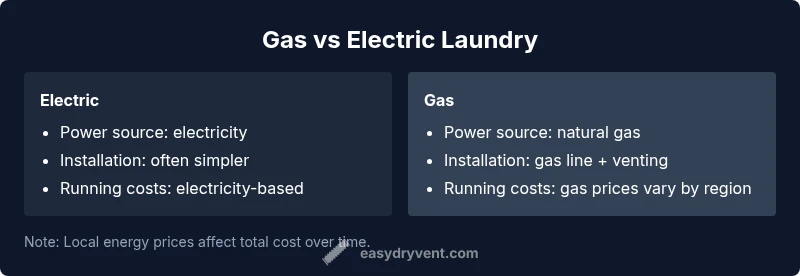
| Feature | Electric washer and dryer | Gas washer and dryer |
|---|---|---|
| Energy Source | electric | gas |
| Installation & Connections | dedicated 240V circuit + standard outlets | gas line connection + venting |
| Running Costs Context | electricity-based costs; varies by rate | gas-based costs; varies with gas price |
| Drying Performance | depends on model; many offer efficient cycles | can offer faster cycles in some models |
| Ventilation & Safety | venting required to outdoors; electric heat source | combustion byproducts vented outside; CO risks if venting is faulty |
| Maintenance & Durability | fewer combustion parts; often reliable electronics | burner components and venting require additional upkeep |
The Good
- Easier electrical installation in homes with existing circuits
- Lower indoor air quality risk with electric dryers (no combustion)
- Gas can offer lower operating costs where natural gas is inexpensive
- Potentially faster drying cycles in some gas models
- Wide selection of models for both electric and gas options
Negatives
- Gas installation can be costly and requires licensed professionals
- Gas dryers require venting and ongoing burner maintenance
- Electricity prices can be volatile and affect running costs
- Model availability and service coverage vary by region
Electric washers and dryers are the pragmatic default for most homes; gas wins where a gas line exists and energy costs favor gas.
If you lack a gas line or face high electricity rates, electric units are typically the safer, simpler choice. If you have a gas connection and favorable gas pricing, gas models can offer lower long-term costs and faster cycles.
Common Questions
What is the main difference between electric and gas laundry pairs?
The primary difference is energy source: electric pairs run on electricity, while gas pairs use natural gas for the dryer heat. This distinction drives installation needs, running costs, and safety considerations across the entire laundry stack.
Electric and gas laundry pairs differ mainly in energy source, installation, and cost. Consider your home's hookups to decide what's best.
Are electric washers more energy-efficient than gas washers?
Both electric and gas washers can be efficient depending on the model and controls. Efficiency depends more on drum design, sensors, and heat source efficiency than on the energy type alone.
Both types can be efficient; it depends on the specific model and features.
Do I need a vent for gas dryers?
Yes. Gas dryers typically require venting to the outdoors to expel combustion byproducts. Electric dryers also vent to exhaust outdoors, but without combustion byproducts.
Gas dryers usually need a vent to outside; electric dryers vent too, but without combustion gases.
What installation costs should I expect?
Costs vary by home. Gas installations may require gas line work and venting, while electric installations focus on circuits and possible panel upgrades. Hiring licensed professionals for gas work is common.
Gas installation often costs more due to line work and venting; electric setups are usually simpler.
Which is better for apartments?
Electric washers and dryers are typically more practical in apartments that lack a gas line or venting constraints, while gas options are more common in homes with existing gas service.
Electric units are usually the safer fit for apartments without gas access.
Can I convert a gas dryer to electric (or vice versa)?
Conversions between energy sources involve replacing appliances and reworking connections; it is generally not cost-effective and not recommended.
Conversions are usually not practical; you’re better off selecting the right type from the start.
Key Points
- Assess your home’s hookups first and foremost
- Gas can lower operating costs where gas is inexpensive
- Electric pairs are typically easier to install and maintain
- Ventilation and safety matter for all gas units
- Consider local energy prices and typical loads when deciding