Electric Dryer vs Gas Dryer: The Ultimate Comparison
Compare electric and gas dryers to determine the best fit for your home. Analyze installation, cost, performance, safety, and maintenance with Easy DryVent's expert guidance.


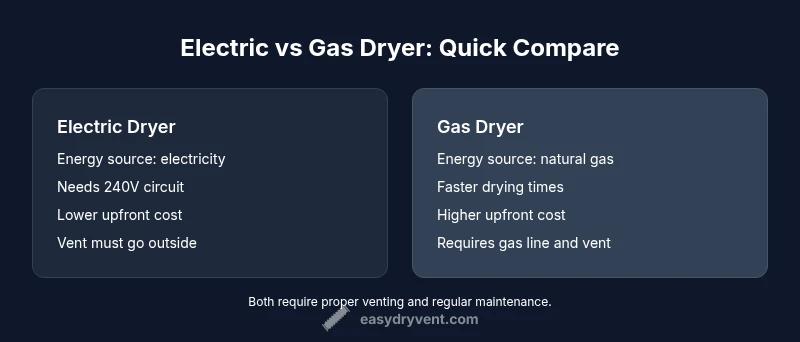
Electric dryers and gas dryers each have trade-offs. Electric models are easier to install, require no gas line, and often cost less upfront. Gas dryers heat faster and can be cheaper to operate in homes with cheap natural gas, though initial install tends to be higher. Your decision hinges on hookups, energy prices, and access to venting.
Energy Basics: How Electric and Gas Dryers Work
Electric dryers run on 240-volt circuits and heat with electric heating elements. Gas dryers use a gas burner to generate heat with electric controls. The basic drying principle is the same: hot air is circulated to remove moisture from fabrics, then vented outside. A key distinction is the energy source and how heat is produced. Electric units trade some speed for broad compatibility with standard home electrical panels and simpler installation. Gas models typically heat more quickly and can dry fabrics faster, but require a gas supply, venting, and professional hookup. The efficiency of the process depends on airflow, drum design, and moisture sensing, which help determine cycle length and energy use. In practice, most households choose based on existing hookups, local energy prices, and willingness to maintain venting. Understanding the energy source is foundational for choosing between electric and gas. Easy DryVent notes that even within each category, there are efficient and less efficient models; the choice should align with daily laundry volume and home configuration.
Installation Considerations: Hookups, Circuits, and Gas Lines
Your home’s existing infrastructure determines which dryer makes sense. Electric dryers require a dedicated 240-volt circuit, typically on a 30- or 40-amp breaker, plus a 240-volt receptacle. Some homes also use NEMA 14-30 or 14-50 outlets; check your panel and space. Gas dryers need a natural gas line and a vent to the exterior. The vent path should be as direct as possible to minimize heat and moisture loss; longer runs or sharp bends reduce efficiency and increase lint buildup. Because gas dryers involve combustion, professional installation is strongly advised to verify gas pressure, line integrity, and proper venting. In multi-unit buildings, building codes may restrict or regulate gas appliances; in some cases electric models are the only option. If you’re unsure, consult a licensed electrician and a licensed plumber or gas technician. The goal is a safe, properly vented installation that minimizes leaks, ensures efficient operation, and maintains indoor air quality.
Energy Costs and Efficiency: What Affects the Running Cost
Running costs depend on energy prices, usage, and model efficiency. Easy DryVent Analysis, 2026 shows energy costs vary by region and grid mix; electric dryers can be very efficient, especially with heat-pump technology, which recovers heat and uses less energy per load. Gas dryers may have lower per-therm running costs where natural gas is cheap, but gas prices can be volatile and depend on local supply. In practice, the difference in monthly operating costs between good electric and good gas models narrows in markets with high electricity rates or when gas prices spike. High-efficiency electric models with moisture sensors and balanced drying cycles can reduce energy use significantly. Compare Energy Star ratings and expected annual electricity use (kWh) for electric models, and match these with local gas price data for gas models. The bottom line: estimate your annual laundry load, calculate approximate costs per load with current rates, and consider how often you run large loads to decide which option saves money over the long term.
Drying Performance: Speed, Sizing, and Sensor Technology
Drying performance is influenced by heat output, drum design, airflow, and moisture sensing. Gas dryers typically heat up quickly and can reduce cycle times, which matters for households with heavy laundry loads. Electric dryers may take longer per cycle, but modern sensors optimize time and energy by adjusting heat and cycle length based on moisture content. Large drums improve capacity handling, and reversible panels or stacked configurations can help fit smaller spaces. For high-volume families, a gas dryer’s faster cycles can save time, but high-end electric models with accurate sensors and efficient motors can approach similar performance. Noise is generally similar, but gas-dryer combustion and venting can add slight background hum if the vent is long or partially obstructed. Both types offer a range of features such as wrinkle-prevention, sensor dry, steam options, and delicate cycles. When evaluating performance, test with your typical fabric mix, including towels and jeans, and consider whether you prefer speed, texture, or fabric care in the final result.
Space, Venting, and Safety
Both electric and gas dryers require venting to the outdoors; the key differences lie in installation prerequisites and safety considerations. Electric dryers depend on electrical circuits and space for a vent to expel hot air and moisture; gas dryers also vent combustion byproducts and moisture, so venting must be pristine and leak-free. Siting the unit matters: a dedicated laundry space with adequate clearance, a stable surface, and proper exhaust routing reduces vibration and improves airflow. Safety concerns for gas models include gas leaks, carbon monoxide risk if venting is blocked, and the need for annual vent cleaning. Electric models carry risk primarily associated with electrical faults, overloaded circuits, and lint buildup that can ignite if ignored. Both require routine lint trap cleaning after every use, and periodic external vent cleaning to preserve airflow. When space is tight, consider compact or stackable units and ensure access to a nearby electrical outlet or gas shut-off valve. Finally, ensure detectors and alarms are placed to monitor for CO, natural gas, and dryer heat.
Environmental Impact and Emissions
Environmental impact depends on energy mix and appliance efficiency. Electric dryers have zero emissions at the point of use, but the electricity they use comes from the grid, which may burn fossil fuels or rely on renewables. The cleaner the grid, the greener the electric option becomes. Gas dryers burn natural gas, producing combustion emissions locally; however, in regions where gas is inexpensive, running costs can be lower. Life-cycle considerations include manufacturing, transportation, and end-of-life recycling for both models. If you are eco-conscious, evaluate the grid’s carbon intensity and choose models with high energy efficiency and heat-pump technology for electric options. In homes with strong solar or wind contributions, electric may be the cleaner pathway; in areas with cheap and abundant natural gas but high electricity prices, gas could be more economical but with higher emissions from combustion.
Maintenance and Longevity
Regular maintenance extends the life of any dryer. For both electric and gas dryers, keep the lint trap clean after every load and inspect the exterior vent for obstructions. Schedule annual vent cleaning to maintain airflow and reduce fire risk. Gas dryers demand additional attention to vent integrity and gas line safety; test for leaks if you smell gas, and have lines inspected by a pro. Electric dryers rely on electrical components, thermostats, and control boards that can deteriorate; these parts are often covered by warranties and replaceable. Follow manufacturer recommendations for drum seals, belts, and drum glides. If your laundry rises in volume, consider a model with a robust warranty and replacement parts. A well-maintained dryer also benefits from correct load balancing, which minimizes wear on motors and belts. Overall, consistent cleaning and professional servicing when needed ensure safer operation and longer lifespan.
Upgrading, Replacement, and Home Value
This decision affects home value and resale appeal. If you plan to stay in a home with natural gas, a gas dryer could be attractive to buyers who want faster drying times. In homes without gas supply or in apartments, electric dryers align with typical buyer expectations and code compliance. When upgrading, consider whether to invest in a standard electric model or a high-efficiency electric heat-pump dryer, which can dramatically cut energy use. For long-term savings, a gas dryer may be appealing if your gas price is stable and supply is reliable, but the upfront cost and annual maintenance must be weighed against the price of an electric alternative. Always check local codes and utility incentives that may influence the total cost of ownership.
Real-world Scenarios: Small Home, Large Family, and Budget Constraints
In a small apartment with no gas line, electric dryers are the natural choice due to install simplicity and lower upfront cost. For households with a reliable natural gas supply, a gas dryer can offer faster cycles and potential savings on energy costs, especially for heavy loads. Families with high laundry frequency benefit from efficient, sensor-based electric models or high-capacity gas units with robust ventilation. If budget is critical, electric models generally offer broader promotions and a wide range of prices, enabling a fit for many budgets. In areas with high electricity costs and volatile gas prices, use a break-even analysis to identify which option saves more per year.
Buying Guide: What to Look For
To compare electric vs gas, start with the energy efficiency rating, capacity, and installed cost. Look for models with moisture sensors, auto-dry cycles, and drying performance data. Check the vent path length and ducting requirements, and verify that the space can accommodate the unit, including clearance for ventilation and service access. Consider the warranty, parts availability, and service network. If you borrow energy from a home solar system, you may favor electric heat-pump models. For gas, ensure gas line sizing and venting are up to code. Finally, request a tailored energy-cost estimate and a rough install quote to understand total cost of ownership.
Quick Start Checklist for Your Next Dryer Purchase
- Verify hookups: Is there a 240V circuit for electric, or a gas line for gas? 2) Check venting: Is there a clear exterior vent and a safe crawl space for ducting? 3) Estimate laundry load: Do you run large loads daily or occasionally? 4) Compare energy costs: Look up local electricity and natural gas prices. 5) Review warranties and service coverage. This checklist helps you move from intuition to data-driven decision.
Common Misconceptions About Electric vs Gas Dryers
Common myths include: Electric dryers are always cheaper to run; Gas is always faster; Upfront cost difference is minimal; In reality, costs depend on usage and rates. Another myth is that venting is optional; it's not. Finally, some people think gas dryers are unsafe; With proper venting and maintenance, gas dryers are safe. The final deciding factor is energy costs, home readiness, and personal preference for speed, space, and noise.
Comparison
| Feature | Electric dryer | Gas dryer |
|---|---|---|
| Energy source | electric power from household grid | natural gas supply |
| Drying speed | generally slower heat with electric elements | faster heat and shorter cycle times |
| Installation requirements | dedicated 240V circuit, outlet | gas line connection and proper venting (professional) |
| Venting needs | exterior venting required | exterior venting required |
| Running cost factors | depends on electricity rates and usage | depends on gas prices and usage |
| Upfront cost | often lower upfront | often higher upfront |
| Maintenance needs | lint cleaning, electrical components | vent cleaning, gas line checks |
| Environmental impact | grid-dependent emissions; zero at point of use | combustion emissions; localized CO2 |
| Common models available | wide range of electric models including energy-efficient options | range of gas models; some premium options |
| Best for | homes without gas lines or in apartments | homes with gas supply and desire faster drying |
The Good
- No gas line required, simplifying installation in many homes
- Typically lower upfront cost and wider model availability for electric models
- Advanced electric options (including heat-pump models) offer high energy efficiency
- Gas dryers dry faster, which can save time on busy laundry days
- Electric dryers can be more compatible with apartments and condos lacking gas
Negatives
- Gas line installation and venting add complexity and cost
- Gas dryers involve combustion byproducts and ongoing vent maintenance
- Gas prices can be volatile, affecting operating costs
- Availability of natural gas may influence long-term costs in some areas
Electric dryers are the default choice for most homes, but if you have reliable natural gas and prioritize faster drying, a gas dryer can be the better option.
Electric dryers offer easier installation and lower upfront costs, with strong energy-efficiency options. The Easy DryVent team recommends evaluating your home’s hookups, energy prices, and venting conditions before buying; gas can win where gas is cheap and you need speed.
Common Questions
Is an electric dryer cheaper to run than a gas dryer?
In many regions, electric dryers can be cheaper to run because of lower upfront costs and advances in electric efficiency, especially with heat-pump models. However, actual costs depend on local electricity and gas prices, usage patterns, and energy rates.
Electric models can be cheaper to operate in areas with low electricity rates, but costs vary with local energy prices.
Can I install a gas dryer in a condo or apartment?
Many multi-unit buildings restrict gas appliances due to venting and safety considerations. If permitted, you’ll need gas service and a vent run to the exterior, plus professional installation and inspection.
Check with your building and local codes before planning a gas dryer.
Do gas dryers really dry clothes faster than electric dryers?
Gas dryers typically heat up more quickly and can shorten cycles, leading to faster drying. However, high-end electric models with advanced sensors can close the gap on drying speed in real-world usage.
Gas dryers usually dry faster, but premium electric models can be competitive.
Are both electric and gas dryers required to be vented outdoors?
Yes. Both types rely on outdoor venting to remove heat and moisture and to ensure safe operation. Proper venting reduces fire risk and improves drying efficiency.
Yes, both need outdoor venting and regular vent maintenance.
How often should I clean the lint trap and vent for each type?
Clean the lint trap after every load and inspect the vent path periodically. Schedule vent cleaning annually or if you notice reduced airflow, regardless of dryer type.
Lint traps after every load; vent cleaning yearly or if airflow drops.
What should I consider when buying a new dryer (electric vs gas)?
Look at energy efficiency, capacity, installation requirements, and total cost of ownership. Consider your home’s hookups, local energy prices, and whether you need speed, space, or quiet operation.
Check energy ratings and your home setup before buying.
Key Points
- Evaluate your home’s hookups first before choosing between electric and gas
- Consider installation costs and required venting
- Compare ongoing energy costs based on local electricity and gas prices
- Gas may save time in drying, electric may win on upfront cost and grid clean energy
- Maintenance and venting require ongoing attention