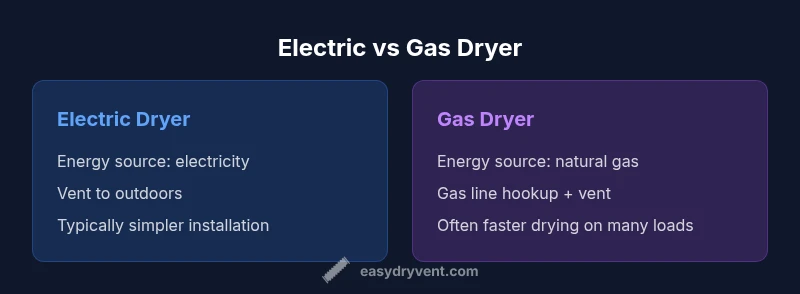
Electric vs Gas Dryer: A Practical Difference Guide
Explore the key differences between electric and gas dryers, including installation, energy use, and performance. Easy DryVent guides homeowners through choosing the right dryer for their home.


Electric and gas dryers differ mainly in energy source and venting needs. The difference between electric and gas dryer impacts installation, operating costs, and drying performance. Most full-size electric models run on a 240-volt circuit and vent outdoors, while gas models require a natural gas (or propane) line and outdoor venting—often with faster drying but additional installation considerations.
Overview: Understanding the difference between electric and gas dryer
The difference between electric and gas dryer options matters for installation, operating costs, and day-to-day performance. In simple terms, electric dryers rely on heated elements powered by electricity and vent outside the home. Gas models generate heat by burning natural gas or propane and also vent to the outdoors. Both types require proper venting and a safe electrical or gas connection, but the details of installation, maintenance, and yearly energy costs vary widely by home and region. When evaluating these options, homeowners should consider existing utility hookups, local energy prices, and the long-term value of faster drying vs. upfront installation complexity. In addition, safety considerations such as proper venting, lint management, and carbon monoxide awareness for gas dryers play a role in selecting the right model.
Energy efficiency and operating costs: what to expect
Energy efficiency is a major factor in the total cost of ownership. Electric dryers rely on electric resistance heaters and often show stable efficiency across models, while gas models use a burner to generate heat, which can reduce cycle times in some cases. The actual operating cost depends heavily on local electricity and natural gas prices, dryer efficiency ratings, and how often you run the machine. Look for Energy Star or equivalent efficiency ratings and consider refrigerant-free heat pump options when applicable for certain models. While gas dryers may offer shorter cycle times, the energy cost balance varies by region and utility pricing, making a direct, apples-to-apples comparison essential for budget planning.
Installation, venting, and safety considerations
Installation is where the biggest practical difference lies. Electric dryers require a suitable 240-volt outlet and an exterior vent. Gas dryers require a gas line hookup, a dedicated vent, and compliance with local building codes and permits. In homes with existing gas service, a gas dryer can sometimes lower running costs, but the installation may involve plumbing work, gas shutoff valves, and more complex vent routing. Safety basics apply to both types: clean the lint screen regularly, check for blocked vents, and ensure outside vents are unobstructed. For gas dryers, install CO detectors and ensure adequate CO monitoring in living spaces to mitigate combustion-related risks.
Drying performance and user experience: heat, cycles, and control options
Performance varies by model and technology, not energy source alone. Electric models typically provide steady heat with good control over cycles, while gas dryers can deliver higher heat output for faster drying in some scenarios. Modern dryers often include moisture sensors, multiple temperature settings, sensor-based dry cycles, and extended-tumble options to reduce fabric wear. The choice between electric and gas can influence cycle times, heat consistency, and the ability to dry delicate fabrics safely. If you frequently dry bulky items or heavy fabrics, you may notice differences in how quickly cycles conclude and how evenly clothes dry across the drum.
Maintenance, safety, and long-term costs
Lint prevention remains essential for both types, but vent maintenance plays a bigger role for gas models due to additional combustion risks. Schedule regular lint cleaning, inspect ducts for kinks or obstructions, and verify that exterior vents open freely. Gas dryers demand periodic checks of gas connections and vent integrity, plus functional CO detectors in the home. Over the long term, total cost of ownership includes purchase price, installation costs, fuel/energy costs, and maintenance. Monitoring your energy bills and scheduling timely service can help you avoid unexpected costs and ensure safe operation.
How to decide for your home: best-fit scenarios and decision factors
If your home has an existing gas line and you value potentially faster cycles, a gas dryer may be appealing, especially in colder climates where efficient drying is beneficial. If you lack gas service or want minimal installation work, an electric dryer is typically the simpler choice, often with lower upfront costs. Consider the local energy price mix, the availability of gas service, and the practicality of vent routing in your space. For many households, the decision boils down to utility infrastructure (gas vs electricity), the cost of fuel vs electricity, and the importance of cycle speed versus installation convenience.
Quick-start checklist for buyers
- Confirm existing utility hookups (gas line vs dedicated 240V electric outlet)
- Compare local energy prices for gas and electricity
- Check venting requirements and available space for installation
- Review drying performance features (moisture sensors, sensor-based cycles)
- Assess safety measures (CO detectors for gas dryers, vent maintenance plan)
Comparison
| Feature | Electric Dryer | Gas Dryer |
|---|---|---|
| Energy Source | Electric power from the grid | Natural gas or propane combustion |
| Vent/Installation | Exterior vent required; dedicated 240V circuit | Gas line hookup + exterior vent; may require permits |
| Operating Costs | Depends on local electricity rates and dryer efficiency | Depends on local gas prices and cycle frequency |
| Drying Time | Comparable; some models slower on certain loads | Often faster cycles on heavy loads due to higher heat output |
| Upfront Cost | Typically lower electrical installation costs; no gas line work | Typically higher due to gas line work and permits |
| Environmental Impact | Impact tied to grid electricity mix | Emissions from combustion plus gas supply logistics |
| Best For | Homes with existing electric service and no gas line | Homes with accessible gas service and venting space |
The Good
- Electric dryers generally have simpler installation for homes without gas lines
- Gas dryers can offer faster drying and may reduce cycle times in some setups
- Modern electric dryers with moisture sensors are highly efficient and easy to maintain
- Gas dryers may have lower long-term fuel costs where gas is cheaper than electricity
Negatives
- Upfront gas installation costs and permitting can be higher
- Gas dryers require venting and CO detector considerations
- Electric dryers' performance depends on electrical service quality and climate
- Gas prices fluctuate with market conditions, affecting operating costs
Choose electric if you lack gas service or want simpler installation; choose gas if you have a gas line and want potentially faster cycles.
Electric dryers are typically best for homes without gas access and with straightforward electrical wiring. Gas dryers suit homes with existing gas service and venting, offering faster cycles but with higher installation considerations and ongoing fuel cost variability.
Common Questions
What is the main difference between electric and gas dryers?
The primary difference is energy source: electric dryers use electricity to heat air, while gas dryers burn natural gas or propane. Both types require venting to the outdoors and have similar lint control needs. Installation complexity and operating costs vary by local energy prices and existing hookups.
The main difference is energy source: electric uses electricity, gas uses natural gas or propane and venting is needed for both.
Do I need a gas line to use a gas dryer?
Yes. A gas dryer requires a safe, properly installed gas line and a vent to the outside. If your home lacks a gas line, you will need a conversion or a different dryer, which may involve significant plumbing and permits.
Yes, you need a gas line and proper venting for a gas dryer.
Are electric dryers safer than gas dryers?
Safety considerations differ. Electric dryers eliminate combustion risks but still require proper venting and lint management. Gas dryers introduce combustion byproducts, so CO detectors and regular vent checks are advised to mitigate risks.
Electric dryers avoid combustion risks, but gas dryers need CO detectors and vent checks for safety.
Which dryer type is more energy efficient?
Energy efficiency depends on the model and technology, not the energy source alone. Look for Energy Star ratings and heat-pump options when available. Regional energy prices also affect overall efficiency in real-world use.
Efficiency varies by model; check Energy Star ratings and regional energy costs.
Can I convert an electric dryer to gas or vice versa?
Conversion between electric and gas is generally not feasible without replacing major components and ensuring adequate utility connections. A new dryer matching your home’s setup is typically recommended.
Conversion is usually not feasible; install a dryer that matches your home’s infrastructure.
What should I check before buying a dryer for a small space?
Measure the location for venting, clearance, and electrical or gas connections. Compact electric models may offer similar performance with a smaller footprint, while some gas options require more space for safe ventilation and access.
For small spaces, verify venting, clearance, and connection requirements; consider compact electric models.
Key Points
- Assess utility availability first: gas line vs electric circuit
- Estimate operating costs using local energy prices
- Consider venting requirements and safety features
- Check for moisture sensors and cycle options for fabric care
- Plan for installation permits if choosing gas