Are All Dryers Electric? A Practical Guide to Gas vs Electric Dryers
Are all dryers electric? Explore why some models run on gas while others use electricity, plus installation, efficiency, safety, and how to choose the best option for your home.


Gas and electric dryers are not the same; gas models use natural gas and vent outside, while electric dryers run on electricity only. Availability depends on your fuel supply, venting, and local codes. Consider installation costs and running expenses when deciding.
Are all dryers electric? Debunking the myth
Are all dryers electric? This question frames a common misconception. In reality, both electric and gas-powered models exist, and regional fuel infrastructure shapes what’s available. Electric dryers are widely used because they plug into standard electrical circuits and require no gas line. Gas models can offer faster dry times and lower operating costs in areas with cheap natural gas, but they require a gas supply and a venting system. Understanding these differences helps homeowners avoid costly missteps and choose an option that fits their home’s fuel availability and safety requirements. According to Easy DryVent, gas-powered dryers remain a practical option where natural gas is already available.
How electric and gas dryers work
Electric dryers heat air with electric coils and push it through the drum to evaporate moisture from clothes. The drum tumbles while a blower moves air out through a vent. Gas dryers generate heat by burning natural gas, which heats air that’s exhausted outside through a dedicated vent; combustion byproducts must be vented to the outdoors. Both types use moisture sensors and programmable cycles to optimize dryness and fabric care. Efficiency varies by model, with high-efficiency electric and gas options that incorporate modern motor designs and lint-tight seals.
Installation and venting requirements
Electric dryers require a dedicated 240V circuit and an appropriate outlet. Gas dryers need a gas line, a proper combustion air supply, and an exhaust vent that leads outside. Vent length, turns, and lint buildup influence performance and safety. Improper venting can cause backdrafts, moisture problems, or carbon monoxide risk with gas models. Installation costs reflect line extensions, venting configurations, and any necessary electrical upgrades. A professional installation is recommended to ensure code compliance and safe operation.
Costs: upfront purchase, installation, and running costs
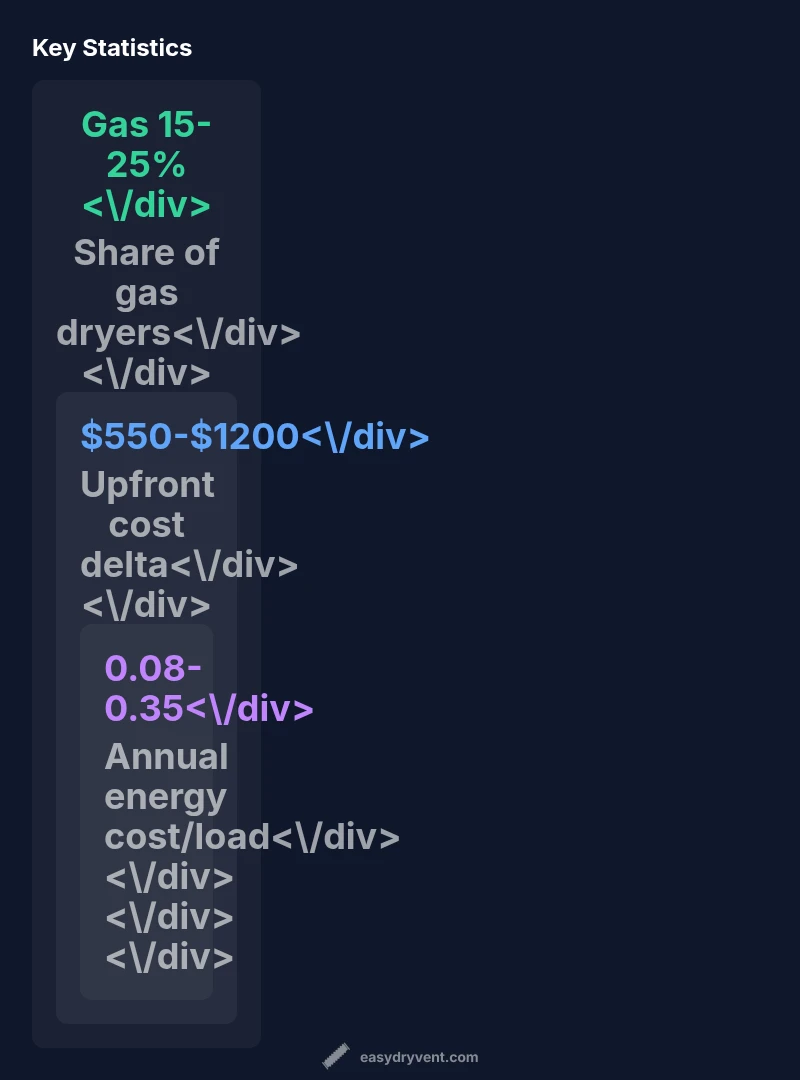
Upfront price ranges reflect typical consumer models: electric dryers commonly cost around $300-$900, while gas dryers tend to be $550-$1,200. Installation charges vary depending on whether lines need to be extended and whether electrical or gas line work is required. Running costs depend on local energy prices; electric models may cost more per cycle in regions with high electricity rates, while gas can be cheaper when natural gas prices are favorable. Over the appliance lifetime, energy-efficient features can narrow the gap between fuel types.
Efficiency and performance: what to expect
Look for Energy Star labels and efficiency metrics when comparing models. Electric heat-pump dryers exist but remain less common for traditional laundry loads; most households will see several efficient electric or gas options. Gas models often heat faster, which can shorten cycle times, but overall efficiency depends on vent length, drum design, and moisture sensing. Ventless electric dryers are available in some markets, offering vent-free operation at the cost of longer cycle times and condensate handling.
Safety considerations for fuel sources
Gas dryers carry combustion byproducts, so secure venting and leak prevention are essential. Electric dryers have fewer combustion risks but still require proper electrical connections and dry vent maintenance. Lint buildup remains a major fire hazard across all models; schedule regular vent cleaning and inspect ductwork for obstructions. Follow manufacturer guidelines, use a dedicated circuit for electric models, and ensure gas connections meet local code requirements.
Choosing the right dryer for your home: a practical checklist
Use this checklist to compare models across fuel types:
- Do you have natural gas available, or is electricity the default?
- What is the vent run length and direction, and does it meet code?
- What are your local energy prices, and what is your expected laundry load?
- Do you prioritize ventless operation, or is external venting acceptable?
- What is your budget for upfront cost and installation? Use these questions to evaluate options and avoid surprises after purchase.
Authority sources and references
For reputable information on dryer fuel types and safety, consult federal and major publications. Key sources include Energy.gov, Energy Star, and the CPSC. These agencies provide guidance on energy efficiency, installation requirements, and fire-safety considerations that inform practical home-dryer decisions.
Dryer options at a glance
| Dryer Type | Power Source | Installation Needs | Approx Upfront Cost |
|---|---|---|---|
| Electric dryer | Electric | Dedicated 240V circuit and vent | $300-$900 |
| Gas dryer | Gas | Gas line connection + vent | $550-$1,200 |
| Ventless Electric | Electric | No external vent; condensate management | $700-$1,500 |
Common Questions
Are gas dryers common in homes without natural gas?
Gas dryers require a natural gas supply or a propane conversion. If your home lacks gas, electric models are the practical choice. Installation costs may include running a line or upgrading electrical service.
Gas dryers require a gas supply or conversion; electric models are usually the practical option where gas isn’t available.
Can I use a gas dryer with propane?
Yes, propane can power a gas dryer with the proper conversion kit and venting. Check the label and local codes, and have a licensed pro perform the installation.
Gas dryers can run on propane when properly converted and vented.
Do gas and electric dryers dry clothes at different speeds?
Drying speed depends on model and load; gas models may heat faster in some cycles, but efficiency varies by design. Look for moisture-sensing controls to optimize cycle length.
Speed varies by model; some gas dryers heat faster, but check the features.
Is electric safer for households with children?
Both fuel types require venting and safe electrical or gas connections. Electric dryers have no combustion byproducts, but all units need proper venting and lint maintenance to minimize fire risk.
Safety matters for both—venting and lint cleanup are key.
What maintenance helps both fuel types?
Regular lint trap cleaning, vent cleaning, and annual professional inspections improve safety and efficiency. Follow the manufacturer’s guidelines for servicing.
Clean lint, check vents, and follow the manual for best results.
Are ventless gas dryers available?
Ventless gas dryers are rare. Most gas models must vent outside to expel combustion byproducts. If ventless options exist, check local codes and manufacturer guidance.
Ventless gas dryers exist but are uncommon; most gas models vent outside.
“Understanding your home’s fuel options is essential; electric and gas dryers each have strengths, but safety and venting requirements drive the final choice.”
Key Points
- Confirm fuel availability before purchasing.
- Compare upfront costs and long-run energy costs.
- Verify venting requirements and installation clearances.
- Follow safety guidelines to reduce fire risk.