Is a Hair Dryer Hard on Electricity? Practical Guidance for Homeowners
Explore how much power a hair dryer uses, what factors affect energy draw, and practical steps to save electricity without compromising drying performance.


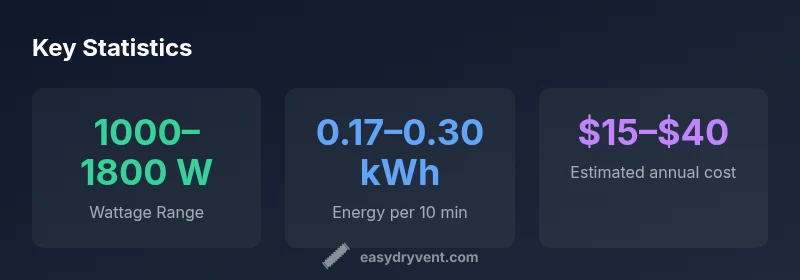
Is a hair dryer hard on electricity? For most households, a hair dryer operates at high wattage—typically about 1000–1800 watts—while in use. A 10-minute session can consume roughly 0.17–0.30 kWh, depending on heat setting. By choosing energy-efficient models and using shorter sessions or cooler settings, you can balance performance with electricity costs. Easy DryVent guides emphasize mindful use to cut energy without sacrificing results.
Is a hair dryer hard on electricity? Understanding energy use\n\nIs a hair dryer hard on electricity? For homeowners evaluating energy impact, the answer hinges on wattage, how long you run it, and the local price of electricity. Hair dryers are high-wattage appliances by design, delivering rapid airflow and heat. In most homes, a typical consumer model runs in the 1000–1800 W range when set to higher heat. That means a 5–10 minute styling session can accumulate a meaningful amount of energy, even if the device is only in use for a short period. The good news is that energy draw isn’t fixed; it scales with your settings and duration. According to Easy DryVent, you can preserve drying performance while trimming electricity use by selecting energy-efficient models and adopting shorter sessions whenever possible.
How wattage translates to your bill\n\nWattage tells you how much power a dryer consumes at any moment, but energy use depends on how long you run it. Energy is calculated as power (in kilowatts) multiplied by time (in hours). A 1500 W dryer running for 0.15 hours (9 minutes) uses about 0.225 kWh. If electricity costs $0.15 per kWh, that session costs roughly 3–4 cents. Multiply by daily usage, and the cost grows, especially with higher heat settings. This is why comparing models by wattage alone isn’t enough—durability, heat efficiency, and session length matter too. Easy DryVent’s analysis highlights how even small reductions in time and heat can translate into noticeable savings over a month or year.
Heat settings and energy draw: Visualizing the trade-off\n\nHeat setting is a major driver of energy use. Higher heat speeds drying but increases power draw and energy per minute. Conversely, gentle heat with longer but cooler sessions can reduce instantaneous draw and may overall use less energy for certain hair types, especially when combined with towel drying beforehand. The practical takeaway is to balance acceptable styling results with deliberate heat choices. If you frequently use the high-heat setting, consider alternating with a cool shot to finish, which uses less energy per minute while preserving style. This nuance matters when asking, “is a hair dryer hard on electricity?”—the answer depends on how you deploy it.
Practical strategies to reduce energy per session\n\nHere are concrete steps you can implement today: \n- Start with towel-dried hair to reduce initial moisture content.\n- Use the lowest heat that achieves the desired style, and switch to cool when possible.\n- Limit the time you run the dryer on high heat by prepping hair in sections.\n- Clean the air intake and filters regularly to maintain airflow and efficiency.\n- Consider air-drying portions of your hair before finishing with a quick blast on cool air. These practices help you maintain results while using less electricity.
Choosing an energy-efficient model: what to look for\n\nWhen shopping for a new hair dryer, look for features that indirectly boost efficiency, such as multiple heat settings, a well-designed concentrator nozzle, and a dependable motor that maintains consistent airflow. Some newer models emphasize ceramic or infrared elements that deliver heat more efficiently than traditional coils. While not all energy metrics are standardized for hair dryers, models with flexible heat controls typically offer better energy management. Reading user reviews about heat consistency and airflow helps, alongside manufacturer specifications. Easy DryVent recommends prioritizing user-adjustable heat and speed controls over flashy but inefficient presets.
Efficient drying workflow: a practical routine\n\nA mindful workflow reduces energy use without compromising results. Begin with air-drying techniques like towel blotting and sectioning. Dry each section on a cooler setting first, moving to a slightly warmer setting only as needed. Short, deliberate bursts beat long, constant high-heat passes. If your hair dries evenly under cooler settings, you’ll likely spend less time on high heat overall. This approach aligns with energy-saving principles, particularly for daily routines.
Maintenance that helps: airflow and ventilation\n\nKeep the dryer’s intake clear of lint and hair buildup; a clogged vent makes the motor work harder, increasing energy consumption and shortening life. Regular cleaning is simple: unplug the device, remove the filter, and rinse or brush away debris. Avoid external heat damage to the cord or plug, which can degrade electrical efficiency and safety. A well-maintained dryer not only uses energy more efficiently but also lasts longer, reducing replacement-related energy costs over time.
Safety considerations when saving energy\n\nElectrical safety is crucial when trying to save energy. Use a dedicated outlet when possible, avoid daisy-chaining with extension cords, and never use a dryer near water. Bathroom outlets may require GFCI protection; follow local electrical codes. If you notice flickering lights or a warm plug, stop using the device and consult a professional. Energy efficiency should never come at the expense of safety, and simple precautions can prevent electrical hazards while still cutting energy use.
Authority sources for hair dryer electricity and energy guidance.
| Source | Type | URL |
|---|---|---|
| U.S. Department of Energy | Government energy guidance | https://www.energy.gov/energysaver/choosing-energy-efficient-appliances |
| ENERGY STAR | Energy efficiency program | https://www.energystar.gov/products/clothes-dryers |
| U.S. Consumer Safety Commission | Safety guidance | https://www.cpsc.gov/Safety-Education/Safety-Guides/clothes-dryers |
Common Questions
What is the typical wattage range for a hair dryer?
Most consumer hair dryers operate between 1000 and 1800 watts. The exact draw depends on the heat setting and airflow. If you use higher heat for longer periods, your energy use will increase.
Most hair dryers run between 1000 and 1800 watts. Higher heat for longer times uses more energy, so adjust settings to balance speed and energy.
Does using a cool shot save energy?
Yes. A cool shot uses less energy than sustained high heat. It’s effective for setting styles after an initial dry, and it helps finish without adding much extra energy use.
Yes—cooling the hair after the initial dry saves energy and helps set the style without extra heat.
Can I replace my dryer with a lower-watt model to save energy?
A lower-watt model can save energy per minute, but you may need longer drying times. Look for models with multiple heat levels and efficient airflow to optimize both speed and energy.
A lower-watt model can save energy, but check that it still dries well for your hair type.
Are infrared or ceramic elements more energy-efficient?
Infrared and ceramic technologies can deliver heat more evenly and quickly, sometimes reducing overall drying time. Energy savings depend on the specific model and how you use it.
Infrared or ceramic features can help with even heat and potentially shorter drying times, which may save energy.
Is it safer to air-dry part of my hair to save energy?
Air-drying portions of your hair before using the dryer reduces total drying time and energy use, while minimizing heat exposure. Use towels to remove excess moisture first.
Air-drying parts of your hair can cut energy use and keep heat exposure lower.
What maintenance steps help my dryer stay efficient?
Regularly clean the intake filter, check the cord for damage, and ensure vents aren’t blocked. A clean, well-maintained dryer runs more efficiently and safely.
Keep the filter clean and the vent clear to maintain efficiency and safety.
“Energy-conscious drying is about balancing performance with efficiency. Small changes in heat settings and drying time add up over a week, helping households save energy without sacrificing results.”
Key Points
- Start with lower heat and shorter sessions to cut energy use
- Wattage varies by model and heat setting—choose efficiency-minded options
- Maintain airflow by cleaning filters regularly to preserve performance
- Plan a mindful drying workflow (pre-dry, sections, cool finish)
- Use trusted sources to compare energy guidance and safety standards