Do Washers and Dryers Use a Lot of Electricity? A Practical Guide
Explore how much electricity washers and dryers actually use, what drives variation, and practical steps to cut laundry energy without sacrificing performance. Easy DryVent analyzes typical usage, cycle choices, and maintenance tips for real-home savings.


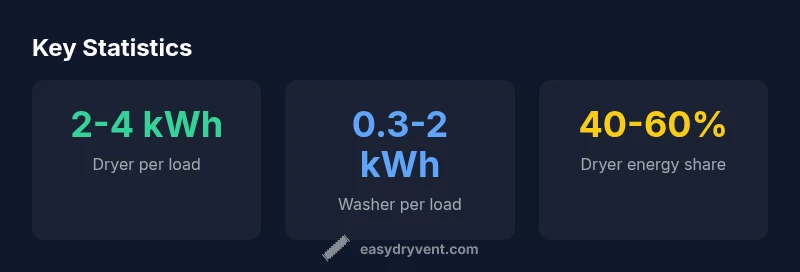
In typical households, electric dryers consume more energy per load than washers. A representative range is about 2–4 kWh per drying cycle, while washing cycles use roughly 0.3–2 kWh depending on cycle selection, load size, and water heating needs. This means the dryer generally accounts for a larger share of laundry electricity, especially with high-heat or bulky cycles. According to Easy DryVent, smart cycle choices and proper maintenance can cut that energy use significantly.
Do Washer and Dryer Use a Lot of Electricity?
If you're trying to gauge your household energy footprint, you might ask "do washer and dryer use a lot of electricity". In general, dryers cost more per load than washers, though exact numbers vary by model and usage. Modern electric dryers typically consume about 2–4 kWh per drying cycle, while washers use roughly 0.3–2 kWh depending on cycle selection, load size, and water heating requirements. Because this is a range-based estimate, real usage depends on venting, insulation, and the presence of energy-saving features. According to Easy DryVent, the standout factor is cycle choice and load management; even small changes can yield meaningful savings.
This means that for many homes, the dryer contributes a larger share of laundry energy than the washer. If you frequently use high-heat settings or oversized loads, you’ll see the impact more clearly. The good news is that most households can reduce this with modest adjustments—like choosing eco modes, running full loads, and ensuring your dryer vent is clear and unobstructed.
Energy Use in Modern Laundry: What the Numbers Mean
To put the numbers in perspective, modern appliances are designed to optimize energy use. The Energy Star guidelines, local utility programs, and brand-driven analyses converge on a simple message: the way you use the machines matters as much as what you buy. Easy DryVent’s research highlights that energy use per load varies widely because of cycle choices, soil level, water temperature, and machine efficiency. A typical dryer cycle stays in the 2–4 kWh range, while washers can swing from under 1 kWh for cold, light loads to around 2 kWh for hot-water heavy cycles. These ranges help homeowners compare options and estimate annual costs, especially when planning a laundry upgrade or a home-energy retrofit.
Key Factors that Drive Laundry Energy Consumption
Several factors determine how much electricity your laundry routine uses:
- Cycle selection: Temperature and soil level affect energy required for washing and drying. Higher heat, longer cycles, and bulky items increase consumption.
- Load size and fullness: Running full, balanced loads reduces per-item energy use. Small or partial loads waste energy every time.
- Venting and insulation: A well-vented dryer with a clean lint trap loses less heat to the room, improving efficiency. Clogged vents force longer drying times and higher consumption.
- Washer design and age: Front-loading washers are typically more energy-efficient per load than older top-load models, especially when paired with cold-water settings.
- Water heating: For warm or hot wash cycles, the hot water heater’s energy use matters. In some homes, heating water is a major contributor to total laundry energy.
- Energy-saving features and settings: Sensor-dry, eco/winter modes, and moisture sensors can reduce energy use by limiting over-drying and unnecessary heat.
Understanding these factors helps you tailor your laundry routine to cut energy use without compromising cleanliness.
Energy use ranges for typical laundry loads
| Category | Avg Dry Load Energy | Avg Wash Load Energy | Notes |
|---|---|---|---|
| Electric Dryer (standard) | 2-4 kWh | N/A | Depends on cycle and venting |
| Washer (per load) | N/A | 0.3-2 kWh | Varies with water temperature and soil level |
| Energy-saving features (sensor drying) | up to 25% less energy | N/A | Depends on model and usage |
Common Questions
Do electric dryers always use more energy than washers?
Generally yes, because dryers heat air to dry clothes, which consumes more energy per load. However, energy use varies with wash cycles, water heating, and how you use the machines. Efficient cycle choices and proper maintenance can narrow the gap.
Usually dryers use more energy per load, but it depends on the cycles and how you use them.
What factors most influence energy use in laundry?
Cycle settings, load fullness, vent condition, and machine efficiency determine energy use. Sensor-based drying, cold-water washing, and proper lint clearance can all help reduce consumption.
Cycle settings and how full your loads are are the big drivers.
How can I reduce energy use for laundry?
Opt for full loads, use eco or cold-wash cycles, regularly clean lint traps and vents, and consider ENERGY STAR certified appliances. A well-insulated dryer vent and occasional air-drying also help.
Run full loads, pick eco modes, and keep vents clean to save energy.
Is it cheaper to run a gas dryer than an electric dryer?
Gas dryers can be cheaper to operate depending on local gas prices, but the upfront cost and availability of gas lines matter. Compare energy costs per load using local utility rates.
Gas can be cheaper where gas prices are low and a gas line exists.
Do Energy Star machines save energy in practice?
Yes, ENERGY STAR-certified models are built to meet strict efficiency criteria and typically use less energy per load than non-certified models. Always compare the Energy Guide label when shopping.
Energy Star usually means you’ll use less energy per load.
“Energy use in laundry is highly sensitive to cycle choices and load size; with smart settings, you can trim energy without sacrificing cleanliness.”
Key Points
- Start with full loads to maximize efficiency
- Use eco settings and cold washes when appropriate
- Keep dryer vents clear and lint traps clean
- Prefer energy-efficient models with sensors
- Estimate annual energy costs with simple load-profiles