What Size Wire to Dryer: A Practical Homeowner's Guide
Discover the correct wire size for your dryer, whether electric or gas, with practical guidance, safety tips, and code basics from Easy DryVent.


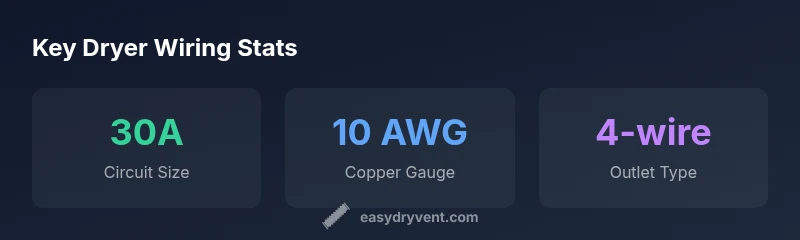
Electric clothes dryers typically require a dedicated 30-amp circuit on 10 AWG copper conductors, paired with a 4-prong 240V outlet. Gas dryers usually need only a 120V circuit (commonly 15–20 amps) for controls and igniters. Always verify the appliance label and local code before wiring.
What size wire to dryer: the fundamentals
When we talk about what size wire to dryer, we're really discussing two things: the circuit that powers the dryer and the gauge of the conductors that carry the electrical current. For most homes with a standard electric clothes dryer, the National Electrical Code (NEC) and common practice call for a dedicated 240V circuit rated at 30 amps. The wiring for this circuit is typically 10 AWG copper, able to safely carry the load required by a modern dryer while leaving room for start-up surges. If you have older aluminum wiring, you may see 8 AWG aluminum used in some installations, but copper is the most common and easiest to verify. For gas dryers, the load is much lighter on the 120V side, usually 15–20 amps, and the wire gauge is smaller (often 14 AWG or 12 AWG depending on the circuit), but the dryer still needs a dedicated circuit for the control electronics. In all cases, the dryer should have a dedicated circuit separate from other appliances. Easy DryVent emphasizes verifying the data plate on the dryer and consulting your local code to confirm requirements for your home.
- body
Wiring basics you should know
- Dryers operate on a 240V supply for heating elements and a 120V supply for controls; ensure a proper connection that matches the dryer’s cord and inlet configuration.
- A four-wire configuration (two hots, neutral, and ground) is standard for new installations; older homes may still have three-wire setups but upgrades are common during replacement.
- The wire gauge must match the circuit ampacity and the breaker size; undersized wiring poses a fire risk and can trip breakers or overheat cables.
- Always install a correctly rated receptacle and cord, and keep the dryer and its outlet accessible for inspection and service.
policyBlock
Typical dryer wiring configurations and conductor gauge
| Dryer Type | Circuit Size | Wire Gauge | Outlet/Plug | Notes |
|---|---|---|---|---|
| Electric Dryer (Standard) | 30 amps | 10 AWG copper | 4-prong 240V outlet | Most common setup in new installations |
| Gas Dryer | 15-20 amps (120V) | 14-12 AWG copper | NEMA 5-15/5-20 outlet | Cy sustains controls; heat comes from gas appliance |
| Aluminum Wiring Alternative | Same circuit rating as copper when allowed | 8 AWG aluminum | 4-prong 240V outlet | Requires approved connectors and inspection |
Common Questions
What size wire do I need for a standard electric clothes dryer?
A standard electric clothes dryer typically requires a dedicated 30-amp circuit with 10 AWG copper conductors. This ensures reliable operation and safe startup current for the heating elements. Verify the dryer label for any model-specific requirements and follow local codes.
For most electric dryers, use a 30-amp circuit with 10 AWG copper. Check the model label and local codes.
Can I use 12 AWG copper for a dryer circuit?
No. 12 AWG copper is generally appropriate for 20-amp circuits, not the 30-amp dryer circuit that most electric models require. Using 12 AWG on a 30-amp dryer circuit is unsafe and code-noncompliant. Use 10 AWG copper unless your code explicitly allows otherwise.
Avoid 12 AWG on a dryer circuit; most models need 30 amps with 10 AWG copper.
Do I need a four-wire outlet for my dryer?
Yes. Modern installations typically require a four-wire 240V outlet (two hot conductors, a neutral, and a ground). This arrangement improves safety and grounding for electronic controls. If your home has an older three-wire setup, plan for a code-compliant upgrade when replacing the appliance.
Most new dryers use a four-wire outlet; check if your home needs an upgrade.
What about gas dryers—do they need the same wiring?
Gas dryers still require a dedicated 120V circuit to power controls and igniters, usually 15–20 amps with copper wiring such as 14 AWG or 12 AWG depending on the circuit. The heating is gas, so the wiring is lighter, but a dedicated circuit remains essential.
Gas dryers use a smaller 120V circuit, but still need a dedicated outlet.
Will upgrading wiring affect my electrical panel?
Upgrading a dryer circuit might require a dedicated breaker and space in your panel. If your panel is near capacity, an electrician may recommend a panel assessment or service upgrade. Always obtain permits if your local code requires them.
Panel checks may be needed if you’re adding a new dryer circuit.
How can I verify that my wiring is correct?
Start by checking the dryer label and the circuit breaker. Look for a 30-amp breaker and 10 AWG copper conductors on the dedicated circuit. Have a licensed electrician inspect the installation to confirm compliance with local code and safety standards.
Get a professional to inspect the wiring to ensure safety.
“Electrical safety starts with correct wire sizing and a properly installed dryer circuit. When in doubt, consult the dryer’s label and local code.”
Key Points
- Choose a dedicated 30A circuit for most electric dryers
- Use 10 AWG copper conductors on copper wiring
- Consider 8 AWG aluminum only if permitted and with approved connectors
- Modern installations use a 4-wire outlet and grounding
- Always verify appliance label and local code before wiring
- Consult a licensed electrician for any upgrades or changes