What Outlet Is Needed for a Dryer: A DIY Guide
Learn which outlet is needed for a dryer, including electric (NEMA 14-30R, 240V, 30A) vs gas (NEMA 5-15R, 120V) requirements, installation tips, safety checks, and common mistakes. Easy DryVent provides practical, code-conscious guidance for homeowners.


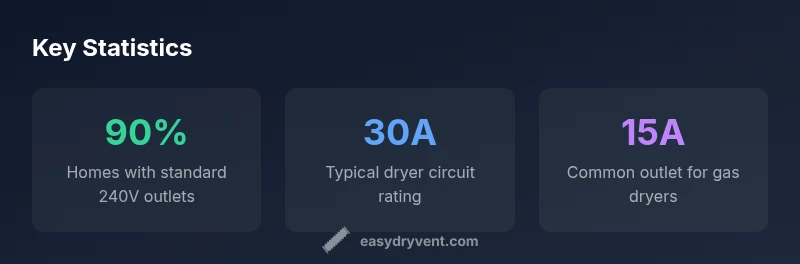
Electric dryers typically require a 240-volt, 30-amp outlet (NEMA 14-30R) on a dedicated circuit, with a 4-wire configuration in new installations. Gas dryers use a standard 120-volt outlet for controls, typically on a 15-amp circuit. Always verify local codes and manufacturer specs.
Understanding why the correct outlet matters
The question "what outlet is needed for dryer" is more than a label on a plug. The right outlet determines voltage, current, and grounding, which in turn affect drying performance, energy efficiency, and safety. An undersized circuit can trip breakers, overheat wires, or damage the dryer’s control board. An incompatible receptacle may also violate building codes or void warranties. At Easy DryVent, we emphasize a code-conscious approach to dryer installations, because mistakes here can lead to lint fires or electrical hazards. The typical rule of thumb is simple: electric dryers rely on a higher-voltage, higher-current circuit, while gas dryers rely primarily on electricity for controls and lights. In this block we’ll unpack the outlet types, explain how they pair with venting and appliance design, and give practical steps to verify what’s installed in your laundry area. You’ll learn how to identify whether you’re looking at a 14-30R, a 10-30R, or a standard 5-15R outlet, and what that means for wiring and safety. Finally, we outline a quick risk assessment you can perform before any installation or purchase decisions.
Electric dryers: outlet types and circuit requirements
Electric dryers demand a dedicated, higher-capacity circuit and a 240-volt supply. The standard choice for new installations is a NEMA 14-30R receptacle on a 30-amp circuit, with four wires (two hots, a neutral, and a ground). This configuration supports modern dryers that heat and run electronic controls simultaneously. Older homes may still have a NEMA 10-30R (three-prong) outlet, which uses a shared neutral/ground arrangement and is legacy rather than code-compliant for new work. Upgrading to a 4-wire, 14-30R setup aligns with current electrical codes and improves safety by keeping grounding separate from the neutral. When wiring, ensure the outlet, cord, and dryer match in functionality and rating, and avoid overloading circuits. If you’re unsure, hire a licensed electrician to install a dedicated 30A, 240V circuit and verify that the dryer’s plug matches the receptacle.
Gas dryers: electrical needs and venting checks
Gas dryers still rely on electricity for controls, lighting, and the drum motor but do not heat with electricity. The typical electrical requirement is a standard 120-volt outlet on a 15-amp circuit (NEMA 5-15R). This outlet is separate from the gas supply line and is used purely to power electronics and fans. Proper venting is essential for gas models, with a clear, unobstructed duct and minimal turns to prevent backpressure and lint buildup. Some local codes require a dedicated 15A circuit for the control panel even though the heater uses gas, so always verify the installation details in the dryer manual and local requirements. If in doubt, consult a licensed electrician to assess both the outlet and the vent path for safety and performance.
How to determine which outlet is in your home
Start by locating the outlet behind the dryer and visually inspecting its shape. A four-slot, rectangular receptacle typically indicates a 14-30R (electric, 240V, 30A). A smaller, three-slot or two-slot outlet may indicate a legacy 10-30R (obsolete) or a standard 5-15R (gas or electric on 120V). Check the dryer's manual for the required outlet type and circuit rating. You can also use a multimeter to test voltage, or consult the dryer’s model number to look up the exact requirements. If you’re unsure, do not rely on guesses: mismatched outlets are a leading cause of electrical fires in laundry rooms. In all cases, the safest approach is to engage a licensed electrician to confirm the circuit is dedicated, properly wired, and correctly grounded before installation or replacement.
Installation considerations and safety tips
Before installing or replacing a dryer outlet, ensure the circuit is dedicated and free of other loads. Never use extension cords or adapters; these create heat buildup and can cause fires. The outlet location should be a minimum distance from water sources and away from heat sources. Check that the cord matches the outlet in body and rating, and confirm the grounding path is correct. For gas dryers, verify the gas line is leak-tested and that the vent has the correct diameter and clearance to the exterior. For electric models, confirm a proper 4-wire setup if required by code, and ensure an appropriate strain relief on the cord to prevent damage.
Common mistakes and how to avoid them
Common mistakes include using an undersized circuit, mixing 3-wire and 4-wire configurations, and using adapters to force-fit a non-matching outlet. These practices can lead to nuisance tripping, overheating, or electrical fires. Another mistake is vent neglect—inadequate venting or long, tortuous runs reduce dryer efficiency and increase moisture and lint buildup. Finally, homeowners sometimes attempt DIY wiring without permits or inspections, risking code violations. Always verify outlet type with the dryer manual, ensure a dedicated circuit, and hire a licensed electrician for any rewiring or installation tasks.
Quick-start readiness checklist
- Identify your dryer's type (electric vs gas) and required outlet.
- Locate and inspect the existing receptacle and circuit breaker size.
- Confirm a dedicated circuit of 30A for electric dryers or 15A for gas dryers.
- Ensure proper four-wire grounding for new electric installations; upgrade legacy three-wire systems if needed.
- Do not use extension cords or adapters; hire a professional for any wiring changes.
- Verify venting is clean, unobstructed, and properly connected before use.
Common dryer outlet types and their electrical needs
| Outlet Type | Voltage | Typical Circuit | Notes |
|---|---|---|---|
| Electric dryer | "240V" | "30A" | "NEMA 14-30R, four-wire" |
| Legacy electric dryer | "120/240V" | "30A" | "NEMA 10-30R (obsolete)" |
| Gas dryer | "120V" | "15A" | "NEMA 5-15R for controls" |
Common Questions
Do electric and gas dryers require different outlets?
Yes. Electric dryers typically require a 240V, 30A outlet (NEMA 14-30R). Gas dryers use a 120V outlet (NEMA 5-15R) for controls. Always check your model’s manual and local codes.
Electric dryers use 240V outlets on a 30A circuit; gas dryers use 120V for controls. Check your unit’s manual.
Can I reuse an old outlet or adapter for my dryer?
No. Dryers require dedicated circuits and proper receptacles; adapters or piggyback outlets are not allowed by code. If the existing outlet doesn’t match your dryer, have a professional update the circuit.
Don’t reuse old outlets or use adapters. Get a proper, dedicated outlet installed.
What about 3-prong vs 4-prong outlets?
Modern installations use 4-prong outlets (NEMA 14-30R) with separate ground. Older homes may have 3-prong (NEMA 10-30R) but upgrading is recommended and often required by code.
Most new setups use four prongs with a separate ground; upgrading is advised.
Do I need a permit to install a dryer outlet?
Permit requirements vary by location, but many jurisdictions require permits for new outlets or rewiring to meet 4-wire standards. Check with your local building department before starting.
Local permits may be needed; check with your city or county.
Can extension cords be used for dryers?
No. Extension cords are not permitted for dryers and can create heat buildup and fire hazards. Use a properly installed fixed outlet and cord.
Never use an extension cord for a dryer.
What should I ask an electrician before installation?
Ask about outlet type, circuit rating, 4-wire grounding, vent clearance, and local code compliance. Provide the dryer’s model to ensure compatibility.
Ask about outlet type, circuit rating, grounding, and venting before starting.
“Choosing the right outlet is foundational to dryer safety and performance; ensure your installation follows current code and manufacturer instructions.”
Key Points
- Identify whether your dryer is electric or gas before shopping for outlets
- Electric dryers usually require a 240V, 30A circuit with a 14-30R receptacle
- Gas dryers use a 120V outlet (5-15R) for controls; verify circuit size
- Avoid adapters and extension cords; ensure a dedicated circuit and proper venting
- Upgrade legacy 3-wire to 4-wire when installing a new electric dryer
- Consult a licensed electrician to ensure code compliance and safety