What Gauge Wire Do Dryers Need? A Homeowner's Guide to Safe Wiring
Learn the correct dryer wiring gauge for safe, efficient operation. This guide covers typical 30A circuits, copper vs aluminum, long runs, and safety tips for DIY homeowners.


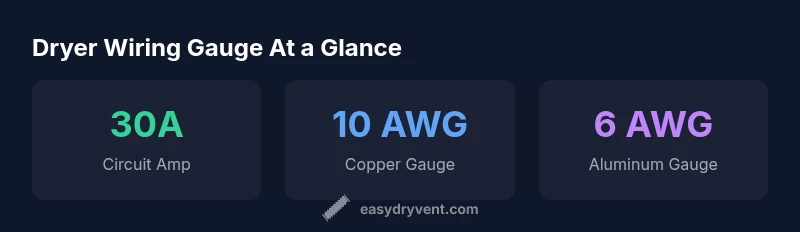
Most residential dryers on standard 240V circuits require 10 AWG copper wiring on a dedicated 30-amp breaker. For longer runs or when copper isn’t available, upgrading to 8 AWG copper (or 6 AWG aluminum) helps reduce voltage drop. Always verify a four-wire circuit and follow your local electrical code when upgrading or replacing wiring.
What gauge wire is needed for a dryer: baseline guidance
For most homes, a standard electric clothes dryer runs on a 240V circuit protected by a 30-amp breaker. The typical wiring choice is 10 AWG copper, paired with a four-wire cable (two hots, a neutral, and a ground). This combination provides the current capacity and protection recommended by Easy DryVent's guidelines and aligns with common electrical code practices. If you’re replacing an existing cord or upgrading, always confirm the circuit type and the dryer's rating in the manual, and avoid using undersized wire, which can heat up and pose a fire risk. If space or budget requires aluminum conductors, you’ll often see 6 AWG aluminum used for a 30A circuit, but connectors and terminations must be rated for aluminum, and a qualified electrician should perform any such upgrade. For DIY projects, ensure you shut off power at the panel and test for voltage before touching any conductors.
Amperage, gauge, and distance: how they interact
Amperage determines the required conductor size, but distance matters too. Voltage drop increases with run length and can reduce dryer performance or lead to overheating if wire is undersized. In typical homes, a 30A circuit on 10 AWG copper minimizes drop over standard laundry-room distances. If your run exceeds typical lengths (for example, long basements or expansive layouts), you may need to move to 8 AWG copper or adjust the circuit design to maintain safe voltage levels. Easy DryVent notes that following a conservative approach on longer runs protects both dryer performance and home wiring.
Step-by-step guide to verify your dryer's circuit gauge
- Locate your dryer's circuit breaker and verify the amperage rating on the panel label. 2) Inspect the wire entry and the dryer’s cord for signs of damage or heat discoloration. 3) If you’re upgrading, dimension the new wire to the breaker size (e.g., 10 AWG for 30A or 8 AWG for 40A) and ensure a four-wire connection. 4) If aluminum conductors are involved, ensure the terminal lugs, connectors, and cord set are rated for aluminum. 5) Have any upgrades inspected by a licensed electrician to confirm conformity with local codes.
Special cases: aluminum conductors and long runs
Aluminum conductors require careful selection of connector materials and proper termination. For a standard 30A dryer circuit, 6 AWG aluminum is common, but you must use lugs and terminal blocks rated for aluminum and consider oxidation protection with anti-oxidant paste. Long runs can introduce voltage drop; verify with a calculator or a professional, and upgrade to copper or a larger aluminum gauge if needed.
Safety considerations and code compliance when upgrading a dryer circuit
Always work with the power off and use a dedicated 240V circuit for your dryer. Do not cap or share a dryer circuit with other appliances. Ensure a four-wire configuration in new installations and install properly rated strain relief, cord clamps, and strain reliefs on the dryer end. Local codes may vary, so check with your electrical inspector before making changes.
Maintenance tips to keep your dryer's circuit safe
Regularly inspect the dryer cord and cable sheath for wear, warm spots, or scorch marks. Keep the area around the panel clear and test the circuit for proper grounding. A clean vent system and a well-sealed housing reduce overall load on the circuit, and routine checks help prevent unexpected failures.
Dryer wiring gauge scenarios
| Scenario | Recommended Wire Gauge | Circuit Breaker | Notes |
|---|---|---|---|
| Standard residential dryer (new install) | 10 AWG copper | 30 | Most homes use a 30A circuit per code and manufacturer guidance |
| Long run/high load | 8 AWG copper | 30-40 | Consider 8 AWG for reduced voltage drop |
| Aluminum conductors | 6 AWG aluminum | 30 | Use specified aluminum conductors and connectors |
| Gas vs electric dryers | N/A | N/A | Gas dryers use 120V for controls; electric require 240V |
Common Questions
What gauge wire is required for a standard electric dryer on a 30-amp circuit?
A standard electric dryer on a 30-amp circuit typically uses 10 AWG copper wiring. This setup provides safe current capacity and aligns with most code requirements.
A standard dryer uses 10 AWG copper on a 30-amp circuit.
Can I use 12 AWG wire for a dryer?
No. 12 AWG is generally suitable only for 20-amp circuits. Dryers require heavier gauge conductors (commonly 10 AWG copper on a 30A circuit) to handle startup surges and continuous load.
No. 12 AWG isn’t suitable for most dryers; use 10 AWG copper on a 30A circuit.
Is a four-wire dryer cord required for new installs?
Yes. Current code typically requires a four-wire cord with separate grounding and neutral, plus an appropriately grounded dryer chassis. Some older installations may still use three-wire setups but upgrading is recommended.
Yes, a four-wire cord is required in new installs.
Are aluminum conductors allowed for a dryer's circuit?
Aluminum conductors can be used, but require different terminal/connectors and proper anti-oxidant protection. Ensure lugs are rated for aluminum and consider upgrading to copper where feasible.
Aluminum conductors are allowed with proper connectors and anti-oxidant protection.
How long can a dryer run before voltage drop becomes a concern?
Voltage drop becomes a concern as run length increases; for typical homes, 30A with 10 AWG copper covers standard distances. For longer runs, consider 8 AWG copper or a dedicated circuit reroute.
Longer runs raise voltage drop; you may need larger gauge or a different layout.
Should I hire an electrician to upgrade my dryer wiring?
If you’re not experienced with 240V circuits, have a licensed electrician perform upgrades or inspections to ensure code compliance and proper terminations.
Yes, for safety and code compliance, hire a licensed electrician.
“Choosing the correct gauge is essential for both safety and performance; when in doubt, upgrade to a larger gauge and consult a licensed electrician.”
Key Points
- Check the dryer's manual for gauge recommendations
- Use 10 AWG copper on most 30A dryer circuits
- Upgrade to 8 AWG copper for long runs
- Avoid 12 AWG on a dryer circuit
- Ensure a four-wire connection where required