What Amp Breaker Is Needed for Dryer: A Practical Guide
Discover the correct amp breaker for your dryer, how to read the data plate, and practical steps to ensure a safe, code-compliant installation for both electric and gas models.


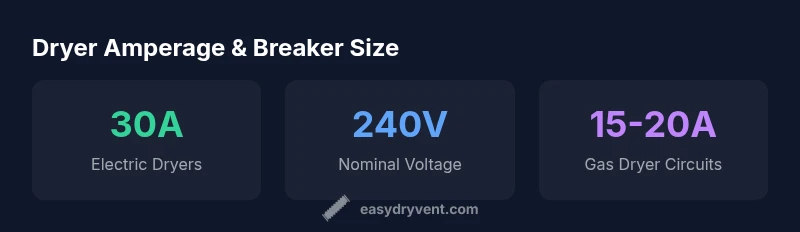
For most residential electric clothes dryers, the standard breaker size is a 30-amp, 240-volt circuit. This size matches the dryer's heating element draw and the wiring typically installed for a dedicated dryer circuit. Gas dryers, by contrast, use 120-volt power for controls and usually require a smaller 15-20A circuit. Always verify the exact requirement from the dryer's data plate and follow local codes.
Understanding the Basics of Dryer Amperage
If you’re wiring a dryer or checking an existing installation, you probably want to know what amp breaker is needed for dryer. For most residential electric clothes dryers, the answer is a 30-amp, 240-volt circuit. This size matches the dryer's heating element power draw and the current rating of standard dryer cords and outlets. The exact breaker size is printed on the dryer's data plate and must be matched by 4-wire wiring and a properly rated receptacle. Gas dryers, by contrast, rely on a 120-volt circuit for controls and lights, and their amperage needs are much smaller, usually 15-20A. Beyond the label, you should follow local codes and the manufacturer's installation instructions.
Electric vs Gas Dryers: Why Amperage Differs
The amperage requirements differ primarily because electric dryers draw significant power through a 240-volt heating element. Gas models use a 120-volt supply only for controls and lighting, while heat is generated by gas burners. Because of this, you’ll see 240V circuits with higher amperage for electric models and smaller 120V circuits for gas models. Always confirm with the manufacturer and check your local electrical code, as some locales have specific provisions for laundry appliances.
Reading the Dryer Data Plate: The Quick Verification
Every dryer carries a data plate with essential electrical specs. Look for the circuit size or minimum breaker rating, the required voltage, and whether a 4-wire connection is required. The data plate may announce 30A if it’s an electric model; if you see a different value, you must match your circuit, wire gauge, and outlet to that specification. If in doubt, contact the manufacturer or a licensed electrician before installation.
The 30-Amp Standard: How it’s Determined
Most residential electric dryers are designed to operate on a dedicated 30A, 240V circuit. This calculation comes from the typical heating element resistance and the allowable current for standard 10 AWG copper wiring (4-wire configuration). The 30A rating also aligns with common dryer outlets and cords (NEMA 14-30). Some high-demand or specialty models may specify different requirements, which is why the data plate and installation manual are indispensable.
Wiring and Circuit Considerations: Wire Gauge, Outlet, and Installation
A dryer circuit usually requires a dedicated, 240V supply with four conductors: two hots, a neutral, and a ground. For a 30A circuit, 10 AWG copper is standard, but longer runs or higher ambient temperatures may justify 8 AWG. The outlet for electric dryers is typically a NEMA 14-30R (4-wire). Make sure the cord, outlet, and panel feed are compatible and that the circuit has a full-size disconnect and protected, properly grounded enclosure. Do not share a dryer circuit with other large appliances, which can overload the breaker and create hazards.
Safety Precautions and Code Compliance
Electrical work carries risk, so adhere to national and local codes. In the United States, the National Electrical Code (NEC) provides the baseline rules for dryer circuits, including wire size, breaker rating, and the 4-wire requirement. Some jurisdictions also require GFCI protection for laundry outlets or have special provisions for older homes. Always consult your local inspector if you’re unsure, and consider an inspection after any major changes to the dryer circuit.
Troubleshooting Common Breaker Trips Related to Dryers
If the breaker trips or the outlet feels warm, power is being drawn beyond the circuit’s rating or there’s a fault. First, unplug the dryer and inspect the vent for blockages that can increase current draw. Check the dryer cord and outlet for signs of damage, corrosion, or loose connections. If the problem persists, consider a professional electrical inspection. Frequent trips can indicate a failing element, a short, or an improper installation.
DIY vs Professional Installation: When to Call an Electrician
Installing or upgrading a dryer circuit involves high-potential risk and strict code requirements. If you’re not completely confident in interpreting the data plate, sizing wire, or routing a 240V supply, hire a licensed electrician. They will verify the breaker size, wire gauge, outlet compatibility, and proper grounding. For new installations, you may need permits and an inspection. Professional installation minimizes risks and ensures code compliance.
Quick-start Checklist for Dryer Amperage Safety
- Locate the data plate on the dryer and confirm the required circuit size. 2) Verify 240V supply and a dedicated 30A breaker if electric. 3) Confirm four-wire configuration and a matching NEMA 14-30R outlet. 4) Inspect the dryer cord and vent for damage or blockages. 5) Ensure the panel and wiring are properly grounded. 6) Check local codes and obtain any required inspections. 7) If any doubt remains, consult a licensed electrician.
Comparison of electrical requirements for electric vs gas dryers
| Aspect | Electric Dryer | Gas Dryer |
|---|---|---|
| Typical Breaker Size | 30A | 15-20A |
| Voltage | 240V | 120V |
| Outlet Type | NEMA 14-30R (4-wire) | N/A |
| Notes | Dedicated circuit; check data plate | Controls powered by 120V; consult local codes |
Common Questions
What size breaker do I need for a clothes dryer?
Most electric dryers require a 30A, 240V circuit. Always verify with the dryer's data plate and local codes before installation.
Most electric dryers need a 30-amp 240-volt circuit; always check the label and local rules.
Can a dryer be run on a 20-amp circuit?
Only if the dryer’s data plate explicitly allows a 20-amp circuit; for standard models, a 30-amp circuit is required. Always defer to the manufacturer.
Only if the model says so on its label, otherwise it should be on a 30-amp circuit.
Do I need a 4-wire outlet for a dryer?
Yes. Modern installations require a four-conductor connection (two hot, neutral, ground) with a four-wire outlet and cord.
Yes—most new installations require a four-wire setup.
Is GFCI protection required for a dryer?
GFCI requirements vary by location. Many laundry outlets don’t require GFCI protection, but some jurisdictions do. Always verify with local codes.
GFCI rules depend on your location—check local codes.
What should I do if the dryer breaker trips frequently?
Unplug the dryer, inspect the vent for blockages, check the cord and outlet for damage, and consult an electrician if trips persist.
If trips persist, shut off power and call an electrician.
“Electrical dryer installations must align with the dryer's data plate and local codes to ensure safety and performance. When in doubt, prioritize a dedicated 30A, 240V circuit and professional verification.”
Key Points
- Verify the dryer's data plate for exact amperage needs
- Electric dryers commonly require 30A, 240V circuits
- Gas dryers use 120V for controls; lower amperage
- Use a dedicated four-wire outlet and appropriate wire gauge
- Always follow local codes and manufacturer guidelines