What Dryer Setting for Pillows: A Practical Guide
Discover the safest dryer setting for pillows, plus prep steps, practical tips, and a step-by-step method to restore loft without damage. Easy DryVent explains pillow-friendly drying for homeowners and DIY enthusiasts.


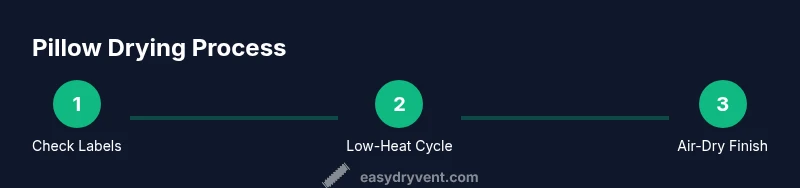
You can safely dry many pillows in a dryer using a low-heat setting with a gentle tumble. Always check the care label and add dryer balls to prevent clumping. For down or down-alternative fillings, run shorter cycles and finish with air-drying to restore loft. Avoid high heat, which can damage fibers.
Understanding Pillow Materials and Risks
Pillows come in a variety of fillings, from down and feathers to synthetic fibers, memory foam inserts, and latex. Each material responds differently to heat and tumbling. Down and down-alternative pillows are generally dryer-safe when dried on low heat with moisture distributed evenly. Synthetic fiber pillows are more forgiving but still benefit from a gentle cycle to prevent lumping. Memory foam or latex inserts inside a pillow are usually not dryer-friendly; drying them can cause deformation or off-gassing. The key risk during drying is uneven drying, which invites mildew or odor, and heat damage that can flatten loft or weaken fabric. Always check the care label and perform a small patch test if you’re unsure. According to Easy DryVent, prioritizing low heat and even distribution protects both fill and cover.
Why the Dryer Setting Matters for Pillow Care
The dryer setting determines how hot the air is and how aggressively the drum tumbles. High heat can over-dry delicate fabrics, shrink covers, or melt certain fillings. A gentle tumble tends to distribute heat more evenly and reduces the chance of clumping. The choice of cycle also affects moisture removal—underdrying leaves damp spots that promote mold, while overdrying can damage fibers and shorten pillow life. By selecting a controlled, low-heat setting and incorporating movement with dryer balls, you strike a balance between speed and loft. In practice, many pillows dry best on a low heat cycle with regular pauses to monitor moisture levels, then finish with air-drying if needed.
Pre-Drying Prep: Read Labels and Fluff for Even Drying
Care labels are there to prevent damage and guide you toward the safest approach. Start by inspecting for any tears or loose stitching, then fluff the pillow to distribute filling. A quick shake helps even out the fill and reduces the chance of dense pockets forming during tumbling. If the label advises air-drying only or avoiding the dryer altogether, skip the machine and prep for air-drying instead. If you’re unsure about a pillow’s filling, test a small area of the fabric and monitor for unusual heat or odor during the first short cycle. Compliance with care instructions minimizes risk and extends pillow life.
Recommended Dryer Settings by Pillow Type
Different fillings require different heat and tumble levels. For down or down-alternative pillows, use a low heat or delicate cycle with a couple of clean dryer balls, and run short increments (15–20 minutes) with pauses. Synthetic fiber pillows tend to tolerate low to medium heat on a low-tumble setting, again in 15–25 minute bursts. Memory foam and latex inserts should generally not go in the dryer; instead, finish with air-drying. Always consult the care label and perform a moisture check between cycles to prevent overheating. Keeping a log of which pillow type gets which setting helps you avoid mistakes over time.
The Role of Dryer Accessories: Balls, Cleansers, and Positioning
Dryer balls or clean tennis balls prevent clumping by redistributing fill as pillows tumble. Position pillows loosely — don’t overload the drum — to ensure air can circulate. A clean lint screen helps maintain airflow and dryer efficiency. If your dryer has a moisture sensor, it can help prevent over-drying by signaling when the pillow is close to dry. For sensitive fillings, consider a breathable pillow bag during the cycle to reduce friction and protect delicate covers. Accessories can dramatically improve drying performance when used correctly.
Common Mistakes and How to Avoid Them
Avoid high heat, which can scorch fabric or deform fillings. Don’t overload the dryer; crowded loads trap moisture and create uneven drying. Skipping dryer balls invites clumping and uneven loft recovery. Never dry pillows with memory foam inserts in conventional cycles unless the care label explicitly allows it. Finally, never skip the final loft-restoration step: a brief air-dry period helps you regain fluffy, even loft and reduces post-drying odors.
Finishing Touches: Air-Drying to Restore Loft and Freshness
Air-drying a pillow after a dryer cycle helps regain loft and prevent stiffness from heat exposure. Place pillows in a well-ventilated area away from direct sunlight to protect fabrics and fillings. Gently pat and fluff periodically during air-drying to maintain an even fill. If you notice stiffness or uneven texture after air-drying, a short, cool-tumble cycle (with dryer balls) can help redistribute the fill without reintroducing heat damage. Proper finishing preserves comfort and longevity.
Safety First: Avoiding Mold, Odor, and Heat Damage
Ensure pillows are completely dry before storing; residual moisture promotes mold and musty odors. Maintain a clean dryer lint filter to optimize airflow and reduce fire risk. If a pillow has persistent odor after drying, consider a mild fabric-safe deodorizer or re-washing, following care label directions. Use a lower heat setting if you’re unsure and always monitor the first cycle to prevent accidental overheating. Easy DryVent emphasizes cautious heat control as the foundation of safe pillow care.
Energy, Cost, and Efficiency Considerations
Drying pillows with low heat and shorter cycles saves energy and reduces wear on your dryer. Pausing between cycles to fluff the fill uses time efficiently and reduces the need for extended cycles. If possible, dry pillows in batches rather than all at once to maximize airflow and minimize total drying time. Always align cycles with care labels to avoid wasted energy on unsuitable fillings or temperatures.
Troubleshooting: Damp Pillows, Odors, and Quick Fixes
If you notice dampness after a cycle, run additional short cycles with fresh dryer balls and check for blockages in the vent or lint screen. For musty odors, a quick re-wash with a mild detergent and proper drying can eliminate the scent. If odors persist, consider air-drying longer in a ventilated space and ensure the pillow remains completely dry before reuse. Quick checks after each cycle help you catch issues early.
Quick-Start Pillow-Drying Checklist
- Read the care label before any drying. - Use low heat and gentle tumble. - Add dryer balls to prevent clumping. - Dry in short increments and fluff between cycles. - Finish with air-drying if needed to restore loft. - Inspect thoroughly for dryness before storage.
Tools & Materials
- Dryer with low-heat or delicate setting(Choose a cycle labeled 'low heat' or 'delicate'; avoid high heat which can damage pillow fills.)
- Dryer balls or clean tennis balls(Place three to four balls to keep fill evenly distributed and prevent clumping.)
- Care labels from each pillow(Verify filling and any special instructions before drying.)
- Clear, breathable space for air-drying(Needed if finishing with air-drying to restore loft.)
- Lint screen brush or cloth(Keep the lint screen clean for maximum airflow.)
Steps
Estimated time: 60-90 minutes
- 1
Check care labels and prep
Inspect the care label on each pillow and examine for tears. Fluff the pillow to distribute the filling evenly. This minimizes clumping and reduces the chance of heat damage during the cycle.
Tip: If you find loose seams, repair them before drying to prevent fill leakage. - 2
Load with dryer balls on low heat
Place one pillow per dryer load with 3-4 dryer balls or tennis balls. Select a low-heat or delicate setting to promote even drying without overheating the fabric or filling.
Tip: Don’t overload; give the pillow space to tumble freely. - 3
Run initial cycle and monitor moisture
Start with a 15–20 minute low-heat cycle and pause to check damp spots. Fluff the pillow to redistribute the fill and resume in 15-minute bursts until most moisture is gone.
Tip: If you see significant lumps, stop early and redistribute the fill with a few shakes. - 4
Finish with additional cycles or air-dry
If the pillow remains moist, complete short cycles of 10–15 minutes. Finish by air-drying in a warm room with good airflow until fully dry.
Tip: Direct sunlight can fade fabric; opt for indirect light during air-drying. - 5
Test dryness and loft recovery
Gently press the center of the pillow to feel for moisture. If it springs back and feels light, it’s dry. If not, continue short cycles or finish with air-drying.
Tip: Loft should be even; lumpiness indicates uneven drying. - 6
Store properly after drying
Store pillows in a dry, well-ventilated area to prevent musty odors. If possible, place in breathable storage bags to avoid compression.
Tip: Avoid plastic containers that trap moisture and odors.
Common Questions
Can all pillow fillings be dried in a household dryer?
Most down, down-alternative, and synthetic fiber pillows can be dried on low heat, but memory foam and latex cores should be air-dried unless the care label allows otherwise.
Most pillows can be dried on low heat, but memory foam or latex cores should be air-dried unless the label allows otherwise.
What heat setting should I use for down pillows?
Use a low heat or delicate setting with dryer balls and short cycles to prevent damage and preserve loft.
Low heat with short cycles works best for down pillows.
How can I tell a pillow is completely dry?
Feel the center and edges; it should feel light and springy with no damp spots. If in doubt, run a brief extra cycle.
Feel for moisture in the center and edges; if in doubt, run another short cycle.
Are memory foam pillows safe to dry in a dryer?
Most memory foam-filled pillows should not be dried in a regular dryer, as heat can warp the foam. Air-dry or follow the label instructions.
Most memory foam pillows should air-dry; check the label for exact guidance.
How long does it typically take to dry a pillow in a dryer?
Drying time varies by filling and load size; expect multiple short cycles totaling around 30–90 minutes, plus possible air-drying.
Expect several short cycles totaling about 30 to 90 minutes, plus air-drying if needed.
What should I do if my pillow still smells after drying?
Rewash with mild detergent, rinse thoroughly, and dry again. Ensure complete dryness and good ventilation to prevent musty odors.
If odor remains, rewash and dry again with proper ventilation.
Watch Video
Key Points
- Choose low heat for most pillows.
- Use dryer balls to prevent clumping.
- Finish with air-drying to restore loft.
- Always check care labels before drying.
- Avoid drying inserts with memory foam.