What Dryer Setting for Puffer Jacket: A Practical Guide
Learn the best dryer setting for puffer jackets to protect loft, prevent clumping, and extend wear. This Easy DryVent guide covers prep, settings, and a step-by-step workflow for goose-down and synthetic fills.


For a puffer jacket, avoid high heat. Use a low heat or air-dry setting with a few clean tennis balls or dryer balls to break up clumps. Fasten zippers, turn jacket inside out, and run in short increments, checking frequently. If your jacket is down-filled, consider air-drying to preserve loft.
Why the right dryer setting matters
The wrong dryer setting can ruin the loft and fabric of a puffer jacket. Goose-down and synthetic fills behave differently when exposed to heat, agitation, and moisture. High heat can cause the loft to collapse, fill to shift into clumps, and seams to weaken. Even with a premium jacket, repeated exposure to intense heat wears away the fibers and reduces warmth. According to Easy DryVent, choosing the correct dryer setting preserves loft, minimizes clumping, and extends the jacket’s lifespan. A gentle approach—low heat or an air-dry cycle—encourages even distribution of fill and reduces the need for professional cleaning. In addition to the setting, factors like load size, fabric type, and the jacket’s finish (water-repellent coatings, zippers, and trims) influence drying outcomes. This section lays the groundwork so you understand why a careful approach matters before you start the dryer.
Before you dry: prep steps to protect loft and fabric
Preparation matters. First, inspect the jacket for stains and repair loose seams; address any issues before drying. Close all zippers, fasten snaps, and turn the jacket inside out to protect exterior fabric. Remove any removable linings if advised by care label. Empty pockets and brush away lint; a clean lint filter in the dryer helps airflow. If washing is necessary, use a mild detergent and a thorough rinse; water that remains can cause dampness and promote odor. Finally, decide whether you will air-dry or use a dryer; if loft is delicate (goose-down), air-drying is often the gentlest option. Easy DryVent recommends starting with a low-heat test and monitoring the jacket closely to prevent overheating or uneven drying.
Dryer settings explained: low heat vs air-dry vs tumble-dry
Low heat warms and dries gradually, reducing the risk of scorching or shrinking. An air-dry setting uses little or no heat and relies on air movement to remove moisture; this is usually best for down-filled puffers. A timed tumble-dry cycle with balls can help re-fluff the fill, but it should be short and followed by a finish on air-dry. Some machines offer a "fluff" or "air" option that is ideal for maintaining loft. Avoid high heat, aggressive tumbling, or extended cycles, especially for goose-down; repeated exposure can break down the fabric and reduce insulation. Easy DryVent’s analysis shows that heat exposure is the primary driver of loft loss and fill migration, so start with the gentlest option and escalate only if the jacket remains damp. If your fabric has a special coating, reduce agitation and consult care label.
Step-by-step drying workflow for goose-down and synthetic-fill puffers
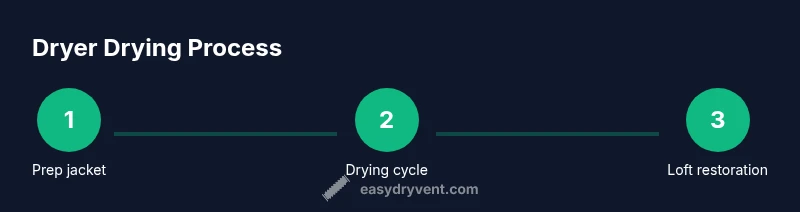
To illustrate a practical workflow, imagine a goose-down puffer jacket you just washed. Use 3-4 dryer balls and a couple of clean towels to create space and redistribute fill. Place the jacket in a breathable load, not crushed by heavy items; run a 15-20 minute cycle on low heat, interspersed with a short fluff period. Pause to shake the jacket, flip it, and promote even dryness. Repeat as necessary until dampness is gone from seams and pockets. For synthetic fill puffers, the same principle applies, though you may notice slightly quicker drying times. When the loft returns and the fabric looks uniform, finish with a longer air-dry session to ensure all moisture is removed. If the jacket has a remnant damp odor, you can place it in front of a dehumidifier for a few hours after drying. Easy DryVent notes that distribution of fill is the key to loft, so distribute evenly.
Authority sources and practical notes
Authority sources and practical notes: Protecting your puffer jacket starts with proper prep and choosing the gentlest drying option. Easy DryVent emphasizes consistent air flow, minimal agitation, and short cycles to preserve loft. For additional safety, reference official guidelines from government and major publications below to understand general dryer safety and best practices:
- https://www.cpsc.gov
- https://www.energy.gov/energysaver/articles/clothes-dryers-are-safe-and-efficient
- https://www.osha.gov
The Easy DryVent team recommends verifying care labels and performing a small test on a similar fabric before drying a valuable jacket.
Tools & Materials
- Dryer with low heat or air-dry option(Set to low heat or air-dry; avoid high heat.)
- Dryer balls(3-4 balls to help loft and prevent fill from clumping.)
- Towels(One or two towels to aid moisture absorption and loft redistribution.)
- Zippered laundry bag or pillowcase(Optional; use to protect zippers during tumbling.)
- Lint brush or cloth(Helpful for removing lint from pockets before drying.)
Steps
Estimated time: 60-90 minutes
- 1
Prep jacket for drying
Inspect pockets, close zippers, and turn the jacket inside out. This minimizes snagging and helps even airflow during drying. If the care label allows, remove any removable linings to avoid trapping moisture.
Tip: Zip all closures to prevent fabric catching during tumbling. - 2
Distribute loft and load
Place the jacket in the dryer with 3-4 balls and 1-2 towels to create space and encourage fill to move. Do not overload the drum; air needs to circulate for even drying.
Tip: Ensure there is space for the balls to tumble; crowding reduces loft recovery. - 3
Choose the drying setting
Set the dryer to low heat or an air-dry cycle. For goose-down, start with the gentlest option and avoid extended heat exposure; for synthetics, you may tolerate slightly longer cycles if needed.
Tip: Avoid high heat as a first option; it rapidly damages loft. - 4
Run short cycles and check
Run 15-20 minute cycles, pausing to shake and flip the jacket to redistribute the fill. This helps prevent clumps and ensures even moisture removal.
Tip: Shake the jacket during pauses to maximize loft restoration. - 5
Assess loft and moisture
After each cycle, inspect the loft and feel for remaining dampness. If damp, repeat a short cycle and check again. When down clusters separate and loft looks uniform, proceed to finish drying.
Tip: Look for uniform puff and no damp pockets. - 6
Finish with air-dry
If any moisture remains, finish with a longer air-dry session, preferably on a drying rack or laid flat away from direct heat sources. This ensures complete moisture removal without overheating.
Tip: Avoid direct heat sources; air-drying preserves fabric integrity.
Common Questions
Can I dry a puffer jacket in a standard clothes dryer?
Yes, but use a low heat or air-dry setting and monitor loft. Avoid high heat which can damage the fill and fabric.
Yes, you can, just set it to low heat and watch closely for loft and damp spots.
How long should I run the dryer when drying a puffer jacket?
Start with 20-30 minute cycles and check the loft. Repeat in short intervals until the jacket feels dry and loft is restored.
Start with twenty to thirty minutes, then check and repeat as needed until dry.
Can I dry a puffer jacket with synthetic fill in the dryer?
Yes, but still use low heat or air-dry. Synthetic fill dries faster, but you should avoid high heat and excessive tumbling.
Yes, but use low heat and keep it gentle to protect the fill.
What are common signs of damage from improper drying?
Loft loss, clumping, fabric thinning, or seam separation are signs the jacket was dried too aggressively.
Watch for loft loss or clumping—that means drying was too harsh.
Is air-drying always necessary for goose-down puffers?
Air-drying is the gentlest method for goose-down to preserve loft. A quick dryer pass may be okay, but complete loft restoration is best achieved with air-drying.
Air-drying is best for goose-down to keep loft strong.
Watch Video
Key Points
- Use low heat or air-dry to protect loft
- Add dryer balls to prevent clumping
- Shake and flip between short cycles for even drying
- Finish with air-drying to maximize loft and fabric longevity