What dryer setting for down jacket: Safe loft drying guide
Learn the best dryer setting for down jackets to protect loft, prevent clumping, and avoid damage. This educational guide covers delicate cycles, prep steps, and safe air-drying alternatives for long-lasting warmth.


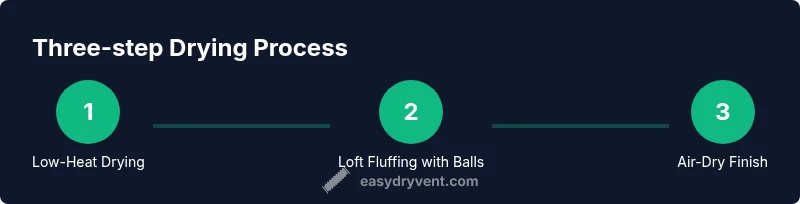
To dry a down jacket safely, use a low-heat or delicate setting with a gentle tumble, plus clean tennis balls to restore loft. Avoid high heat and long cycles, and ensure the jacket is fully dry to prevent mold. Run one or two short cycles, pausing to inspect loft and moisture between runs.
Why the right dryer setting matters for down jackets
Down jackets are prized for warmth, but their insulating fill is sensitive to heat and agitation. The wrong dryer setting—especially high heat or a long run—can crush the loft, cause feather clumping, and even damage the outer fabric. According to Easy DryVent, achieving the right dryer setting matters to preserve loft and avoid fabric stress. The Easy DryVent team found that a gentle tumble on low heat minimizes breakage of delicate shells while keeping the core insulation evenly dried. When a jacket dries evenly, the loft rebounds so the garment feels light and warm again. If you routinely skip this step, you risk uneven drying, damp pockets, and odor, which often require professional cleaning later. In short: the dryer setting is not cosmetic; it directly affects warmth, comfort, and the jacket’s lifespan. In this guide, we will cover safe heat levels, cycle choices, and practical steps you can implement today to keep your down jacket dry and fluffy without sacrificing fabric integrity.
This guidance is grounded in practical maintenance principles from Easy DryVent and aligns with common-sense care practices homeowners can apply without specialized equipment.
Delicate heat levels that protect fill and fabric
When drying down, the goal is to minimize heat exposure while allowing moisture to escape. Choose the lowest effective heat setting labeled as “delicate,” “low,” or “tumble dry low.” If your dryer offers multiple heat tiers, start at the lowest possible setting and increase only if there are still damp spots after a complete cycle. High heat can flatten the down, damage shell fabrics, and accelerate wear over time. For most household machines, a gentle tumble with a cool-down phase helps the fill settle evenly and reduces the chance of feather migration. Always consult the care label on your jacket, and if the label suggests air drying, prioritize that method. While it may take longer, air drying minimizes mechanical stress on the fabric and keeps loft intact according to practical maintenance principles from Easy DryVent.
Pre-drying preparation: inspecting, cleaning, and zipping
Before any drying cycle, inspect the jacket for cleanliness and damage. Close all zippers, fasteners, and storm flaps to prevent snagging during tumbling. Empty pockets to avoid snagging coins or debris inside the drum. If the jacket is visibly dirty, consider a quick wash on a gentle cycle prior to drying; clean, dry fabric recovers loft more effectively. Turn the jacket inside out to protect the outer shell and ensure even moisture removal. Remove lint from the surface, as trapped fibers can interfere with drying and loft restoration. By taking these steps, you reduce the risk of lingering moisture and uneven drying that could compromise warmth.
Drying method differences: machine vs air-dry
Machine drying on a delicate setting is convenient, but it isn’t always the best choice for every down jacket. If the care label permits air drying, lay the jacket flat on a clean surface or hang it over a drying rack in a well-ventilated area. Air drying minimizes agitation and heat exposure, helping prevent fabric stress and feather clumping. If you decide to use a dryer, use low heat and a short cycle, followed by a pausing check to assess loft and moisture distribution. Air drying is often recommended for very delicate shells or water-repellent finishes, while a controlled machine-dry cycle can work for standard jackets with known fill power. Always monitor the jacket closely to avoid over-drying, which can make shells stiff.
How to load and protect your jacket in a dryer
Load the jacket loosely—don’t pack the drum with other items. Place the jacket inside a clean pillowcase or a laundry bag to cushion the shell and minimize friction. Add two or three clean tennis balls or dryer balls to agitate the fill and prevent clumping. Do not overfill the drum; air needs to circulate around the jacket for even drying. If your dryer has a “fluff” or “air only” option, consider running a brief preliminary cycle with no heat to remove excess moisture before a low-heat tumble.
Using loft-restoring aids: tennis balls and dryer balls
Tennis balls or purpose-built dryer balls are effective loft-restorers. They bounce around inside the drum, breaking up any clumps and helping the down fill redistribute evenly. This process reduces the risk of cold spots and helps the loft rebound once drying is complete. Be mindful not to let the balls hit the fabric with excessive force; the goal is gentle agitation that lifts the fill rather than tearing the fabric. If you notice rattling or loud noises, stop the cycle and reassess the load.
Monitoring, pauses, and repeat cycles
Set a short initial dry cycle on low heat, then pause the machine to inspect loft and moisture levels. Shake the jacket gently to redistribute the fill, then resume with another short cycle if needed. Repeat as necessary until the jacket feels dry to the touch and loft appears restored. Depending on the jacket’s weight and fill, you may complete two to four cycles. Avoid long, continuous cycles that run the risk of overheating and damaging fabric or fill.
Checking dryness and loft repair post-drying
After the final cycle, perform a thorough loft check by gently pressing and fluffing with your hands. If you detect dampness around cuffs, collars, or pockets, run a brief additional low-heat cycle. Once dry, air-dry the jacket on a hanger or flat surface for a few hours to eliminate any remaining moisture and to maximize loft recovery. If the fabric feels stiff, a final light fluffing can help restore suppleness without crushing the down.
Alternatives to machine drying when in doubt
If you’re unsure about your jacket’s care requirements or the dry cycle isn’t yielding the desired loft, opt for air drying. Place the jacket on a wide hanger in a well-ventilated space and use a fan to increase airflow. Periodically shake and fluff the fill to prevent clumping. For jackets with particularly sensitive shells, or convex shapes like hooded designs, air drying remains the safest option. Remember: patience often yields better loft and longevity than forcing a quick dry.
Long-term care to extend life of a down jacket
Proper long-term care helps retain loft, warmth, and fabric integrity. Store jackets in a cool, dry place away from direct sunlight to prevent fabric yellowing and fiber breakdown. Use a breathable garment bag when not in use to protect against dust while allowing moisture to escape. When washing, follow the care label and avoid harsh detergents that strip natural oils from the down. Regularly inspect seams and zippers for wear, and address small issues promptly to prevent bigger repairs later.
Tools & Materials
- Tumble dryer with delicate/low-heat setting(Dryer should be on 'delicate' or 'low heat' with a short cycle.)
- Two clean tennis balls or dryer balls(Help to break up clumps and restore loft during drying.)
- Pillowcase or laundry bag(Optional protection for the shell during the dryer cycle.)
- Drying rack or hanger for air-drying(Use if you prefer air-drying or need to finish loft gradually.)
- Lint brush(Optional tool to prepare the jacket before washing/drying.)
Steps
Estimated time: 60-90 minutes
- 1
Inspect jacket and prep
Examine care label and fabric condition. Close all zippers, fasteners, and pockets to prevent snagging. Ensure the jacket is clean so excess moisture can escape efficiently.
Tip: Close zippers slowly to avoid catching the fabric. - 2
Prepare the jacket for drying
Turn the jacket inside out and place it loosely in the dryer. Place the jacket in a pillowcase or bag if you’re worried about friction with the drum.
Tip: Inside-out drying protects the outer shell’s finish. - 3
Add loft-restoring aids
Drop in two clean tennis balls or dryer balls to help break up clumps and distribute fill evenly during drying.
Tip: Balls should move freely; don’t overfill the drum. - 4
Run a low-heat cycle
Start with a short, low-heat cycle (about 20–30 minutes); pause to check loft and moisture distribution.
Tip: If damp, resume with a short cycle rather than a long one. - 5
Shake and recheck loft
Pause, remove the jacket, and give it a gentle shake to redistribute the fill. Check for even dryness and loft.
Tip: Shaking helps prevent clumps from forming in one area. - 6
Repeat if necessary
If moisture remains, repeat short low-heat cycles until fully dry and loft is restored.
Tip: Avoid overheating by using the lowest effective heat. - 7
Finish with air-dry (optional)
For extra caution, finish with air-drying on a rack or hanger to remove remaining moisture and maximize loft.
Tip: A few extra hours of air-drying can pay off in loft recovery.
Common Questions
Can I dry a down jacket on high heat?
No. High heat can damage both the fabric and the down fill, reducing loft and warmth. Always opt for a delicate or low-heat cycle.
Avoid high heat; it damages the jacket and reduces loft.
Is air drying safer than using a dryer for down jackets?
Air drying avoids heat exposure and is gentler on fill and shell. It takes longer but often yields the best loft retention for sensitive fabrics.
Air drying is safer but slower; it preserves loft better.
How do I know when the jacket is fully dry?
Check for even loft and a completely dry feel to the touch. If any damp spots remain, run a short additional cycle on low heat.
If there’s any dampness, run another short dry cycle.
Should I wash before drying?
Yes. Clean the jacket according to the care label before drying. Fresh fabric dries more evenly and reduces odor potential.
Wash per the label, then dry using the recommended settings.
Do tennis balls help with loft restoration?
Yes. Tennis balls or dryer balls help break up fill clumps and restore loft during tumbling.
They help fluff the fill for better loft.
What about jackets with waterproof shells?
Waterproof or water-repellent shells may have special washing/drying guidance. Always follow the care label for drying compatibility.
Check the label for shell care guidelines.
Watch Video
Key Points
- Use a delicate, low-heat dryer setting.
- Add tennis balls to restore loft during drying.
- Check dryness and loft between cycles.
- Air-dry if unsure about heat exposure.
- Inspect pockets and seams after drying.