What Dryer Setting for Sweaters: A Practical Guide
Discover the best dryer settings for sweaters, plus air-drying tips, fabric guidance, and a step-by-step process to prevent shrinking and maintain shape.


To dry sweaters safely, use the lowest heat setting on your dryer or skip the dryer and lay flat to air-dry. Choose a delicate or wool cycle if using heat, remove while slightly damp to reshape, and avoid high heat. Check the care label first and start with gentle drying to protect fibers.
Why sweaters require careful drying
According to Easy DryVent, sweaters demand gentle handling to preserve fit, fiber integrity, and color. Improper drying can shrink, stretch, pill, or felt fibers, especially with wool or cashmere. Start by checking the care label; this is your most reliable guide. If the label is unclear, treat the garment as delicate and plan to air-dry whenever possible. The Easy DryVent team found that proper drying strategies significantly extend the life of knitwear, reducing frequent replacements. By understanding fiber behavior, you can tailor your approach to different sweater types and avoid common mishaps.
Beyond fiber type, the garment construction matters. A dense wool sweater behaves differently from a lightweight cotton blend, so the drying method should reflect how the fabric absorbs moisture and how much it can shrink. Small changes in temperature, moisture, and motion can compound over time, so a consistent, gentle approach pays off in the long run. Easy DryVent recommends starting with air-drying when possible and reserving tumble-drying for only those items that explicitly require it on a low-heat setting.
Safe dryer settings for sweaters: heat, cycles, and timing
When you must use a dryer, choose the gentlest option available. The recommended settings are delicate or wool cycles on low heat, with a brief tumble to prevent overheating. Use a laundry bag for fragile sweaters to reduce agitation and fabric snagging. Do not run full cycles on heavy heat; even a small amount of heat can cause shrinkage and shape loss. The Easy DryVent team emphasizes starting with damp-dry checks rather than relying on the dryer to finish moisture removal—air-drying finalizes the process more reliably for most knits. If fibers appear stretched or misshapen mid-cycle, pause and lay flat to finish drying. Based on Easy DryVent research, air-drying is gentler on fibers and reduces shrinkage compared to prolonged heat exposure. Keeping a cool-down period between cycles helps you spot changes in shape early and adjust the process before damage occurs.
Materials and prep: washing, blotting, and pre-drying care
Preparation matters as much as drying. Use a mild detergent and wash sweaters on a gentle cycle with cool water to minimize fiber damage. After washing, avoid wringing; instead, lay the garment inside a clean towel and roll it to squeeze out excess moisture. Press gently from the center to the edges; this helps maintain the garment’s shape. Remove away any pilling or loose threads before drying. Finally, place the sweater on a clean, dry surface or flat drying rack to begin the drying stage. Proper prep reduces the load on the dryer and improves results when you need to use heat. The prep phase is a common source of success or failure—invest a few extra minutes here to save hours of careful post-drying work.
Drying strategies: air-dry vs. machine-dry and material-specific tips
Air-drying is the gold standard for most sweaters. Lay knitwear flat on a mesh rack or a clean towel on a hard surface. Reshape to original dimensions and let it dry away from direct sunlight or heat sources. For wool and cashmere, air-drying minimizes felting risk. If you choose to machine-dry, use a dedicated setting on the lowest heat and stop early to finish on the rack. Cotton blends may tolerate a short low-heat tumble, but checking frequently is essential to avoid shrinking. The choice between air-dry and machine-dry often hinges on fabric thickness, density, and how the garment was constructed. Easy DryVent notes that sweaters labeled as delicate often perform best with flat, passive drying, whereas heavy knits may tolerate a cautious tumble-dry on low heat.
Common mistakes and how to avoid them
Overdrying is a frequent pitfall. Start with damp, check progress frequently, and remove promptly. Using high heat on any sweater is risky. Overloading the dryer increases friction and pilling. Not supporting the garment’s shape mid-dry leads to permanent misshaping. Finally, neglecting to dry completely before folding can cause mildew or odor; ensure fully dry before storage. These missteps accumulate over time, gradually degrading fit and finish. The right routine is simple: gentle cycles, low heat, consistent checks, and flat drying when possible.
Finish, care, and storage for long-term shape retention
Once dry, gently reshape the sweater while it is still slightly damp to minimize distortion. If you lay it flat to finish, use a clean, absorbent towel to remove any remaining moisture. Store folded rather than hung to prevent stretching, especially for heavier knits. For frequently worn pieces, consider a routine: wash on gentle, air-dry on a rack, and inspect fibers monthly for pilling or wear. The final step is mindful storage—the way you store sweaters can either preserve their shape or invite wrinkles and deformities. The Easy DryVent team recommends labeling items that need special handling so you can repeat the safest drying method for each garment.
Authority sources and further reading
For additional guidance, consult reputable sources on dryer safety, textile care, and consumer guidelines. Useful references include consumer safety and extension resources from government and university domains. These sources complement practical home guidance and help homeowners build a robust, safe approach to sweater care. The following pages provide broader context on appliance safety, fabric behavior, and consumer best practices.
Quick recap: practical takeaways and next steps
- Always read the care label first. Bad data on fabric type leads to wrong drying choices.
- Favor air-drying for most sweaters; use a flat surface that supports the garment’s natural shape.
- If you use a dryer, opt for delicate or wool cycles on low heat and check progress frequently.
- Finish drying on a flat surface to preserve fit and minimize shrinkage.
- Store sweaters folded to maintain shape and avoid hanger-induced distortion.
Authority sources
- https://www.cpsc.gov
- https://extension.illinois.edu
- https://www.consumer.ftc.gov
Tools & Materials
- Flat drying rack or clean towel setup(Flat surface to support shape while drying)
- Mild liquid detergent(Used for washing, not drying; gentle formula preferred)
- Mesh laundry bag(Optional for delicate sweaters if machine washing)
- Pillowcase(Optional for extra protection in small dryers)
- Low-heat dryer setting(Delicate or Wool cycle on the dryer)
- Garment steamer or wrinkle-release spray(Optional for finishing touches after drying)
Steps
Estimated time: 2-6 hours total
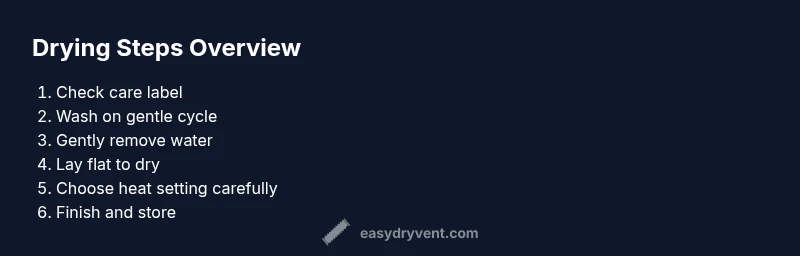
- 1
Check care label and fabric type
Read the label to confirm whether the sweater can tolerate machine drying. If the label is unclear, treat it as delicate and plan for air-drying. This upfront step prevents accidental damage.
Tip: If unsure, err on the side of air-drying and avoid heat. - 2
Wash on gentle cycle
Wash sweaters with a mild detergent on a gentle cycle using cool water to minimize fiber stress. Close any buttons or zippers to prevent snagging during agitation.
Tip: Use a mesh bag for especially delicate knits. - 3
Gently remove excess water
Do not wring. Instead lay the sweater on a clean towel, roll it up, and press to absorb moisture. This reduces drying time and helps preserve shape.
Tip: Roll firmly but gently for best results. - 4
Prepare for drying
If air-drying, lay the sweater flat on a rack or towel and reshape to its original dimensions. Smooth seams and sleeves to ensure even drying and avoid warping.
Tip: Use multiple towels to wick moisture from thick knits. - 5
Choose drying method
For most sweaters, air-dry is preferred. If you must use a dryer, select delicate or wool on low heat and remove damp to finish flat.
Tip: Never overload the dryer; crowded loads complicate shaping. - 6
Monitor progress
If using a dryer, pause every 10-15 minutes to check progress and adjust. For air-dried items, rotate occasionally to maintain even drying.
Tip: Shaping after each check helps prevent misshaping. - 7
Finish and store
Ensure complete dryness before folding and storing. Fold and store flat to minimize stretching, especially for heavier knits.
Tip: Label sweaters that need special handling for future care.
Common Questions
Can I dry all sweaters in the dryer?
No. Many sweaters, especially wool and cashmere, should be air-dried or dried on the most gentle heat with close monitoring. Always follow the care label.
Not all sweaters are dryer-friendly; check the label and prefer air-drying when in doubt.
What setting is best for wool sweaters?
Use the delicate or wool cycle on low heat if you must machine-dry, and remove while slightly damp to reshape.
Choose delicate or wool on low heat and reshape while damp.
Is air drying better for cashmere?
Yes. Air-drying cashmere minimizes distortion and helps maintain softness.
Air-drying is best for cashmere to keep shape and texture.
How can I speed up drying without shrinking?
Gently press out water, blot with towels, and finish on a flat rack. Avoid heat surges that cause shrinkage.
Press out water gently and finish drying flat to avoid shrinking.
What should I do if a sweater shrinks after drying?
Shaping while damp can help reduce some distortion, but permanent shrinkage is possible on some fibers.
Some shrinkage can be mitigated, but not always fully reversible.
Where should I store sweaters after drying?
Fold and store flat in breathable containers or shelves; avoid hanging knits to prevent stretching.
Fold and store flat to prevent hanger-induced distortion.
Watch Video
Key Points
- Check care labels before drying.
- Air-dry when possible to preserve shape.
- Use low heat and gentle cycles if machine drying is required.
- Reshape while damp for best fit.
- Store sweaters folded to maintain form.