Can You Dryer Pillows? Safe, Practical Pillow Drying Guide
Learn how to safely dry pillows in a dryer with low heat, proper balancing, and expert tips. This Easy DryVent guide covers fillings, care labels, timing, and troubleshooting for safe loft restoration.


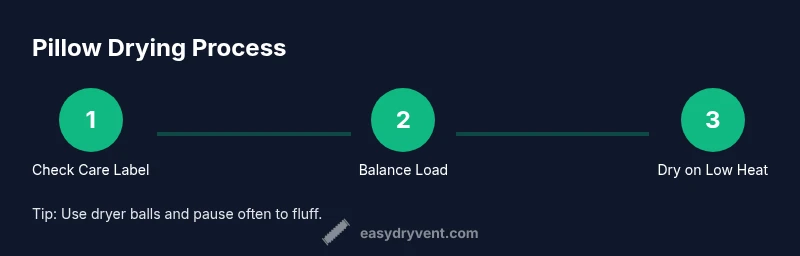
Yes, you can dry pillows in a dryer, but only with proper care. Start by checking the care label and selecting a low-heat or air-dry setting. To keep them fluffy, add dryer balls or clean tennis balls, and pause every 20–30 minutes to fluff and reposition. Use a towel to balance very heavy pillows if needed.
Can You Dryer Pillows? A Practical Introduction
If you're wondering can you dryer pillows, it's important to understand the basics of pillow construction and dryer safety. Pillows come in a range of fillings—down, synthetic, memory foam, and blends—and each type responds differently to heat and tumbling. According to Easy DryVent, the safest approach starts with a careful check of the care label and a plan that matches the filling and cover. The Easy DryVent team found that most pillows can be dried in a home dryer under strict conditions, but not all fillings tolerate heat equally. In practice, you’ll want to avoid high heat, monitor moisture, and use accessories that promote even drying. This guide walks you through the steps, settings, and common pitfalls so you can restore loft without damaging the pillow or your dryer. By understanding the specifics of your pillow, you can make a quick, safe decision about whether the dryer is right for it and how to get the best fluff.
Understanding Pillow Fillings and Drying Compatibility
Pillows vary widely in filling and fabric, which changes how they react to drying. Down pillows trap warmth and recover loft slowly, while synthetic fills are usually more forgiving but can still compress if overheated. Foam cores, including memory foam, resist heat poorly and can lose shape if tumbled too aggressively. Always start with the care label to confirm whether a dryer-safe setting is recommended for your exact pillow. Easy DryVent emphasizes matching heat, duration, and tumbling to the filling type. If you’re unsure, choose a gentle air-dry cycle and allow extra time—air drying in a shaded area can be a safer option for fragile fillings. Remember that using high heat on any pillow increases the risk of uneven drying, clumping, and odors.
Prep Steps Before Drying Pillows
Before placing a pillow in the dryer, take a few precautionary steps. Remove pillow covers to prevent fabric snagging and wash according to the label if the pillow is visibly dirty or scented. Check for any loose stitching or holes and repair them to prevent fiber escape. Ensure the pillow is fully dry after washing—moisture trapped inside can lead to mold. Having a clean, dry pillow surface also helps the dryer work more efficiently and reduces the chance of moisture pockets that prolong drying time.
Setting Your Dryer for Safe Pillow Drying
Choose a low-heat or air-dry setting to minimize heat exposure. If your dryer has a delicate or wool setting, that’s often a better option for many pillow fillings. Place 2–3 dryer balls or clean tennis balls inside to help fluff and redistribute filling as it tumbles. Add a couple of clean towels to balance the load if you’re drying a large or bulky pillow. Run in 15–20 minute intervals, pausing to re-fluff the pillow and check for damp spots. Repeat until the pillow feels evenly dry and loft is restored.
Balancing the Load and Avoiding Damage
Load balance is key to preventing clumping and uneven drying. Heavy pillows on their own can bumble around and cause the drum to wear unevenly. Use towels to balance the weight and prevent constant motion that can wear fabric. Dryer balls are excellent for preventing clumping and helping air circulate inside the pillow. Avoid stuffing the dryer with multiple pillows without space; give each pillow room to tumble for even drying. If you’re drying more than one pillow, consider intermittent runs to avoid overheating the appliance.
Drying Time and How to Tell When They’re Dry
Drying times vary by filling, size, and dryer efficiency, but expect 30–75 minutes for most standard pillows on a low-heat setting. Check for dryness by pressing the center and feeling for cool, damp spots; shake the pillow to redistributes loft and test again. If any area still feels damp, run another short cycle and finish with a cool-down period to prevent overheating. A fully dry pillow should be firm, fluffy, and free of odor. Remember to clear the lint trap before and after each cycle to maintain dryer efficiency and reduce fire risk.
Special Considerations by Pillow Type
- Down or feather pillows: Safe to dry on low heat if the filling is well contained and the pillow is well balanced. Avoid high heat to prevent scorching and clumping. - Synthetic-filled pillows: Generally dryer-safe on low heat, but follow the label for any caveats tied to fiber type. - Memory foam or latex pillows: These are trickier; many memory foam cores should not be placed in a standard dryer. If the label allows, use the air-dry setting and a long cool-down period, or air-dry entirely instead. When in doubt, air drying is the safer option to preserve shape and resilience.
Common Drying Problems and Fixes
If a pillow smells musty, add a short, gentle cycle with a tablespoon of white vinegar in the wash or rinse cycle if appropriate per the label. Lumps form when filling shifts; pause and redistribute. If the pillow remains damp, add extra drying time and ensure air can circulate. Avoid over-drying, which can damage fibers and reduce loft. Finally, inspect the lid, door seals, and lint trap for debris that could hinder airflow.
Air Drying as an Alternative
Air drying in a well-ventilated area, away from direct sunlight, can be a safer option for sensitive fillings. Fluff the pillow several times a day, rotate to ensure even drying, and allow 24–48 hours depending on humidity and pillow type. Air drying reduces energy use and preserves fill integrity, but it requires more time and planning. For some pillows, air drying may be the only recommended method from the care label.
Safety and Maintenance: Keep Your Dryer Safe
Never leave a running dryer unattended with a pillow inside, and always clean the lint trap before and after each cycle. Pillows that shed fibers can clog the filter over time, reducing efficiency and posing a fire hazard. If you notice an unusual odor, uneven drying, or the pillow starts to show signs of damage, stop using the dryer immediately and switch to air drying or professional care. Maintaining your dryer with regular vent checks helps prevent lint buildup and reduces fire risk.
Post-Drying Care and Storage
Allow the pillow to fully cool after drying before returning it to its cover. Gently fluff and reshape to restore original loft and even distribution of fill. Store pillows in a cool, dry place away from direct sunlight to prevent fiber degradation and odors from developing. If you rotate pillows seasonally, give them a quick refresh before storing again. Keeping a routine helps extend the life of your pillows and maintain comfort.
Tools & Materials
- Dryer with low-heat or delicate setting(Select delicate or air-dry mode to minimize heat exposure)
- Dryer balls or clean tennis balls(3 balls recommended to maintain loft)
- 2–3 towels (for bulky pillows)(Balance load and assist drying)
- Care label and pillow cleaning instructions(Always verify heat tolerance and washing method)
Steps
Estimated time: 30-75 minutes
- 1
Check care label and prep
Read the pillow’s care label and inspect for wear. Remove any covers and pre-clean according to the label.
Tip: If seams are damaged, repair before drying to prevent fiber leakage - 2
Wash if needed
Only wash the pillow if the label says it’s safe. Use a mild detergent and run an extra rinse to remove soap residue.
Tip: Drying with detergent residue can cause stiffness and odors - 3
Balance the load
Place the pillow in the dryer with 2–3 towels or distribute evenly across the drum. Add dryer balls to help restore loft.
Tip: Avoid leaving the door cracked; a balanced load dries more evenly - 4
Set and start on low heat
Choose a low-heat or air-dry setting and run in 15–20 minute increments.
Tip: Stop and fluff every interval to prevent clumping - 5
Fluff and check progress
After each interval, remove and fluff the pillow, feel for damp spots, and rotate for even drying.
Tip: Pay attention to the center of the pillow where moisture hides - 6
Complete drying
Continue until the entire pillow feels dry and loft returns. Allow a final cool-down period after the last cycle.
Tip: Do not over-dry; this can damage fibers - 7
Inspect and finish
Inspect seams and fabric for heat damage or pilling. Replace pillow cover if necessary.
Tip: A newly fluffy pillow looks right when it bounces back with a gentle squeeze - 8
Store properly
Let the pillow cool completely before storing in a breathable case away from sunlight.
Tip: Flip occasionally to prevent moisture buildup in storage
Common Questions
Can I dry feather pillows in a dryer?
Feather and down pillows can be dried on a low heat setting if the filling is contained and the pillow is balanced. Avoid high heat to prevent clumping and feather shift.
Feather pillows can dry on low heat if balanced; avoid high heat to prevent clumping.
Can memory foam or latex pillows be dried in a dryer?
Memory foam and latex pillows are often not recommended for standard dryers because heat can deform the foam. If the label allows, use an air-dry setting with frequent fluffing, or air dry entirely.
Memory foam pillows usually shouldn't go in a dryer; if allowed, use air-dry and fluff often.
How can I tell when a pillow is completely dry?
Check the center for damp spots and feel the fabric for coolness. If any area is damp, continue with short, gentle drying cycles and a final cool-down.
Test for damp spots and feel for cool areas; finish with a cool-down cycle.
What if the pillow smells after washing?
A musty odor can indicate moisture trapped inside. Rewash using an extra rinse and confirm the pillow is thoroughly dried before storing.
Musty odors mean more drying and another rinse may be needed.
Is it safer to air-dry large or bulky pillows?
Yes. For bulky pillows, air drying minimizes heat exposure and reduces clumping risk. Balance, rotate, and ensure airflow until fully dry.
Air dry bulky pillows to minimize heat risk; rotate for even drying.
Watch Video
Key Points
- Follow care labels to protect pillow fillings.
- Low heat and balanced loads minimize damage and gasping odors.
- Fluff often and check for damp spots to ensure thorough drying.
- Foam and down require different handling; when in doubt, air dry.
- Regular lint-control improves dryer safety and efficiency.