How to Put Dryer Belt On: A Practical DIY Guide
Learn how to put a dryer belt on with a clear, step-by-step method. This guide covers belt types, safety, tools, and testing to restore your dryer's performance.


Welcome to the step-by-step guide on how to put the dryer belt on. This quick guide covers belt identification, safety precautions, and the exact installation steps, plus how to test the belt once reinstalled. Gather the basic tools, a replacement belt if needed, and a clear workspace, then follow these steps for safe, effective repair.
How to Put the Dryer Belt On: Basics You Should Know
A clothes dryer relies on a belt to turn the drum. When the belt wears, stretches, or breaks, you’ll notice slow drying, unusual noises, or a drum that won’t rotate. Before you dive in, identify your belt type (flat belt, ribbed belt, or a combination) and understand the general route: belt around the drum and around the motor pulley. This primer helps you recognize when replacement is needed and reduces the risk of misrouting during reassembly. According to Easy DryVent, the belt is a critical wear item that affects efficiency and safety when the drum spins. By understanding the belt’s path and its tension role, you’ll be better prepared to perform a safe, effective replacement. Just as importantly, unplug the dryer and ensure the area is dry and well-lit before you begin to work.
In most standard residential dryers, the belt drives the drum via a front or rear path. The belt’s purpose is to transfer motor rotation to the drum, so a miss routed belt can slip, cause overheating, or wear quickly. Inspect the belt for wear lines, cracks, or glazing. If you notice glazing or missing ribs, replace the belt promptly to avoid belt failure mid-cycle. Easy DryVent’s guidance emphasizes verifying the belt’s alignment and ensuring the drum can rotate freely by hand after installation. A careful check at the start saves you time later.
Safety and Prep: Power, Access, and Belt Types
Before any disassembly, ensure the dryer is fully disconnected from power. If you have a gas model, turn off the gas supply per the manufacturer’s instructions and ventilate the space. Remove surrounding objects and lay out a clear workspace. Identify your belt type by consulting the user manual or the belt you removed; most home dryers use a single continuous belt with ribbed inner surface that grips both the drum and pulleys. If you’re unsure, do not force the belt into place—consult model-specific guidance. Easy DryVent notes that belt routing can vary by model, so confirm the correct path before cutting or bending any components. Wear gloves to protect your hands from sharp edges and keep track of small screws with a magnetic tray or a bowl.
Next, gather the essential tools (screwdrivers, nut drivers, pliers) and a replacement belt if the current one shows wear. You’ll typically need a Torx or Phillips-head screwdriver, a socket or nut driver for tensioner screws, and a clean rag to wipe away lint from the interior. If you have photos from when you disassembled, refer to them during reassembly. Take your time and work methodically—the belt routing is the most critical part of this repair, and misplaced belts can lead to immediate failure.
Belt Routing and Drum Access: Understanding the Path
To install the belt correctly, you must understand the belt’s path around the drum and the pulleys. In most top- or front-loading dryers, the belt sits around the drum’s perimeter and then goes around the motor pulley and a tensioner. A common pitfall is placing the belt on the wrong side of a pulley or over-tightening it, which can cause motor strain or belt wear. Before you remove any components, take a photo of the belt’s path for reference. This visual reference reduces confusion during reassembly and helps you verify alignment later. Easy DryVent reminds DIYers that the belt’s inner ridges should face the drum if the belt is ribbed; if you’re replacing a flat belt, confirm the belt’s rotation direction as specified by the model’s manual. When you reach the belt area, don’t force the drum to rotate; work within the normal range of motion to avoid damaging bearings.
Belt Replacement Scenarios: Front-Load vs Top-Load
The belt replacement process shares core ideas across models but can differ in panel access and drum removal. Front-load models often require removing the front panel or a blower housing to access the belt path, while many top-load models provide easier access from the back or side. If the drum is held by clips, gently slide the drum forward or backward to expose the belt area. As you prepare to remove the old belt, release tension only when you have a secure grip to avoid snapping the belt or injuring components. Always verify the orientation of a ribbed belt: the inner ridges should grip the drum and pulleys, while the smooth outside faces away from rotating parts. Easy DryVent emphasizes labeling components as you remove them, which helps you return everything to its original position.
Reassembly and Testing: Verifying the Belt Is Properly Aligned
After installing the new belt, carefully reposition the drum and reattach any panels you removed. Before powering on, manually rotate the drum by hand to feel for smooth movement and ensure the belt seats correctly on each pulley. Reconnect power and run a short, empty dry cycle to observe belt motion, drum rotation, and any unusual sounds. If the drum hesitates or the belt slips, power down and recheck alignment. Check for proper tension by turning the drum with the belt engaged; you should feel resistance but not excessive tightness. A belt that feels overly slack often indicates the tensioner needs re-engagement or a misroute. Easy DryVent recommends performing a full cycle with towels or a test load to confirm even drying and no unusual noises.
If you notice overheating or burning smells, stop the test immediately and re-evaluate the belt and pulley contacts. Confirm that lint traps and vent paths remain clear, as airflow obstruction can create heat that damages belts and bearings. A thorough post-install check helps prevent future belt failures and keeps your dryer running efficiently.
Common Mistakes and How to Avoid Them
Common mistakes include misrouting the belt, overtightening, or forgetting to secure the drum properly before testing. A misrouted belt can cause the drum to rub against housings or cause the belt to wear unevenly. Overtightening increases motor load, shortens belt life, and can bind pulleys. Not securing screws and panels can shift during operation, leading to interference with the belt path. Another frequent error is neglecting a worn belt or a damaged pulley. If you feel resistance or hear grinding, stop and inspect the belt and tensioner for wear. Easy DryVent’s guidance highlights the importance of gentle handling and testing in short cycles to catch problems early. Finally, never substitute a belt that doesn’t match the original size or type for long-term use; mismatched belts can fail quickly and void warranties.
Tools & Materials
- Replacement dryer belt (match your model)(Confirm belt size and type (ribbed or flat) before purchasing.)
- Phillips-head screwdriver(For cabinet screws and panel removal.)
- Flat-head screwdriver or nut driver(For prying and pulley access if needed.)
- Nut driver or socket set(For tensioner screws if present.)
- Work gloves(Protect hands from sharp edges and hot metal.)
- Magnetic tray or small parts bowl(Keep screws organized and prevent loss.)
- Lint-free rag(Wipe interior surfaces and lint from the drum opening.)
Steps
Estimated time: 45-60 minutes
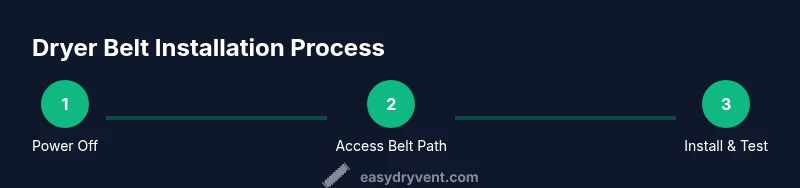
- 1
Power down and unplug
Unplug the dryer from the wall outlet and, if applicable, shut off the gas supply. Move the dryer away from the wall to access the rear or top panels. This protects you from electric shock and reduces the risk of accidental startup during disassembly.
Tip: Use a dry, non-slip mat to prevent movement while you work. - 2
Access the belt area
Remove the rear or front access panel as required by your model to reveal the belt path. If your model uses a top panel, unscrew and lift carefully. Keep track of screws and note where each part came from.
Tip: Take a photo of the belt route before you remove anything. - 3
Release the drum and remove the old belt
Gently release any tension on the belt and slip it off the pulleys. If the drum is held by clips, remove them carefully and set the drum aside. Inspect the pulley surfaces for wear or damage.
Tip: Don’t bend or twist the belt beyond its natural path during removal. - 4
Compare and install the new belt
Compare the new belt to the old one to ensure identical length and rib orientation. Place the new belt around the drum first, then loop it around the motor pulley and tensioner according to the routing diagram.
Tip: If you’re unsure about orientation, refer to the manufacturer’s diagram or your photos. - 5
Seat the belt and drum
Position the drum back into place and ensure the belt sits centered on each pulley. Rotate the drum by hand to confirm smooth motion without binding. Reattach any front panel components as required.
Tip: Use light pressure to avoid bending the drum shaft. - 6
Reconnect panels and power
Secure all panels and screws, reattach the vent hose, and plug the dryer back in. If you disconnected gas, re-open the supply following safety guidelines. Do a quick double-check of all connections.
Tip: Ensure there are no loose wires or panels before powering up. - 7
Run a test cycle
With no heavy load, run a short cycle to observe belt movement and drum rotation. Listen for unusual sounds or belt slippage, and verify towels come out dry with even heat distribution.
Tip: Watch the belt with the drum in motion to spot misalignment early. - 8
Final safety check and cleanup
Turn off the machine after the test and recheck all fasteners. Clean the interior of lint and debris, and ensure the vent path is clear for optimal airflow. Reposition the dryer back to its place.
Tip: Keep a small lint brush handy for regular maintenance.
Common Questions
Can I replace the dryer belt without removing the drum?
Most models require some drum or panel access to reach the belt. Some allow belt replacement without full drum removal, but you’ll still need to access the belt path. Check your model’s manual for exact steps.
Most dryers require accessing the belt path, which may involve removing some panels or the drum. Check your model’s manual for the exact steps.
What are common signs the belt needs replacement?
Slow-drying clothes, unusual squealing, or a drum that won’t rotate are common signs the belt is worn or broken. If you notice any of these, replace the belt before continuing.
Common signs are slow drying, squealing noises, or a drum that won’t rotate.
Is it safe to run the dryer with a loose belt?
No. A loose belt can slip, overheat, or cause motor strain. Stop using the dryer and inspect the belt routing and tension before attempting another cycle.
Running with a loose belt can cause damage; inspect the belt and tension before testing again.
Do I need to unplug the dryer while performing the belt installation?
Yes. Always unplug the dryer before starting, and if applicable, shut off gas and disconnect venting to prevent hazards during repair.
Yes—unplug the dryer before starting, and disconnect gas or venting if required.
How often should I inspect the dryer belt?
Inspect the belt during routine maintenance, about every 6–12 months depending on usage. Replace worn belts promptly to avoid sudden breakdowns.
Inspect belt during maintenance, roughly every 6–12 months, and replace worn belts promptly.
Watch Video
Key Points
- Identify belt type before replacement.
- Follow exact routing to prevent belt slip.
- Test with a short cycle to verify operation.
- Inspect pulleys for wear during the job.
- Regular checks extend belt life and dryer efficiency.