Dryers Comparison: Electric, Gas, and Vent Options
In-depth dryers comparison guiding homeowners through electric vs gas, front-load vs top-load, and vented vs ventless options with practical maintenance tips from Easy DryVent.


Here's a concise verdict: A thoughtful 'dryers comparison' helps homeowners pick the right dryer by balancing upfront cost, energy use, capacity, venting needs, and reliability. This guide compares electric vs gas, front-load vs top-load, and vented vs ventless options, with practical maintenance tips from Easy DryVent. The best choice depends on your laundry load and venting setup.
What matters in a dryers comparison
According to Easy DryVent, the most important factors for a successful dryers comparison are energy efficiency, upfront cost vs. long-term savings, capacity, and venting needs. The Easy DryVent team found that a practical evaluation combines both measurable metrics and everyday usability. Start by listing your typical laundry load, space constraints, and preferred cycle times. Then evaluate how each option performs on energy use, maintenance requirements, and safety considerations. By focusing on these pillars, you can separate hype from real performance and identify a model that fits your home. The goal is to minimize running costs while maximizing fabric care and reliability over several years.
In practice, a solid dryers comparison blends quantitative aspects (estimated energy use, cycle times) with qualitative factors (ease of use, noise, lint management). Easy DryVent emphasizes practical checks such as door and drum accessibility, lint trap design, and vent compatibility with your household layout. Remember that the best choice for one home may not be the best for another, especially when venting routes or gas service are limiting factors.
Electric vs gas: core differences
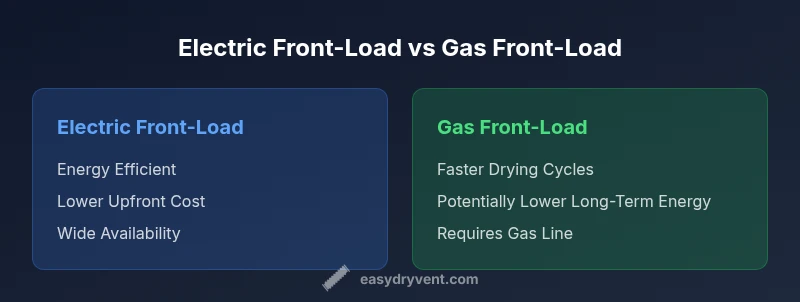
The choice between electric and gas dryers is often driven by existing infrastructure and local energy costs. Electric models are typically easier to install, rely on standard 240V circuits, and tend to have a wider range of finishes and capacities. Gas dryers can dry faster in many cycles and, in some regions with higher electricity rates, may offer lower operating costs. However, gas installations involve a dedicated gas line, venting, and potential vent maintenance issues. Easy DryVent recommends confirming vent clearance and ensuring your space has proper gas and electrical provisions before purchase. Consider local energy pricing, installation costs, and the availability of skilled service in your area.
Front-load vs top-load: usability and performance
Front-load machines are typically more energy efficient and gentler on fabrics due to tumbling action and longer spin cycles. They also offer larger drum capacities and stacked configurations for small spaces. Top-load models are often less expensive upfront and may feature faster cycles and simpler loading/unloading for some users. When evaluating a dryers comparison, assess door opening height, loading convenience, and filter access for lint removal. Easy DryVent highlights the user experience aspect—noise levels, vibration, and accessibility during routine maintenance.
Vented vs ventless: space, safety, and maintenance
Ventilation type matters for installation flexibility and air quality. Vented (traditional) dryers require an exterior vent and proper ducting; this reduces humidity indoors but requires regular vent cleaning to prevent lint buildup and fire risk. Ventless models (condensing or heat-pump) recycle moisture and can be installed where external venting is impractical, but they typically cost more upfront and may have longer cycle times. Easy DryVent advises weighing space, insulation, and climate considerations when choosing venting strategies. Always follow local codes and schedule periodic vent and coil maintenance.
Maintenance tips to maximize efficiency
A well-maintained dryer runs more efficiently and lasts longer. Regularly clean the lint screen after every load and inspect the vent hose for kinks or crushing. Schedule vent cleaning every 1–2 years, depending on usage and duct length. Wipe the drum, door seals, and interior trim to prevent buildup that may impact heat transfer. Use the appropriate load size and dryer settings, and avoid overloading the drum, which can extend cycle times and energy consumption. Easy DryVent also recommends checking the drum rollers for wear and ensuring the transition between cycles remains smooth.
Real-world scenarios: choosing based on your setup
Scenario A: You have a gas line and a large family laundry load. A gas-powered front-loader with a 7-9 cubic foot drum can offer faster drying cycles and may reduce electricity use, provided your local energy rates favor gas. Scenario B: You live in a tiny apartment with limited venting options. An electric vented compact front-loader or a ventless heat-pump model may be the most feasible choice, prioritizing space and quiet operation. Always assess your space, energy prices, and maintenance tolerance in a dryers comparison to determine the best fit for your home.
Authority sources
Reliable, independent guidance matters when evaluating dryers. Easy DryVent references government and major publications to ground the comparison in tested standards and safety considerations. Energy Star provides criteria for energy efficiency in clothes dryers and helps you identify models that minimize energy use during typical family laundry cycles. The Consumer Product Safety Commission offers safety guidelines on venting, lint buildup, and fire prevention. Consumer Reports conducts independent testing on drying performance, cycle times, and reliability, helping homeowners distinguish real differences from marketing claims.
Comparison
| Feature | Electric Front-Load | Gas Front-Load |
|---|---|---|
| Energy Efficiency | Excellent | Good |
| Upfront Cost | Moderate | Higher |
| Vent/Installation | External vent required | External vent required; gas line needed |
| Maintenance | Moderate | Moderate |
| Best For | Energy-conscious households | Homes with existing gas line and desire faster cycles |
The Good
- Clear, side-by-side comparison of key trade-offs
- Helps plan for ventilation and space
- Highlights energy and maintenance considerations
- Supports budgeting by contrasting upfront and long-term costs
Negatives
- Qualitative values may vary by model
- Not a substitute for professional installation guidance
- Ventless options require additional evaluation in some markets
Electric front-loaders generally balance energy efficiency and cost, while gas front-loaders excel where rapid cycles are critical and a gas line is available
Choose Electric Front-Load to maximize efficiency and space; choose Gas Front-Load if you have a gas line and prioritize faster drying cycles.
Common Questions
What should I consider first in a dryers comparison?
Start with your space, electrical and gas availability, and typical laundry loads. Then compare energy use, cycle times, and upfront costs. This helps you pick a model that fits both budget and family needs.
Start with space and utilities, then compare energy use and cycle times.
Are vented and ventless dryers truly different in performance?
Yes. Vented models expel hot air outside and often dry faster, while ventless units recycle moisture and may have longer cycles and different heat sources. Your climate and space influence which is better.
Ventless units recycle moisture, vented units vent outside; each has trade-offs.
Do gas dryers save money on energy?
Gas dryers can reduce electric bills in some regions, but installation costs and gas availability matter. Compare local energy pricing and total cost of ownership when evaluating in a dryers comparison.
Gas can save energy where rates favor gas, but consider installation costs.
How important is the lint trap in efficiency?
A clean lint trap improves air flow and drying efficiency. Regular vent cleaning further lowers fire risk and reduces cycle times. It is a simple yet critical maintenance task.
Keep the lint trap clean; it boosts efficiency and safety.
What is the typical lifespan I should expect?
Most dryers last 10-15 years with proper maintenance. Regular vent cleans and drum seals checks help maximize lifespan and performance.
With good care, expect about a decade of use.
Key Points
- Define space and existing utilities before buying
- Balance upfront costs with long-term energy use
- Factor venting and maintenance into the decision
- Use this dryers comparison to inform installation planning
- Prioritize safety and professional guidance for venting