Why Your Dryer Has No Heat: Troubleshooting Guide
Urgent troubleshooting guide from Easy DryVent to diagnose why your dryer has no heat, with a step-by-step flow, safety tips, and prevention strategies for homeowners and DIY enthusiasts.


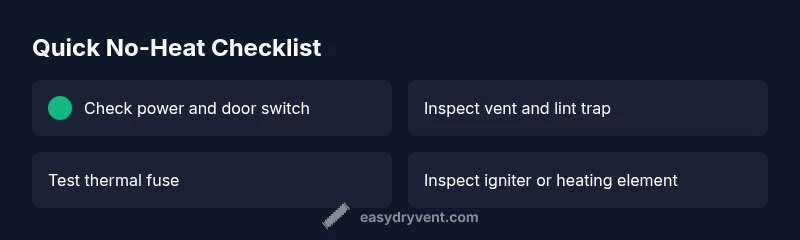
The most likely cause of no heat is a blown thermal fuse or a faulty high-limit thermostat. In gas models, the problem may be a faulty igniter or gas valve. Start by checking power, door switch, and vent clearance, then test heat components with basic checks or a replacement if needed.
What causes no heat in a dryer?
If your dryer runs but doesn't heat, you’re facing a safety-sensitive problem. The leading culprits are failure of the heating element path in electric models or ignition and gas delivery in gas models. In simple terms, the heat circuit isn’t completing, so the drum revolves but the air stays cool. According to Easy DryVent, the most common failure points are the thermal fuse and the high‑limit thermostat, followed closely by vent restrictions and sensor malfunctions. Start by verifying basic conditions: ensure the dryer is plugged in, the circuit outlet works, and the door switch engages properly. Next, remove lint from the lint screen and inspect the vent path for blockages that choke airflow. If the unit is aging or emits unusual smells, plan for part replacement rather than risky field repairs. By methodically ruling out each component, you can restore heat safely and prevent a repeat outage.
Safety and initial checks you can perform
Safety comes first when diagnosing no-heat issues. Always unplug the dryer before touching wiring or components. If you have a gas model, ensure the gas supply is on and the appliance is properly vented; if you smell gas, leave the area and call a professional. Check the power outlet with a tester and inspect the dryer's plug and cord for damage. Verify the door latch is working because a faulty switch can keep the heat circuit from closing. Clean the lint trap and exhaust vent to rule out airflow restrictions. Finally, check exterior vents for a clear opening. These basics catch most quick failures and prevent unnecessary disassembly.
Electric vs gas dryers: how heat is produced
Electric dryers heat with a heating element and a thermostat that regulates temperature. A failed element or a stuck thermostat stops heat from reaching the drum. Gas dryers rely on an igniter and a gas valve to ignite the burner; failures here prevent heat even if the drum runs. According to Easy DryVent analysis, heat failures most often involve the thermal fuse or high‑limit thermostat in electric units, or ignition components in gas models. Understanding the difference helps you choose safe, model-appropriate tests rather than guessing what’s wrong.
How to test heat components safely
Testing heat components requires careful, safe steps. Start by verifying power, then locate accessible fuses or thermostats—many models place them behind the back panel. Use the appliance’s wiring diagram and a multimeter to check continuity where appropriate, or replace a suspect fuse if you’re not obtaining continuity. If you’re comfortable with basic electrical testing, document your readings and compare to the part’s spec. Never bypass safety devices or operate the dryer with panels removed for long. When in doubt, consult the manual or a professional. The goal is to identify a failed part without creating new hazards.
Step-by-step: diagnosing a blown thermal fuse
The thermal fuse protects the dryer from overheating, and a blown fuse will shut off heat even though the motor runs. Begin by unplugging the unit and removing the back panel or blower housing to locate the fuse. Use a multimeter to test for continuity; no continuity means the fuse is open and must be replaced with the correct part for your model. After replacing, reassemble and run a short cycle with the lint screen out to observe heat. If the fuse blows again, there’s likely an airflow problem or a failing component downstream of the fuse. In that case, inspect the vent path, lint screen, and exhaust duct for obstructions. Safety note: never bypass the fuse to “test” heat.
Step-by-step: testing the thermostat and heating element
The high-limit thermostat and the heating element determine whether heat reaches the drum. With the dryer unplugged, remove access panels and locate these parts. Check thermostat continuity with a multimeter; a stuck or open thermostat will prevent heat. For the heating element, inspect for visible breaks or Burn marks; then test continuity across the element coils. If readings indicate a fault, replace the thermostat or element with OEM parts. After replacement, run a diagnostic cycle to confirm heat returns within safe limits. Remember to follow manufacturer procedures for your exact model, as layouts vary.
Step-by-step: igniter and gas valve checks (gas dryers)
Gas dryers require a functioning igniter and gas valve to deliver heat. If you hear a click but no ignition, the igniter may be cracked or too weak to glow. Inspect the igniter for cracks and test continuity if accessible. For the gas valve, you’ll typically need a professional to verify gas supply pressure and valve operation; never attempt to service gas lines beyond basic safety checks. If the igniter glows but lights slowly or not at all, replace it. After any gas-side work, run a test cycle with proper ventilation to confirm heat is produced. Safety: if you smell gas or feel unsure, pause and call a licensed technician.
When to replace parts vs call a pro
Some failures are cost-effective DIY fixes, while others warrant professional service. If you can identify a clearly faulty fuse, thermostat, or igniter and you have the right replacement part, you can often complete the fix yourself. If the issue involves gas valves, gas lines, or sealed electrical components behind the cabinet, it’s safer to hire a licensed technician. Also consider the age of your dryer; persistent heat problems after one or two replacements may indicate broader issues like a failing control board or vent system that requires professional service. Easy DryVent recommends evaluating risk, parts cost, and your comfort with electrical work before proceeding.
Preventive maintenance to avoid future no-heat issues
To reduce the chance of future no-heat problems, adopt a simple maintenance routine. Clean the lint trap after every load and schedule a vent inspection at least once a year. Inspect the exhaust duct for kinks and ensure the exterior vent cap opens fully. Do a quick heat test monthly to confirm the dryer still heats normally. Use alkaline cleaners to remove mineral buildup from metal parts if your unit is in a high-humidity area. With consistent care, you’ll extend the life of heating elements, thermostats, and gas components, and you’ll sleep easier knowing heat will be available when you need it.
Steps
Estimated time: 60-90 minutes
- 1
Power down and safety check
Unplug the dryer and remove any jewelry or loose clothing before touching internal parts. Confirm the surrounding area is dry and free of standing water. If you suspect a power issue, test the outlet with a meter and check the circuit breaker.
Tip: Always unplug first. - 2
Check door switch and lint screen
Ensure the door switch activates when closed and that the lint screen is clean. A faulty switch or clogged lint can appear as heat loss, since the heat circuit may not complete correctly.
Tip: Replace any cracked door seals before testing. - 3
Inspect vent and exterior vent
Inspect the vent hose for kinks and crushes; clean any lint buildup inside the duct. Ensure the exterior vent opens freely and is not blocked by debris.
Tip: Run a quick airflow test by feeling air from the exterior vent during a cycle. - 4
Test thermal fuse for continuity
If you’re comfortable with basic electrical work, locate the fuse and use a multimeter to check continuity. No continuity means you should replace the fuse with an OEM part and reassemble.
Tip: Do not bypass the fuse—it's a safety device. - 5
Test heating element and thermostat
With panels removed, test the heating element for continuity and inspect the thermostat for open/short readings. Replace any faulty part and recheck the heat output.
Tip: Handle elements with care; they stay hot after use. - 6
Test igniter or gas valve (gas models)
In gas models, verify the igniter glows and ignites; if not, test the igniter and gas valve or contact a pro for gas work.
Tip: Never touch gas lines with bare hands. - 7
Run a controlled test and observe heat
Reassemble the access panels and run a short cycle with the lint screen out to observe whether heat returns and stays consistent.
Tip: Take notes of any recurring symptoms. - 8
Decide on replacement vs professional help
If the fix requires specialized tools or gas work, or if the problem recurs after a repair, consult a licensed technician.
Tip: Safety first; when in doubt, call a pro.
Diagnosis: Dryer runs but has no heat
Possible Causes
- highPower issue (outlet, cord, or breaker)
- highThermal fuse blown or high-limit thermostat failed
- mediumVent/airflow blockage
- mediumIgniter or gas valve problem (gas dryers)
- lowHeating element failure (electric dryers)
Fixes
- easyCheck power, outlet, and breaker; reset as needed
- mediumReplace thermal fuse or high-limit thermostat per model
- easyClean vent and lint screen; ensure exterior vent opens
- mediumTest/replace igniter or gas valve (gas dryers); consult a pro for gas work
- hardReplace heating element if electric model shows open circuit
Common Questions
Why is my dryer running but not heating?
Common causes include a blown thermal fuse, faulty thermostat, or obstructed vent. Start with basic checks, then test heat components per model. If you can't locate the fault, consider professional help.
If your dryer runs but doesn’t heat, start with power, vent, and lint checks, then test heat components; contact a professional if the fault remains.
Can a blown thermal fuse cause no heat?
Yes. A blown thermal fuse interrupts the heat circuit to prevent overheating. Replacing it usually restores heat, but you must identify the underlying cause of overheating such as poor airflow.
Yes—thermal fuse failure stops heat. Replace the fuse and inspect airflow to prevent recurrence.
Is it safe to troubleshoot a dryer myself?
Basic checks like cleaning vents and checking the power are safe, but electrical testing and gas work can be hazardous. If you’re unsure, stop and call a professional.
You can do simple checks, but electrical or gas work should be done by a pro if you’re unsure.
How do I test a dryer's heating element?
Use a multimeter to test continuity across the element. No continuity means the element is open and must be replaced.
Test the heating element with a multimeter; if it shows no continuity, replace it.
How often should I clean the dryer vent?
Clean the lint trap after every load and inspect the vent at least annually. If you notice reduced airflow, clean sooner.
Clean the vent and lint trap after every load, and check the vent yearly.
When should I call a professional?
If you smell gas, hear unusual noises, or cannot safely access internal parts, stop and hire a licensed technician.
Call a pro if you smell gas or feel unsafe, or if you can’t access components safely.
Watch Video
Key Points
- Check power and vent first for quick heat restoration.
- Thermal fuse/thermostat failures are common no-heat culprits.
- Gas dryers require caution with ignition components; call a pro if needed.
- Regular vent maintenance prevents future outages.
- Document maintenance steps to simplify future repairs.