No Heat in Dryer: Troubleshooting Guide
Learn how to diagnose and fix no heat in dryer safely with practical steps—from power checks to thermal fuse tests—and know when professional help is required.


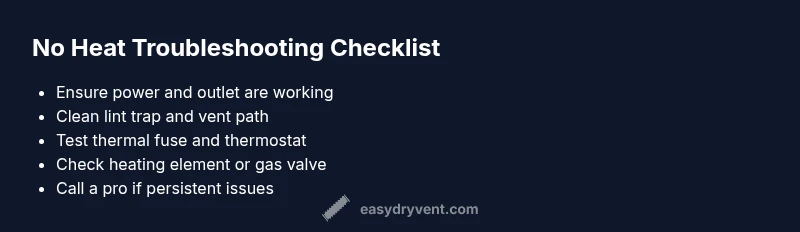
The most likely cause of no heat in dryer is a blown thermal fuse or a tripped circuit breaker. Start by verifying power, then inspect the lint trap and vent, and check the thermostat and heating element for electric models or gas valve for gas models. Replace faulty parts or call a pro if you’re unsure.
Signs of No Heat in Dryer
When the drum spins but your clothes stay damp, you’re likely dealing with no heat in dryer. A dryer that runs but never produces warm air is frustrating and unsafe if lint or gas leaks are involved. According to Easy DryVent, the most obvious sign of no heat in dryer is damp clothes after a cycle. Inconsistent heat, a burning smell, or unusually long cycles can indicate an underlying fault. If you notice your lint trap becoming overly hot or a metallic smell, stop the machine and inspect venting and wiring. Start with the simplest checks: confirm the outlet has power, ensure the door switch latches properly, and verify the dryer’s control settings aren’t on air-dry or ventilate mode. By catching symptoms early, you prevent energy waste and reduce the risk of fire.
Common Causes of No Heat in the Dryer
There are several reasons a dryer might fail to generate heat. The heating system is often the culprit, including a blown thermal fuse, a faulty cycling thermostat, or a burned-out heating element on electric models. In gas dryers, the gas valve or igniter may fail to light. A tripped circuit breaker or a blown fuse cuts power to the dryer’s heating coil entirely. Blocked venting or a clogged lint screen can also reduce heat by causing high exhaust backpressure. A worn door switch or timer can prevent the dryer from entering the heat cycle even if the motor runs. Finally, a simple power issue, such as an outlet that isn’t delivering voltage, will produce the same symptom: no heat in dryer. Each cause changes the recommended fix, from a DIY part replacement to professional service.
Safety-First Checks You Can Do
Before you start disassembling a dryer, prioritize safety and run through these checks. Unplug the unit and switch off the circuit breaker to avoid any risk of shock. Inspect the plug and outlet for damage and test the outlet with a voltmeter if you have one. Clear any lint from the lint screen and vacuum the vent path to remove obstructions. With the vent clear, run a quick test on the heat cycle to see if the dryer warms up. If there’s no heat still, carefully remove access panels only if you’re comfortable and follow the manufacturer’s instructions; otherwise stop and call a pro. Do not touch electrical components if you are unsure about wiring or live circuits. These checks are designed to narrow down the issue without exposing you to unnecessary risk.
When to Call a Professional
Some no-heat dryer problems require specialized tools and expertise. If you have an electric dryer and suspect a blown thermal fuse or failed heating element, a licensed technician should replace the part. For gas models, issues with the gas valve or ignition should be handled by a certified technician due to gas safety. If you hear unusual smells, see sparks, or detect gas leaks, stop immediately and call emergency services. If you’ve checked power, tested continuity, and cleared the vent but still have no heat, professional service is warranted. Regular maintenance, including monthly vent cleaning and annual inspections, helps prevent no-heat situations and keeps your dryer running efficiently.
Steps
Estimated time: 30-60 minutes
- 1
Power down safely
Unplug the dryer and switch off the corresponding circuit breaker. This prevents shocks while you inspect components. If the outlet or breaker shows signs of damage, don’t proceed—call an electrician.
Tip: Always start with unplugging and isolating power. - 2
Check power and controls
Reconnect power after you’ve confirmed the circuit is not tripped. Verify the dryer’s settings are correct for heat (not air-dry). If the outlet is delivering inconsistent voltage, you may need an electrician to assess the circuit.
Tip: Use a separate outlet on a different circuit if possible to test. - 3
Inspect lint trap and vent
Remove the lint screen and thoroughly clean it. Inspect the vent hose and exterior vent for obstructions. A clogged vent can cause heat-related problems or trigger safety shutoffs even if the heating element is fine.
Tip: Vacuum the vent beyond visible lint for best results. - 4
Test for heat during a cycle
Plug the dryer back in and run a short heat cycle. Feel the air at the exhaust and the drum—if there’s no warmth, moves to the next checks. Do not touch the exhaust while it’s running.
Tip: If you hear clicking from an igniter or see a glow, that helps pinpoint gas vs electric issues. - 5
Inspect heating components
Access the heating element and thermostats per the manual. Use a multimeter to test for continuity; replace any part that shows an open circuit. For gas models, check the igniter and gas valve with appropriate safety procedures.
Tip: Disconnect power again before touching internal components. - 6
Test after reassembly
Reassemble any panels you removed and run another heat cycle. Observe whether heat returns. If heat is still absent after these steps, document the steps you took and call a professional for advanced diagnostics.
Tip: Keep a repair log to track what you tested and replaced.
Diagnosis: Dryer runs but produces no heat (no heat in dryer)
Possible Causes
- highPower issue (outlet or breaker) causing dryer to run without heat
- highBlown thermal fuse or faulty thermostat in electric dryers
- mediumBurned heating element (electric models) or gas valve/ignition issue (gas models)
- lowVent/clog causing backpressure reducing heat or inefficiency
- lowWorn door switch or timer preventing heat cycle
Fixes
- easyVerify outlet has power with a different appliance; reset or replace circuit breaker if tripped
- easyTest and replace the thermal fuse or cycling thermostat per the service manual
- mediumCheck heating element continuity with a multimeter and replace if open; for gas dryers, check the gas valve/ignition
- easyEnsure vent and lint trap are clear; clean vents and rerun heat cycle
- mediumInspect door switch and timer for proper operation; replace if faulty
Common Questions
What causes a dryer to stop heating?
The most common causes are a blown thermal fuse, a faulty cycling thermostat, a burned heating element (electric), or a gas valve/ignition issue (gas models). A vent clog or power problem can also lead to no heat.
Common causes include a blown fuse, thermostat, heating element, or gas valve issue, plus vent and power problems.
Electric vs gas: do they heat differently when not working?
Electric dryers heat with elements and thermostats; gas dryers heat via a gas valve and igniter. When heat fails, both share similar troubleshooting paths—check power, venting, and safety switches first.
Electric and gas dryers share the same initial checks; the heating method differs, but many failures are common across both.
Is it safe to use a dryer that won’t heat?
No. Running a dryer without heat wastes energy and increases fire risk. If you suspect an electrical or gas issue, stop using it and seek professional assistance.
No—don’t run it. It’s unsafe and wastes energy; have a pro inspect electrical or gas components.
How do I test a dryer thermal fuse?
Locate the fuse, disconnect power, and test for continuity with a multimeter. If there’s no continuity, replace the fuse following the manufacturer’s procedure.
Use a multimeter to check continuity; if it's open, replace the fuse.
When should I replace the dryer?
If repeated heat faults persist after professional service or the unit is very old and inefficient, replacement may be the safer, more cost-effective option. Consider energy-saving models and warranties.
If heat faults persist after service or the dryer is old, replacement may be best.
Watch Video
Key Points
- Check power first, then venting.
- Test the thermal fuse and thermostat early.
- Clear the vent to restore proper airflow.
- Call a pro when electrical or gas components are involved.