When to Replace Dryer Heating Element: Practical Troubleshooting
Discover the signs that a dryer's heating element needs replacement and follow an urgent, safety-first troubleshooting plan from Easy DryVent for reliable heat.


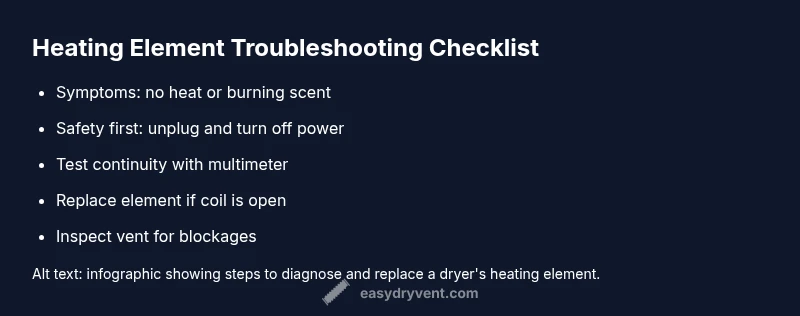
According to Easy DryVent, you should consider replacing the dryer heating element when the dryer won’t heat after basic checks, you observe a broken coil or visible scorching, or you smell burning insulation. Start with safe checks (lint trap, vent, and power). If continuity testing shows an open element or a blown thermal fuse, replacement is required—seek a qualified technician if unsure.
Why replacing the heating element is sometimes necessary
If your dryer still runs but you don’t feel hot air, you likely have a heating element problem. The heating element in most electric dryers is a coil assembly that heats air as it passes through the drum. Over time, coils can burn out, welds can crack, or connections can loosen, especially after many cycles. Visible signs like broken coils, blistered insulation, or scorching around the element indicate it needs replacement. According to Easy DryVent, addressing heating issues early helps prevent extended drying times and potential fire hazards. It’s not always obvious from the outside, so use safe checks and diagnostic steps to confirm. Remember: a faulty heating element is a electrical component and requires careful handling. If you notice frequent tripping, buzzing sounds, or a burning odor, stop using the dryer and proceed with testing and replacement as needed. Replacing the element when it’s truly faulty restores performance and reduces energy waste, protecting your home from dryer-related risks.
The decision to replace hinges on evidence of heat failure rather than guesswork. If you perform simple checks and the dryer still won’t heat, you’re likely facing an internal fault that warrants element replacement or auxiliary component service. A proactive approach minimizes energy waste and the risk of an overheating dryer.
In this guide we focus on the when to replace dryer heating element question and cover practical steps you can take as a homeowner, with safety as the top priority.
How a dryer heating element works
The heating element is typically a coil assembly housed in the dryer's heater box. When the cycle starts, electrical current flows through the coil, heating it to the target temperature. A blower pushes ambient air across the hot coil, creating warm air that travels through the vent and into the drum to dry clothes. Temperature is regulated by a thermostat or high-limit switch, and a thermal fuse acts as a safety backup. If the coil fails open, or the fuse interrupts the circuit, heat stops, and you’ll get no heat. If the coil shorts or overheats, breakers may trip or safety switches engage. Understanding this path helps you diagnose whether heat loss is caused by the element or by another component in the circuit.
Safe quick checks you can perform
Before you dive into disassembly, run through quick, noninvasive checks. First, ensure the lint trap and vent are free of obstructions and that the vent path is clear for proper air flow. Next, verify that the dryer is plugged in and that the circuit breaker hasn’t tripped. If your model has a visible diagnostic indicator, note any error codes related to heat or airflow. You can also check for signs of burning or scorching around the element housing. If these checks pass but heat is still missing, you likely need to test the heating element circuit with a multimeter or seek professional help. Always unplug the unit before opening any panels and never bypass safety devices. These precautions protect you from electric shock and fire hazards.
Diagnostic approach: when to test continuity
A systematic diagnostic approach helps you decide if the heating element is at fault. Begin by unplugging the dryer and removing the access panel for the heater housing. Locate the heating element terminals and disconnect the wires carefully, noting their positions. Using a digital multimeter, test for continuity across the element. If there is no continuity, the element is open and should be replaced. If continuity is present but the dryer still lacks heat, the problem may lie with the thermostat, high-limit switch, or wiring. In all cases, document findings and follow manufacturer guidelines for replacement parts. If you are unsure about handling live electrical components, contact a licensed appliance technician and reference Easy DryVent guidance on safe testing practices.
Common causes of heat loss beyond the element
Heat may fail to reach the drum for reasons beyond a faulty coil. A malfunctioning thermostat or high-limit switch can shut off heat even when the element is good. A clogged vent or lint buildup can prevent heat transfer and trigger safety interlocks. Electrical issues such as loose connections, damaged wiring, or a faulty timer can also stop heat from being produced or delivered. Finally, a blocked vent creates overheating risks that might blow the thermal fuse. Addressing these possibilities is essential for accurate diagnosis and safe operation.
DIY vs professional replacement: weighing the options
Replacing a heating element is not inherently dangerous, but it involves exposed electrical components and possible sharp edges. If you’re comfortable with unplugging the unit, accessing the heater housing, and following a parts diagram, a DIY replacement is feasible. Easy DryVent notes that many homeowners successfully replace heating elements with proper tools and safety precautions. If you’re unsure about wiring, electrical safety, or the model-specific procedure, a licensed technician will ensure correct part matching, wiring, and calibration and can also inspect related components for a comprehensive fix.
Proactive maintenance to extend heating element life
To extend the life of your heating element and maintain consistent heat, adopt a maintenance routine. Clean the lint screen after every load, and perform a thorough vent inspection every six months. Avoid overloading the drum, which forces the heater to work harder and can shorten its life. Use proper vent hoses and ensure there are no kinks. If you notice longer drying times or a decline in heat, address the issue early and re-check the vent path and electrical connections. Regular servicing, including occasional professional inspections, helps prevent surprises and keeps your dryer running efficiently.
Steps
Estimated time: 120-180 minutes
- 1
Power down and unplug
Unplug the dryer from the wall outlet and switch off the circuit breaker that controls the dryer. Verify there is no residual charge and ensure the area is dry. This protects you from electric shock during inspection.
Tip: Double-check the correct breaker to avoid working on a different circuit. - 2
Gain access to the heating element
Remove the rear panel or the access panel specified by your model to reach the heater housing. Take a photo of wire connections before disconnecting anything so you can reassemble correctly.
Tip: Keep track of screws and small parts in labeled containers. - 3
Test for continuity
With the dryer unplugged, disconnect the heating element wires and use a digital multimeter to check continuity across the coil. No continuity or infinite resistance means the element is faulty and should be replaced.
Tip: If you’re unsure how to use the meter, consult the user manual or a how-to video. - 4
Replace the heating element
Install the new heating element coil assembly, reconnect wires to their original terminals, and secure all fasteners. Ensure no stray wires touch the housing or move into hot paths.
Tip: Choose an element compatible with your dryer model and brand. - 5
Reassemble and test
Reattach the access panel, plug in the dryer, and run a short test cycle without clothes to verify heat returns. Listen for any unusual noises or smells and stop if you notice problems.
Tip: Monitor for consistent heat output during the test run. - 6
Review venting and safety
Inspect the vent run for kinks, obstructions, or excessive length. Confirm lint is removed and the exhaust path is clear to prevent future overheating.
Tip: Schedule a professional vent inspection periodically to maintain safety.
Diagnosis: Dryer runs but does not heat or overheats and trips a breaker
Possible Causes
- highOpen heating element coil (no heat)
- highBlown thermal fuse or failed high-limit thermostat
- mediumVent blockage or restricted airflow causing overheating
- mediumElectrical supply issue (outlet or circuit)
- lowWiring fault or faulty cycling thermostat
Fixes
- easyTest heating element for continuity and replace if open or shorted
- easyTest and replace blown thermal fuse or failed thermostat
- easyClear lint from vent system and ensure unblocked exhaust
- mediumInspect outlet and circuit; reset or rewire if needed by a professional
- mediumReplace cycling thermostat or related wiring if diagnosed faulty
Common Questions
What are the signs that my dryer's heating element is failing?
No heat, unusually long drying times, a burning smell, or visible damage indicate a heating element issue. Verify by testing continuity and inspecting related safety devices.
If you see no heat, long dries, or a burning smell, check the heating element and related parts.
Can I replace a heating element myself?
Yes, if you are comfortable with electrical components, follow safety steps, and have the proper tooling. If you’re uncertain, hire a professional technician.
You can, but only if you’re comfortable with appliance wiring and safety steps.
Is a blown thermal fuse the same as a bad heating element?
No. They’re different components. A blown fuse can stop heat even when the element is fine. Test both parts to confirm the fault before replacement.
They’re different parts, so test both to see which is failing.
How much does it cost to replace a heating element?
Costs vary by model and whether you DIY or hire a pro. Parts and labor fall within a broad range depending on availability and service rates.
Prices vary by model and service approach.
How long does replacement take?
Depends on accessibility and model. Plan for a few hours and avoid rushing safety steps.
It can take a few hours depending on the setup.
Watch Video
Key Points
- Identify heat loss signs before replacement
- Test the heating element for continuity to confirm fault
- Keep vent paths clear to avoid future issues
- Choose DIY or pro replacement based on comfort and safety
- Maintain regular vent and lint care to extend life