How to Tell If Dryer Heating Element Is Bad
Learn the signs of a failing dryer heating element, how to safely test it, and step-by-step fixes. Easy DryVent explains practical, home DIY checks to restore heat and prevent future faults.


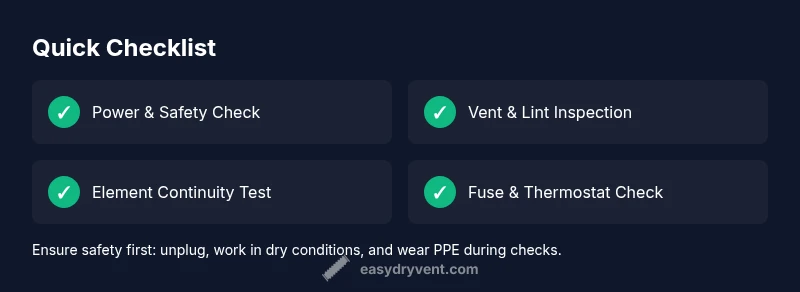
The most common sign is that your dryer won’t heat or dries slowly, often due to a blown heating element or a blown thermal fuse. Start by verifying power, inspecting the lint trap and vent, then test for continuity with a multimeter and inspect the fuse. If the element reads open, replacement is usually required.
Signs Your Dryer Heating Element Is Bad
When a clothes dryer stops producing heat, the heating element is often the culprit. The most common symptom is no heat at all, followed by extended drying times even on high heat settings. You might notice the air feeling warm at the exhaust but the clothes remain damp. In some models, you may hear a popping sound or faint sizzling as the element overheats. The causes can include insulation wear, a short in the coil, or a blown thermal fuse that interrupts current to the heater. According to Easy DryVent, vent blockages and lint buildup can place extra stress on the heating element, accelerating failure. Before blaming the element, do a quick vent check: a clogged lint screen or restricted vent reduces airflow and makes the element work harder, shortening its life. Additional signals include a burning odor, tripped breakers, or a dryer that only heats intermittently. If you observe any of these signs, you should plan a safety-first diagnostic to confirm whether the heating element is indeed bad.
This assessment helps you distinguish between a heating element problem and other airflow or power issues. Remember that a heat-related fault can mimic motor or timer faults, so a careful, methodical approach is essential. Easy DryVent recommends documenting each symptom and test result to track what you’ve ruled out and what remains to be inspected.
Safety First: Power Down, Discharge, and Prep
Safety is non-negotiable when diagnosing heating issues in a dryer. Always unplug the unit from the wall outlet and disconnect the power cord before touching any internal components. If you have a gas dryer, shut off the gas supply and move the appliance away from the wall to access the rear panel safely. Wear gloves and eye protection, and keep the workspace dry. Remove the dryer's front or back panel according to your model's service manual, but never bypass safety interlocks. Have a small container to store screws and a clear plan for reassembly. Gather tools: multimeter, screwdriver set, and a replacement heating element if you determine it’s needed. Easy DryVent emphasizes that performing electrical tests with the dryer plugged in is dangerous and can cause shock or fire. Take your time, test simple things first (power supply, outlet, and vent), then proceed to electrical checks if you’re comfortable.
With the right precautions, you reduce risk and improve diagnostic accuracy. This stage also helps you decide whether you can safely complete the repair yourself or if professional service is the better path.
How to Test the Heating Element With a Multimeter
Locating the heating element housing is the first step. In many models it sits behind a rear panel or inside a dedicated heating box. Disconnect power and carefully separate wiring to access the element terminals. Set your multimeter to the lowest resistance setting (ohms) and test continuity between the heating element terminals. A healthy element will show a low, readable resistance; if the meter reads zero or an abnormally high value, the element may be faulty. Also test for a short to ground by touching one probe to a terminal and the other to a known grounded point; any reading here indicates a fault. If the element fails continuity tests or shows a ground fault, replacement is indicated. If the element passes these tests, reattach wires and test the dryer in a controlled cycle to observe whether heat returns. Always power down before reassembly and consult the manual if your model uses a sealed unit.
Carefully documenting readings and model details helps you compare against expected specs and avoid guessing. If you’re unsure at any point, stop and seek guidance from a professional.
Check the Thermal Fuse and High-Limit Thermostat
In many dryers, a blown thermal fuse will prevent power from reaching the heating element even if the element is okay. Locate the thermal fuse on the blower housing or near the heating chamber and test for continuity with your multimeter. If the fuse is open, it must be replaced; a blown fuse is a sign of overheating or airflow issues. The high-limit thermostat is another safety device that can cut power if the dryer overheats. Test it in the same way; replace if it fails to show continuity. If you replace the heating element but the fuse continues to blow, the underlying problem is likely reduced airflow, lint buildup, or a malfunctioning thermostat that needs inspection. After any replacement, reset the dryer and run a heat test cycle to confirm heat stability and airflow. Always consult model-specific guidance when dealing with sealed components or complex wiring.
Combining tests for element, fuse, and thermostat helps identify the real culprit and prevent repeated failures.
Other Causes That Can Mimic Heating Element Problems
A faulty heater is not the only reason a dryer might fail to heat. Vent blockages and restricted ducts reduce airflow, causing the element to overheat and shut down protection devices. Inspect the lint screen, lint trap area, vent hose for kinks, and the exterior vent termination for obstructions. Moisture sensors or cycling thermostats can also misreport heat status and affect cycles. If you discover vent restrictions or sensor faults, address those first, as they can save you from unnecessary heater replacements. Regular vent cleaning is a proactive step that extends dryer life and improves performance. If the vent path is clear and the dryer still doesn’t heat, proceed with element and fuse tests described above.
Replacement, Reassembly, and Prevention
If testing confirms a bad heating element or blown thermal fuse, replace the component using a compatible kit and follow the manufacturer’s instructions for your model. Some designs require professional handling due to wiring complexity or a sealed heating element. After replacement, perform several test cycles to confirm heat and airflow. Prevention is easier than repairs: clean the lint trap after every load, schedule a yearly vent inspection, and run a dry cycle on a non-lint-producing load to check airflow. Keep replacement parts on hand for your model and document chosen maintenance steps for future reference. Easy DryVent recommends integrating a simple maintenance routine to minimize sudden heater failures and keep clothes drying efficiently.
Steps
Estimated time: 30-60 minutes
- 1
Power down and prep workspace
Unplug the dryer, move it to a clear workspace, and gather tools. Safety first: wear gloves and eye protection. This step reduces risk as you begin meticulous tests.
Tip: Label wires before disconnecting to simplify reassembly. - 2
Access the heating element
Open the access panel as per your model’s manual, then locate the heating element housing. Disconnect wires one by one and keep track of where each wire connects.
Tip: Take photos of wiring configuration before removal. - 3
Test element continuity
With the dryer unplugged, set the multimeter to ohms and test between the element terminals. A healthy element shows continuity; an open circuit indicates failure.
Tip: Double-check you’re measuring the element and not a nearby component. - 4
Test for shorts to ground
Place one probe on a terminal and the other on a grounded surface. Any reading suggests a ground fault that requires component replacement.
Tip: If unsure how to test safely, skip to professional help. - 5
Check the thermal fuse and thermostat
Locate and test the fuse and high-limit thermostat for continuity. Replace any that fail the test, as they can mimic a heater problem.
Tip: Work methodically; replace one component at a time to identify the actual fault. - 6
Reassemble and run a test cycle
Reconnect wiring, reassemble panels, restore power, and run a test heat cycle with a safe load. Observe heat performance and airflow; listen for unusual sounds.
Tip: If heat doesn’t return, halt and consult a professional.
Diagnosis: Dryer not heating or drying slowly
Possible Causes
- highPower issue (outlet, cord, or breaker)
- mediumVent blockage or restricted airflow
- highBlown thermal fuse
- lowFaulty heating element
Fixes
- easyCheck outlet, plug, and reset circuit breakers; test with a known-good outlet
- easyClean lint screen and vent ducts to restore airflow
- mediumTest thermal fuse for continuity and replace if open
- mediumTest heating element for continuity; replace if open or burned
- hardInspect wiring harness for damage; seek professional help for complex faults
Common Questions
What are the first signs that indicate a dryer heating element is failing?
Common signs include no heat, long drying times, and occasional burning smells. To confirm, test continuity of the heating element and inspect the thermal fuse and vent for blockages.
Look for no heat, longer cycles, or burning smells, then test the element with a multimeter.
Can a dryer heat if the heating element is failing?
Sometimes you feel warm air but not enough heat, indicating partial heating or airflow issues. In most cases, a failing element prevents proper heating entirely.
It can feel warm but not heat properly if the element is failing.
How do I test the heating element?
Disconnect power and locate the element housing. Use a multimeter to check continuity between terminals. If there’s no continuity, replace the element. Then test for shorts to ground to rule out other faults.
Test continuity across the element and check for ground faults with a multimeter.
Is it safe to DIY replace a heating element?
DIY replacement is possible for some models, but electrical safety and sealed components can complicate repairs. If you’re unsure about wiring or plumbing connections, hire a professional.
DIY can work for simple cases, but for complex wiring, get a pro.
What maintenance helps prevent heater failure?
Regularly clean the lint trap, inspect and clean the vent duct, and ensure the exhaust vent is clear. Proper airflow reduces overheating and extends component life.
Keep the vent clean and the lint trap clear to prevent overheating.
If the thermal fuse is blown, does replacing the heating element fix it?
No. A blown thermal fuse is a separate safety device; replacing the heater without addressing airflow or fuse may lead to repeat failures. Check and replace both as needed.
Fuse issues need their own fix; don’t assume the heater alone is to blame.
Watch Video
Key Points
- Identify heat-related symptoms early and separate vent issues from element faults.
- Test with a multimeter for reliable, non-destructive diagnosis.
- Address vent cleanliness before replacing the heating element.
- Replace the element and fuse together when tests indicate both are faulty.