ned4655ew1 Error: Urgent Dryer Troubleshooting Guide
A fast, urgent guide to Ned4655ew1—what it means, quick fixes, diagnostics, and professional thresholds. Learn safe steps, common causes, and prevention tips from Easy DryVent.


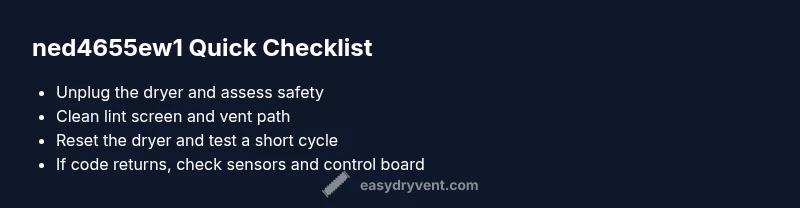
ned4655ew1 indicates a dryer control error tied to the electronics or sensor circuit. The urgent first steps are to unplug the dryer, inspect and clean the lint screen and vent, and perform a basic reset. If the code remains after these quick fixes, follow the detailed diagnostics or call a professional.
What ned4655ew1 Means for Your Dryer
ned4655ew1 is a diagnostic code used by many modern dryers to signal a fault in the control board or sensor circuit. According to Easy DryVent, this is not a single component failure but a system-level warning that the dryer’s electronics detected readings outside the expected range. When ned4655ew1 appears, the dryer may pause mid-cycle, refuse to start, or run inconsistently. The initial reaction should be safety-first: unplug the dryer, keep the area dry, and avoid attempting to bypass the code. In practical terms, ned4655ew1 tells you that either the circuit has a transient glitch or there is a deeper hardware or wiring issue. Because venting and lint accumulation can exacerbate electronic faults, it’s essential to inspect the lint trap and vent path as part of the troubleshooting. Early attention to this code can prevent lint buildup, reduce energy waste, and minimize the risk of overheating. The goal is to determine whether you’re dealing with a quick reset-able glitch or a stubborn fault that requires part replacement or professional service.
Immediate Safety Steps You Should Take Now
First, unplug the dryer from the outlet and switch off the dedicated circuit at the breaker if safe to reach. Avoid trying to run the appliance while the ned4655ew1 code is displayed. Inspect the area around the dryer for signs of moisture or heat damage. Then check the external vent hood for obstructions and perform a quick lint-out of the lint screen. Clean the lint screen thoroughly and remove lint from the vent duct accessible at the dryer outlet. A blocked vent not only reduces drying efficiency but can trigger electronic fault readings by causing the dryer to overheat. Next, wait a minute, plug back in, and reset the dryer by cycling power (on-off-on). If the code returns immediately, stop and proceed to the diagnostic steps, rather than forcing a fix.
Common Causes of Ned4655ew1
- Lint buildup in lint screen or vent: This limits airflow and can trigger control faults due to overheating. Easy to fix with a thorough cleaning.
- Faulty temperature sensor or thermistor: A sensor that reads incorrectly can surface as a control error, especially during start-up or heat cycles.
- Loose connections or damaged control board: Wiring or PCB issues can produce sporadic signals that the dryer interprets as faults.
- Door interlock or switch issues: A faulty door switch can cause intermittent cycles and error codes. Check that the door seals well and latches securely.
In some cases, interference from moisture or improper electrical supply can mimic or trigger ned4655ew1. Regular maintenance reduces the likelihood of these symptoms turning into persistent faults.
Diagnostic Approach: How to Test the Code
- Visually inspect lint screen, vent hose, and exterior vent for kinks, blockages, or crushing. Clear any obstruction and ensure the vent path is open.
- Check the lint trap housing and door switch for debris and proper engagement. A sticky latch can falsely trigger faults.
- Reset the appliance: unplug for 60 seconds, then plug back in and perform a test cycle while observing the display.
- If available, review the dryer's diagnostic readouts or run a self-test cycle to capture error history. Document any patterns, such as temperature spikes or mid-cycle stops.
- If the code persists after cleaning and reset, the next steps typically involve testing sensors and the control board, which may require professional tools and knowledge.
Step-by-Step Fix for the Most Common Cause: Lint Vent Obstruction
- Power down the dryer and unplug it. 2) Remove the lint screen; clean it thoroughly with warm, soapy water and dry completely. 3) Disconnect the vent hose from the dryer and inspect for lint buildup; use a vacuum or vent brush to clear the duct, working from the dryer end outward. 4) Reattach the vent hose securely and ensure the exterior vent flap opens freely when air is expelled. 5) Plug in the dryer, reset, and run a short test cycle. If ned4655ew1 reappears, proceed to sensor and control-board checks. Tip: Wear a dust mask and safety goggles when handling lint and duct debris.
Other Causes and Their Fixes
- Faulty sensor or thermistor: If accessible, replace the sensor; otherwise, schedule service. Check for loose connectors behind the control panel.
- Control board malfunction: A reset may clear transient faults, but persistent issues often require board inspection or replacement by a professional.
- Electrical supply irregularities: Verify outlet stability and avoid using adapters that may cause voltage fluctuations. If the dryer shares a circuit with high-draw appliances, consider relocating or upgrading the circuit.
Safety Warnings and When to Call a Pro
- Do not bypass safety interlocks or continue to operate the dryer when wiring or panels are damaged. A malfunctioning control board can pose shock or fire risks. If you smell burning, hear buzzing, or notice melted insulation, stop immediately and call a licensed technician.
- For persistent ned4655ew1 codes after basic fixes, a professional diagnosis often costs more than basic repairs but reduces the risk of further damage. A pro can test sensors, check a faulty control board, and inspect wiring and harnesses with specialized equipment.
Prevention and Maintenance to Avoid Recurrence
- Schedule regular vent cleaning every 12–18 months or sooner if you notice longer dry times. Remove lint from the screen after every cycle and check the vent line for obstructions.
- Keep the lint trap clean and consider upgrading to a high-efficiency lint filter for reduced buildup.
- Perform a quarterly self-check of the dryer's diagnostic modes and readouts to catch anomalies early. A proactive approach minimizes the chance of ned4655ew1 or similar codes recurring.
Steps
Estimated time: 30-45 minutes
- 1
Power down and safety check
Unplug the dryer and switch off the dedicated circuit at the breaker if safe. Wait 60 seconds to discharge residual power, then reconnect. This fresh reset can clear transient faults that trigger ned4655ew1.
Tip: Always unplug before handling any internal components. - 2
Inspect lint path and vent
Remove the lint screen and clean it fully. Check the vent hose for kinks or crushing, and clear any visible obstructions in the duct near the outlet. A clear path restores airflow and reduces false fault triggers.
Tip: Use a vacuum with a long, flexible brush to reach tight spots. - 3
Reset and test
Reconnect power and perform a short test cycle. Watch the display for any immediate error reoccurrence and listen for abnormal noises that could indicate wiring issues.
Tip: Document any error codes shown during the test for technician reference. - 4
Evaluate persistence
If ned4655ew1 returns, do not continue testing cycles. Instead, proceed to sensor and control-board diagnostics or arrange a professional service.
Tip: Persistent codes after basic steps usually indicate a component replacement need.
Diagnosis: Dryer displays ned4655ew1 and won’t complete a cycle
Possible Causes
- highClogged lint screen or vent restricting airflow
- mediumFaulty temperature sensor or thermistor reading
- lowControl board glitch or loose relay connections
Fixes
- easyClean the lint screen, vent hose, and exterior vent thoroughly
- mediumTest and replace faulty sensor/thermistor if accessible
- hardInspect connections on the control board and perform a safe reset; replace board if faults persist
Common Questions
What does ned4655ew1 mean on my dryer?
Ned4655ew1 is a diagnostic code indicating a fault in the dryer’s electronics or sensors. It signals the need for diagnostic checks beyond a simple reset and often requires testing sensors, connections, or the control board.
Ned4655ew1 is a dryer error pointing to electronics or sensors; reset and inspect sensors and connections, and call a pro if it sticks.
Can I fix ned4655ew1 myself?
Yes, for many cases you can start with safety steps, lint removal, vent cleaning, and a controlled reset. If the code persists after these steps, professional diagnosis is recommended to avoid further damage.
Yes, start with safety steps and vent cleaning, but if it persists, call a professional.
Is it safe to operate the dryer with ned4655ew1 showing?
Operating the dryer while the code is active can risk overheating or electrical faults. Disable use until you have completed the recommended checks and confirmed the fault is cleared.
Do not run the dryer while ned4655ew1 is displayed; complete the checks first.
Will cleaning the vent fix ned4655ew1?
Vent cleaning can resolve many cases if airflow is restricted, which triggers the fault. If the code remains after cleaning, investigate sensors and the control board.
Vent cleaning fixes many cases, but persistent codes may need sensor or board checks.
When should I call a pro for ned4655ew1?
Call a professional if the code persists after basic cleaning and reset, or if you notice burning smells, melted insulation, or obvious wiring damage.
Call a pro if the code sticks after basic fixes or if there are signs of damage.
How can I prevent ned4655ew1 from returning?
Prevent with regular vent cleaning, lint-trap maintenance, and scheduling annual dryer maintenance checks. Avoid overloading the drum and ensure the vent path remains clear.
Prevent by cleaning vents, maintaining the lint trap, and regular checks.
Watch Video
Key Points
- Identify ned4655ew1 as a control/sensor fault, not just a heater issue
- Prioritize vent and lint cleaning as a quick fix
- Resetting can clear glitches, but persistent codes require deeper checks
- Safety first: unplug, inspect connections, and avoid risky repairs
- Prevent recurrence with regular vent maintenance and lint-trap care