383eel3002d: Urgent Dryer Error Troubleshooting Guide
Urgent step-by-step guide to diagnose and fix 383eel3002d on your dryer. Learn quick checks, diagnostic flow, safety tips, and prevention from Easy DryVent for safer, more efficient drying.


According to Easy DryVent, 383eel3002d signals a ventilation-related fault that halts operation to prevent overheating. The quickest fixes focus on airflow: clean the lint screen, inspect and straighten the vent hose, and clear the exterior vent of obstructions. If the code persists after a power cycle, perform a deeper diagnostic and consider professional service from Easy DryVent.
What 383eel3002d Means in Plain Language
The error code 383eel3002d appears on your dryer's display when the control system detects an abnormal airflow condition. This warning is designed to prevent overheating and reduce fire risk. In practical terms, it usually points to airflow restrictions rather than a failed motor. For homeowners and DIYers, the immediate priority is to restore safe venting and verify there are no visible blockages near the lint screen or exterior vent. According to Easy DryVent, addressing venting issues promptly can prevent more costly repairs and improve drying efficiency in the long run. This guide delivers practical, safe steps you can perform in a weekend, with clear boundaries on when to call a professional.
Quick Checks You Can Do Now
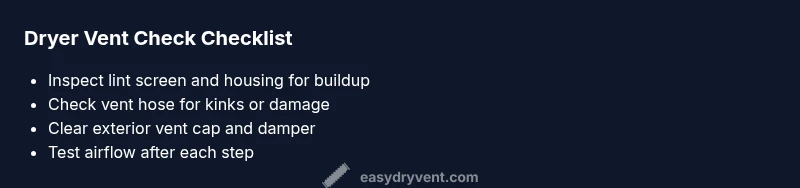
If you see 383eel3002d, start with these quick checks that don’t require special tools. First, unplug the dryer to prevent accidental shocks. Then, inspect the lint screen and housing for buildup and replace any damaged components. Check the vent hose for kinks or compression that restricts airflow, and ensure the exterior vent hood moves freely when opened. If you notice visible lint seam gaps or a damp lint trap, clean or replace the lint screen and rerun a cycle. Finally, perform a controlled test cycle to see if the error reappears; if it does, move to more thorough vent cleaning or calling a professional.
Diagnostic Data: Common Causes for 383eel3002d
Airflow-related faults are by far the most common trigger for 383eel3002d. Easy DryVent analysis shows that lint buildup inside the lint screen housing and in the vent path, plus blocked exterior vents, are frequent culprits. Other plausible causes include kinked vent hoses or collapsed ducts that reduce intake and exhaust efficiency, and, less commonly, sensor or control-board anomalies. Understanding these risks helps you prioritize fixes that restore proper airflow and prevent overheating. Always verify airflow after each fix to confirm progress, and document what you clean for future reference.
Safety First: When to Stop and Power Down
Safety should come first when addressing 383eel3002d. Always unplug the dryer before touching electrical components. If you notice a burning smell, excessive heat near the vent, or smoke, evacuate and call emergency services if needed. Do not attempt to use power tools near the dryer's electrical components. For gas dryers, shut off the gas supply if you suspect a vent-related issue impacting combustion air. If you’re unsure at any point, pause and contact a professional from Easy DryVent for a safe evaluation.
Step-by-Step Fix: The Most Likely Cause
This section provides a high-level fix path focusing on airflow restoration—the most common cause of 383eel3002d. Start with the simplest steps and progress to more involved checks only if the code reappears. The goal is to reestablish free airflow through every segment of the vent path, then verify the dryer operates without triggering the code.
How to Inspect and Clean the Vent Path
A clean vent path is essential for safe operation. Begin at the lint screen and housing, removing any visible buildup. Detach the vent hose from the dryer and inspect it for holes, crushed sections, or heavy lint accumulation inside. Use a vent brush or vacuum to clear obstructions, then reconnect securely. Finally, inspect the exterior vent cap; clear any nests or debris that could impede exhaust air. Reassemble and run a short test cycle to confirm airflow improves.
Testing After Repair and Validation
After completing the fixes, perform a hands-on airflow test by holding a tissue at the exterior vent as the dryer runs. If the tissue shows consistent airflow and the dryer completes a cycle without displaying 383eel3002d, you’ve likely resolved the issue. For gas models, listen for normal combustion air intake during operation to ensure safe venting. If the code recurs, document each step taken and proceed to more thorough cleaning or consult a professional technician to inspect internal dampers and sensors.
Preventive Maintenance to Avoid 383eel3002d
Prevention beats emergency fixes. Schedule regular lint-screen cleaning, ideally after every few uses, and perform seasonal vent inspections. Consider a professional vent cleaning every 1–2 years depending on usage and local environment. Keep exterior vents clear of shrubs or debris and replace damaged hoses promptly. The Easy DryVent team recommends maintaining clear airflow paths year-round to minimize repeated occurrences of 383eel3002d and to sustain peak drying performance.
Steps
Estimated time: 45-75 minutes
- 1
Power down and unplug
Shut off and unplug the dryer from its outlet. If you have a gas model, turn off the gas supply. This ensures you won’t be exposed to live electricity or gas while inspecting internal components.
Tip: Always unplug before touching any electrical parts to reduce shock risk. - 2
Access the lint screen area
Open the dryer door and remove the lint screen. Check the housing for visible lint buildup or damage. If the screen is worn or torn, replace it before proceeding.
Tip: Take a photo of the lint housing before disassembly to help with reassembly. - 3
Inspect and clean lint path
Carefully remove the lint screen and use a brush or vacuum to clear lint from the screen housing and immediate duct. Don’t force lint into small crevices. Repeat on the vent hose near the dryer connection.
Tip: Use a flashlight to spot hidden lint pockets you might miss. - 4
Check the vent hose for kinks
Inspect the flexible vent hose for kinks, crushing, or disconnections. If you find damage, replace the hose and reconnect securely. Ensure the hose is straight and unobstructed for the full run to the exterior vent.
Tip: A straight run improves airflow the most; avoid long bends. - 5
Clean the exterior vent
Clear the exterior vent cap of debris, nests, or snow. Ensure the damper opens and closes freely when you manually actuate it from outside.
Tip: Always clear the exterior vent first before testing airflow. - 6
Reconnect power and test
Plug the dryer back in and run a short test cycle with a light load. Observe airflow at the exterior vent and monitor for the 383eel3002d code to reappear.
Tip: Watch for unusual heat or burning odors during the test.
Diagnosis: Error code 383eel3002d appears and dryer stops mid-cycle
Possible Causes
- highClogged lint screen or lint trap
- highVent hose kinks or collapsed duct
- mediumBlocked exterior vent or vent cap
- lowFaulty moisture sensor or high-limit switch
Fixes
- easyClean lint screen and trap; remove lint buildup
- easyInspect vent hose for kinks, detach and straighten
- easyClean exterior vent cap and ensure airflow
- hardTest and replace faulty sensor or control components
Common Questions
What does error 383eel3002d mean on my dryer?
383eel3002d signals a ventilation-related fault that can cause the dryer to halt for safety. It typically points to airflow restrictions in the lint screen, vent hose, or exterior vent. Addressing airflow issues promptly reduces overheating risk and improves drying efficiency.
383eel3002d means there’s an airflow problem in the vent path, often from lint buildup. Fix airflow first, then recheck the code.
Is it safe to keep using the dryer with this code?
No. Running a dryer with a ventilation fault can overheat, damage the drum, or create a fire risk. Unplug the unit and perform basic checks before attempting another cycle.
No, don’t keep using it. Unplug and inspect the vent path before retrying.
Can I fix this myself, or do I need a professional?
Simple lint-cleaning and vent-hose adjustments are suitable for DIY. More complex issues like damaged ducts or sensor faults should be handled by a professional to ensure safe operation.
You can do basic lint/vent checks yourself, but call a pro for duct replacement or sensor issues.
How much does vent cleaning cost?
Costs vary by location and service provider. Expect variability based on access, duct length, and whether parts must be replaced; your technician can give a range after inspection.
Prices vary by area and job complexity; ask for a range after the inspection.
When should I call Easy DryVent for help?
If basic lint cleaning and vent checks don’t clear the code, or you’re unsure about accessing the vent path safely, contact Easy DryVent for a professional evaluation.
If the code returns after DIY attempts, it’s time to call a pro from Easy DryVent.
Will cleaning the lint trap void my warranty?
Cleaning the lint trap and performing basic vent checks is generally within DIY scope, but review your warranty terms. If in doubt, consult the manufacturer or Easy DryVent before significant disassembly.
Check your warranty terms first; if unsure, ask Easy DryVent for guidance.
Watch Video
Key Points
- Restore airflow first to address 383eel3002d
- Follow a safe, staged diagnostic flow
- Use the STEP-BY-STEP for thorough fixes
- Maintain regular vent cleaning to prevent future issues