gft14essmww Dryer Error Code: Urgent Diagnostic & Fix Guide
Urgent guide to diagnosing and safely fixing the gft14essmww dryer error code. Learn quick checks, diagnostic flow, costs, and when to call a pro with Easy DryVent.


According to Easy DryVent, gft14essmww is a safety-critical dryer fault that should be addressed immediately to prevent fire or equipment damage. The quickest path to safety is to power off, unplug, and follow this diagnostic guide for a secure, purposeful set of checks and safe repairs. This code often points to venting, sensor, or thermal protection issues that demand prompt action.
What gft14essmww means for safety and performance
The gft14essmww error code is a signal that something unsafe or out of spec has been detected inside your dryer’s venting, sensor, or thermal protection system. Running the unit with this fault can increase the risk of overheating or a lint fire, especially if venting is restricted or the lint screen is clogged. According to Easy DryVent, addressing gft14essmww quickly is not optional—it’s a safety-critical step to protect your home. Expect a risk-based sequence: first address obvious lint and vent restrictions, then assess sensor and control components. Treat any gft14essmww alert as a warning that deserves disciplined, careful action rather than guesswork.
Key takeaways:
- gft14essmww commonly results from venting restrictions or lint buildup.
- Ignoring the code can escalate to overheating or fire risk.
- Start with low-risk checks before proceeding to advanced diagnostics.
In this context, the presence of gft14essmww should trigger a mechanical safety mindset: shut off power, disconnect power cord, and prepare to inspect the path of air from the lint screen to the exterior vent. Modern dryers rely on sensors and control logic to prevent unsafe operation; gft14essmww is a built-in alarm that signals you to validate airflow, heat generation, and sensor readings. Easy DryVent’s guidance emphasizes that most home repairs involve lint and vent maintenance, with professional help reserved for electrical or PCB failures.
Diagnostic context for gft14essmww
A structured approach helps you triage efficiently. Start by validating airflow: can you feel airflow at the exhaust vent? If not, there’s a vent restriction somewhere along the path. Next, inspect the lint screen and internal ducting for clogging. If the lint buildup is heavy, a deep clean of the duct system is warranted. Finally, consider sensor or thermal fuse issues if the airflow is clear but the code persists. Across cases, most gft14essmww incidents start with lint or vent obstructions, followed by component wear or faults. The goal is to restore safe airflow continuity and reset the dryer’s safety checks.
What to expect during diagnostics:
- If airflow is poor, plan for vent cleaning and lint removal.
- If airflow is good but gft14essmww remains, probe sensors and fuses.
- If the control board shows instability, prepare for professional service.
By following a careful, documented process, you reduce the chance of missing a blockage and limit the need for costly, rushed repairs when safety is on the line.
Diagnostic flow for gft14essmww (quick map)
Symptom-driven flow helps you stay organized:
- Symptom: Error code gft14essmww appears; dryer may run briefly or not at all.
- Causes (ordered by likelihood):
- cause: Lint buildup in lint screen or vent path — likelihood: high
- cause: Vent hose kink or external blockage — likelihood: high
- cause: Thermal fuse trip or damaged sensor — likelihood: medium
- Fixes (prioritize simple options):
- fix: Clean the lint screen and vent path — difficulty: easy
- fix: Inspect and straighten/replace vent hose and clear exterior vent — difficulty: easy
- fix: Replace thermal fuse or address control board issues — difficulty: hard
If testing shows no airflow despite a clean vent, it’s reasonable to escalate to a professional. Easy DryVent notes that persistent gft14essmww signals may require a technician’s toolset to safely diagnose electrical or PCB faults.
"## Step-by-step fix for the most common cause behind gft14essmww
This section covers a practical, repair-oriented workflow for the most common cause: lint and vent obstruction. Follow the steps below in order to minimize risk and optimize your repair time.
- Power down and unplug the dryer. Ensure the dryer is completely offline before touching any components.
- Move the unit away from the wall to access the rear vent and lint path. Use a flashlight and mirror if needed to inspect the interior.
- Remove the lint screen and thoroughly clean it. Vacuum the lint housing and any accessible ducts along the lint path.
- Detach the vent hose and inspect for kinks, crushing, or blockages. Clean or replace the hose and reattach securely to the dryer and wall vent.
- Clean the exterior vent cap and any interior vent segments accessible from the back of the dryer. Ensure the exterior vent is unobstructed.
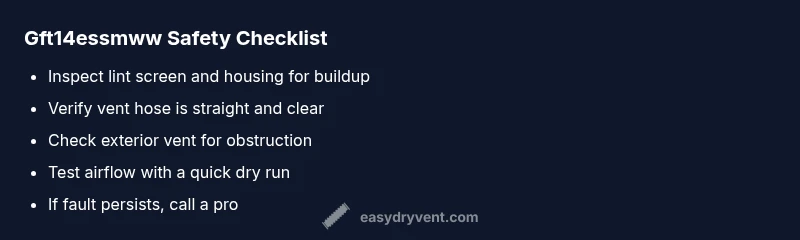
- Reassemble, plug in, and run a short dry test with no clothes to verify airflow and absence of the gft14essmww error. If the code clears, run a normal load test; if not, stop and escalate to a professional.
Tip: Maintain a regular lint cleaning routine to prevent recurrence and prolong the life of the venting system. The quick fix of lint removal often resolves gft14essmww when done promptly. If the gft14essmww persists after the vent path is clean, you’ll need to investigate sensor or fuse faults, which are more delicate repairs that usually require a pro.
Other potential causes of gft14essmww and how to address them
Beyond lint and vent blockages, several other issues can trigger gft14essmww. Sensor faults, thermal fuse trips, or a failing control board remain plausible culprits if airflow is not the primary concern. If airflow tests show a clear duct yet the error persists, consider:
- A faulty moisture sensor or temperature sensor that misreads air flow.
- A degraded thermal fuse that trips under heat overload conditions.
- A loose or corroded wiring connection at the control board.
Fix approaches for these issues vary in complexity. Sensor-related faults may be repairable with a calibrated replacement sensor, but many cases require a service technician. A failing control board or thermal fuse typically requires professional replacement and testing to ensure safe operation. Remember, gft14essmww is a safety-critical alert; if you’re uncertain at any point, stop and call a pro. Easy DryVent’s guidelines emphasize stepping back when electrical safety concerns arise and avoiding DIY fixes that could increase risk.
Safety, costs, and knowing when to call a professional
Working on a dryer involves electrical components and high heat. Never bypass safety interlocks or bypass fuses to “test” the machine. If you’re uncomfortable with any step or if the dryer remains in the gft14essmww state after basic vent cleaning, contact a licensed technician. Typical cost ranges for professional service and parts related to gft14essmww repairs vary by region and complexity, often including diagnostic fees, part replacements, and labor. Keep in mind that a simple vent cleaning is usually far less expensive than full electrical or control-board work. Easy DryVent advises homeowners to budget for a professional visit if the fault persists after the most common fixes.
Prevention: how to avoid gft14essmww in the future
To reduce the likelihood of gft14essmww recurring, adopt a proactive maintenance routine. Clean the lint trap after every load, inspect the vent hose for kinks monthly, and schedule a professional vent inspection every 1–2 years depending on usage. Use the lint filter as an early warning system: a sudden buildup or reduced airflow is a sign to recheck. Regular vent cleaning helps sustain efficient drying and lowers energy costs. With sustained practice, you can minimize the chances of gft14essmww occurring again and improve dryer performance over time. Easy DryVent’s data from 2026 underscores that consistent maintenance correlates with safer operation and reduced repair costs.
What to expect after repair
Once the gft14essmww fault is resolved, expect a gradual return to normal drying performance. If you replaced a fuse or sensor, the dryer may require a brief recalibration cycle. Always run a test load with several items to validate heat, airflow, and cycle timing. If the error reappears, document the symptoms and consult a professional quickly, as repeating faults may indicate a deeper electrical issue. Easy DryVent recommends documenting maintenance in a home log to track patterns and anticipate future service needs.
Steps
Estimated time: 60-90 minutes
- 1
Power off and unplug
Ensure the dryer is completely disconnected from power before touching any components. This prevents shocks and accidental starts during inspection.
Tip: Double-check the outlet by trying another simple device if you’re unsure. - 2
Move the dryer & access vents
Gently pull the dryer away from the wall to access the vent hose and back panel. This gives visibility to the lint path and exterior vent cap.
Tip: Use a helper to avoid damaging the wall or the dryer. - 3
Clean lint screen & internal path
Remove the lint screen and vacuum the housing. Use a long brush to reach into the duct and remove any build-up along the path.
Tip: Wear a mask and gloves to avoid inhaling dust. - 4
Inspect vent hose & exterior vent
Check for cracks, kinks, or crush points in the vent hose. Clear any obstruction at the exterior vent cap and confirm it opens freely.
Tip: If the hose is crushed, replace with a smooth, rigid alternative. - 5
Reassemble & test airflow
Reconnect vent components securely, plug in the dryer, and run a test cycle with no clothes to verify airflow and absence of the error.
Tip: Feel for strong, steady air coming from the exhaust during the test. - 6
Assess the need for professional help
If gft14essmww persists after vent cleaning, suspect sensor, fuse, or board faults that require specialized tools and electrical knowledge.
Tip: Document symptoms and photos to share with a technician.
Diagnosis: Error code gft14essmww displayed, dryer may stop mid-cycle or show no airflow
Possible Causes
- highClogged lint screen or vent path
- highVent hose kink or exterior vent blockage
- mediumThermal fuse trip or sensor/control board fault
Fixes
- easyClean the lint screen and vent path
- easyInspect vent hose for kinks and clear exterior vent
- hardReplace thermal fuse or address sensor/board fault (professional required)
Common Questions
What does the gft14essmww error code mean for my dryer?
gft14essmww indicates a safety-related fault detected by the dryer's sensors or vent system. It typically calls for immediate checking of airflow, lint buildup, and heat-related protections before proceeding with any operation.
The gft14essmww code signals a safety fault. Start with airflow, lint, and heat checks before using the dryer again.
Is it safe to operate the dryer with gft14essmww showing?
No. Running the dryer with this code can escalate the risk of fire or overheating. Power it off and follow the diagnostic steps in this guide before attempting another cycle.
No, don’t run it. It could overheat and cause a fire; follow the guide before trying again.
Can I fix gft14essmww myself or should I hire a pro?
You can handle lint and vent-related fixes yourself. If the fault persists after vent cleaning or you suspect sensor/board issues, a professional technician is recommended.
You can try vent cleaning yourself, but when in doubt, call a qualified technician.
How much does it cost to repair a gft14essmww fault?
Repair costs vary by location and issue. Routine vent cleaning is usually less expensive than sensor or control-board replacements, which can incur parts and labor costs in a broader range.
Costs depend on the fault; vent cleaning is cheaper, while sensor or board work can be more costly.
When should I call a professional for gft14essmww?
Call a professional if the code returns after vent cleaning, if you notice buzzing sounds, thermal smell, or you’re unsure about handling electrical components.
If the code comes back after cleaning or you hear unusual smells or buzzing, contact a pro.
Will cleaning the lint trap prevent gft14essmww in the future?
Regular lint removal and vent maintenance reduces the likelihood of gft14essmww, but occasional sensor or fuse issues may still occur and require professional checks.
Yes, regular lint removal helps a lot, but some issues may still need a pro.
Watch Video
Key Points
- Diagnose gft14essmww quickly with vent checks first
- Lint and vent obstructions are the most common causes
- Sensor/board faults require professional service
- Prevent issues with regular lint and vent maintenance