gtd42gasjww Troubleshooting Guide for Dryers
Urgent guide to diagnose and fix gtd42gasjww, a dryer airflow/safety fault. Learn quick fixes, diagnostic flow, step-by-step repair, safety tips, and prevention from Easy DryVent.


gtd42gasjww signals a dryer fault affecting airflow safety — the most common cause is a clogged vent or restrictive lint filter. Quick fixes include unplugging the unit, cleaning the lint screen, inspecting the vent hose for kinks, and performing a reset. If the code returns, Easy DryVent recommends professional inspection.
gtd42gasjww: What This Error Means
gtd42gasjww is a dryer fault code that signals an airflow or safety condition detected by the dryer's control system. In plain terms, the dryer believes exhaust air cannot escape properly, or a safety sensor has tripped. This situation can lead to longer drying times, overheating, or a fire hazard if left unaddressed. According to Easy DryVent, the most reliable way to approach GTD42GASJWW is to start with the airflow path: check the lint filter, the vent hose, and the exterior vent for obstructions. The code is a warning that needs immediate attention rather than a routine nuisance. By understanding the code's framing, you can prioritize actions that restore safe airflow and prevent heat buildup. The goal is not to guess; it is to systematically remove airflow restrictions and confirm proper vent operation before returning the unit to service. Remember that even a small blockage can cause the code to appear again, so meticulous inspection is key.
Common Causes of GTD42GASJWW
GTD42GASJWW is typically invoked by conditions that restrict exhaust air or confuse a sensor. The most common cause is a clogged or restricted exhaust vent: lint, pet hair, or weather debris can reduce vent diameter and trap heat. A second frequent factor is a lint screen or internal chute blocked by collected fibers, which raises residual moisture and trips the safety system. A kinked, crushed, or disconnected vent hose also reduces airflow and can trigger the code. External vents blocked by snow, bird nests, or insect screens can produce the same symptom from outside. Finally, a faulty sensor, moisture measurement, or control board fault can cause a false positive if the circuitry reads abnormal conditions. In many homes, multiple issues coexist, so addressing the vent path first is prudent before chasing sensor repairs.
Immediate Quick Fixes You Can Try
If GTD42GASJWW appears, act quickly but safely. First, unplug the dryer and wait for 60 seconds to reset the control. Then remove and clean the lint screen thoroughly with warm water and mild detergent, and vacuum the lint from the housing and the duct leading to the vent. Next, inspect the vent hose for kinks, crushing, or detachment; straighten any crimps and ensure a continuous path to the exterior vent. Check the exterior vent cover for obstruction and clear any debris. Finally, perform a simple test: plug back in, run a short cycle with no clothes, and listen for airflow at the exterior vent. If you still see reduced airflow or the code reappears, you likely have a more persistent restriction or sensor fault and should proceed to step-by-step repair or professional help.
Deep-Dive: Why Venting and Lint Matter
Airflow is the linchpin of dryer safety and performance. A blocked vent increases static pressure inside the duct, causing heat to build up and moisture to linger in the drum. Lint buildup not only impedes airflow but also acts as kindling if a spark occurs. The diameter, length, and internal smoothness of the vent affect how efficiently air exits; longer runs and sharp bends worsen pressure losses. Regular lint removal and vent cleaning reduce drying times, energy use, and the likelihood of GTD42GASJWW. Understanding these dynamics helps homeowners prioritize fixes that deliver lasting results, not just a temporary reset.
Safety First: When to Replace vs. Repair
Safety considerations trump convenience. If you notice scorching smells, melted parts, or warm air escaping from the vent opening, stop using the appliance immediately and consult a professional. Gas dryers add an extra layer of risk and demand proper venting clearances and combustion air. In most cases, the GTD42GASJWW issue can be resolved with vent maintenance and sensor checks, but persistent airflow restrictions or damaged ducts may require component replacement. Budget for professional service when the vent path is compromised or when sensor or control-board faults are suspected.
Prevention to Avoid GTD42GASJWW in the Future
Create a simple, ongoing maintenance routine to reduce the chance of GTD42GASJWW returning. Clean the lint screen before every load and vacuum the lint trap housing monthly. Inspect the vent hose for kinks and ensure the exterior vent is clear of debris at least quarterly. Consider annual professional vent cleaning if your home has long ducts or multiple bends. Use shorter, straighter vent runs where possible to minimize airflow resistance. Easy DryVent recommends pairing these habits with a quick monthly airflow test (feel or use a vane anemometer if available) to catch issues before they trigger the code.
Troubleshooting Checklist Overview
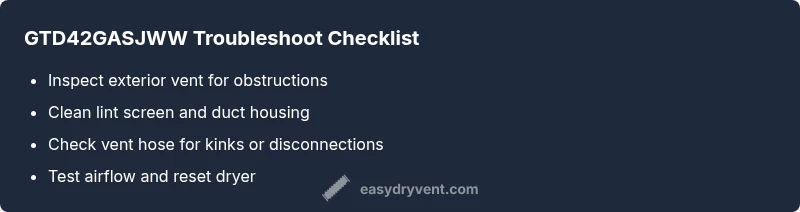
- Confirm the code GTD42GASJWW is current and not a stale display.
- Inspect lint screen and vent path for blockages.
- Check the exterior vent for obstruction and clean as needed.
- Reset the dryer and re-test airflow.
- If the code recurs, escalate to the diagnostic flow and step-by-step plan.
Steps
Estimated time: 45-60 minutes
- 1
Power down and safety check
Unplug the dryer and allow it to cool completely. This prevents shocks or accidental starts while you inspect the vent path. Remove any nearby items and ensure the area around the unit is dry.
Tip: Always unplug before touching electrical components. - 2
Inspect lint screen and chute
Remove the lint screen and clean it thoroughly with warm water and detergent. Vacuum the lint housing and the accessible duct for loosened fibers that could travel toward the vent.
Tip: Don’t reuse a heavily clogged screen; replace if damaged. - 3
Check vent hose for obstructions
Visually inspect the vent hose for kinks, crushed sections, or disconnections. Reposition or replace as needed to ensure an airtight, straight path to the exterior vent.
Tip: Avoid sharp bends; use flexible ducts only where the manufacturer permits. - 4
Evaluate exterior vent and ducting
Go outside to confirm the vent cap opens freely and is free of leaves, nests, or snow. Clear any obstructions and reattach securely to the ductwork.
Tip: Ensure the outdoor cover has a screen to keep pests out. - 5
Test and validate
Plug the dryer back in and run a short, empty cycle to verify airflow at the exterior vent. If strong airflow returns and the code does not reappear, you’re likely clear.
Tip: Keep an eye on heat buildup during the test.
Diagnosis: Dryer displays GTD42GASJWW and shows reduced or no airflow on a hot cycle.
Possible Causes
- highClogged or restricted exhaust vent
- highLint screen or internal chute blocked by fibers
- mediumVent hose kink or crush
- mediumExternal vent blocked by snow, debris, or bird nest
- lowSensor or control board fault causing false reading
Fixes
- easyClean lint screen and interior housing; vacuum ducts reachable from the front
- easyStraighten or replace kinked vent hose; reseat connections
- easyClear exterior vent and check for proper opening
- mediumTest with vent path fully clear; if code persists, replace faulty sensor or control board
Common Questions
What does gtd42gasjww mean on my dryer?
gtd42gasjww is a dryer fault code indicating an airflow or safety issue detected by the control system. It usually points to a blocked vent, lint buildup, or a sensor issue. Address airflow first, then test the unit.
The code means an airflow or safety issue; start with the vent and lint, then test again.
Can GTD42GASJWW be fixed without a pro?
Many cases start with simple fixes like cleaning the lint screen and vent path. If airflow improves and the code clears, you’re done. If not, or if you smell burning or hear unusual noises, call a professional.
Yes, many fixes are DIY, but if the problem persists or you’re unsure, it’s best to consult a pro.
Which fixes should I try first?
Begin with unplugging the dryer, cleaning the lint screen, and inspecting the vent hose for kinks. Then check the exterior vent and run a short test cycle to verify airflow.
Start with the basics: unplug, clean, and check the vent, then test airflow.
Is GTD42GASJWW related to gas dryers specifically?
The code can appear on both gas and electric models as it concerns airflow and safety sensors, not the heating source. If you suspect a gas-related issue, shut off gas supply and call a licensed technician.
It can show up on both types; if you smell gas or have safety concerns, contact a pro immediately.
When should I call a professional?
Call a professional if the vent path is clear but the code keeps reappearing, if you smell burning, or if you’re uncomfortable with electrical or gas connections. A pro can safely diagnose sensors, boards, and vent integrity.
If the code repeats after fixes, or you detect heat or burning smells, get a professional assessment.
Watch Video
Key Points
- Tackle airflow first to resolve GTD42GASJWW
- Regular lint removal prevents blockages and fires
- Always unplug before inspections and seek professional help if the code recurs
- Vent integrity and proper external exhaust are critical to fixed, lasting performance