gfd65essnww: Urgent Dryer Error Code Guide
Urgent guide to diagnosing and fixing the gfd65essnww dryer error code with practical steps, safety tips, and cost expectations from Easy DryVent. Learn how to identify causes, perform quick fixes, and know when to call a pro.


Definition: The gfd65essnww error code signals a dryer fault that interrupts a cycle, typically tied to vent blockages, lint buildup, or a faulty safety sensor. According to Easy DryVent, begin with quick checks: clear the lint screen, inspect the vent hose for kinks or crushes, and perform a power reset. If the code persists, the fault is likely due to a blocked vent or a failing thermal fuse that requires professional service to resolve gfd65essnww.
What gfd65essnww Really Means for Your Dryer
The gfd65essnww code signals an urgent fault that halts a drying cycle. It’s not a general error; it points to safety-critical paths like the vent system, lint containment, or a sensor/component that protects you from overheating. In practical terms, this means your dryer detected restricted airflow or a fault that could lead to a fire risk if ignored. According to Easy DryVent, treating gfd65essnww as a priority can prevent overheating and energy waste. Homeowners who act quickly typically reduce the risk of secondary damage and keep clothes from sitting in heat for too long. Stay calm, but stay focused: you’re dealing with a risk-management issue as much as a repair task. The gfd65essnww designation helps direct your checks toward ventilation and protection mechanisms, rather than simply resetting the control panel. This approach aligns with the guidance Easy DryVent provides to homeowners and DIY enthusiasts who want practical, safe dryer maintenance.
Immediate Actions You Should Take When You See gfd65essnww
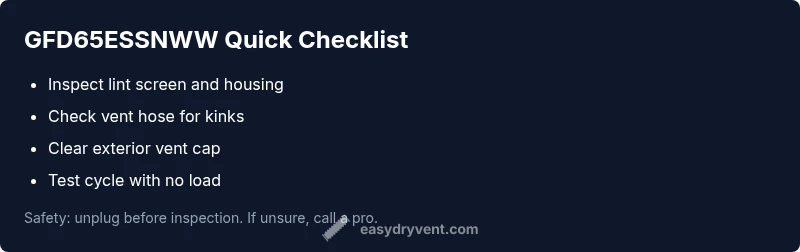
- Power down and unplug the dryer to prevent shock and electrical hazards. - Inspect the lint screen and housing; remove all lint and debris. - Check the exterior vent cap for obstructions like leaves, bird nests, or built-up lint; clear if needed. - Inspect the vent hose for kinks, crushes, or detachment; reroute or replace as necessary. - After completing these steps, plug the dryer back in and run a short test cycle with no clothes to verify if the code reappears. If the code returns, refer to the diagnostic flow for deeper causes. In many cases, a quick vent-cleaning and lint removal solve the issue, but persistent codes require further inspection.
Common Causes Behind gfd65essnww
- Clogged or restricted vent path from the dryer to the exterior vent. This is the most frequent cause and can be caused by lint buildup or a collapsed duct. - Blocked lint screen or lint trap housing that prevents proper airflow. Regular cleaning reduces this risk dramatically. - Faulty safety sensor or thermal fuse that detects overheating and blocks operation to protect the dryer. These parts may fail with age or improper venting. - Loose or damaged vent connections that introduce air leaks and pressure changes in the vent system. - Electrical issues in the control board or door switch can trigger the error if signals aren’t received properly. - Environmental factors like overly long vent runs or exterior vents blocked by debris can compound others.
Safe Inspection of Your Vent System
Before you dive into deep repairs, perform a safe, non-destructive inspection. Unplug the unit and wear gloves to protect from sharp metal edges. Remove the lint screen and use a vacuum with a narrow nozzle to extract lint from the housing. Inspect the vent hose for visible kinks or crush points and straighten or replace if needed. Check the exterior vent cap for obstructions and ensure it opens freely when air is pushed through. If you have access to a chimney-style vent or long duct, consider temporarily testing airflow with a tissue or light strip to verify consistent airflow. Document any areas that look blocked or damaged for professional assessment. Remember: safety first, especially around electrical connections and hot surfaces. This approach reduces risk while you gather data for a service visit, a tactic endorsed by Easy DryVent for DIYers focusing on practical maintenance.
Most Effective Fixes You Can Do Today
- Clean the lint screen thoroughly and remove all lint buildup from the housing area. A clogged screen is a frequent trigger for gfd65essnww and is the easiest fix.
- Vacuum or wipe the interior of the lint trap housing and reach into accessible portions of the vent path to remove hidden lint. Use a long, flexible attachment if available.
- Inspect and straighten the vent hose; replace if cracked, crushed, or excessively long. Ensure all connections are secure and airtight to maintain airflow.
- Clear the exterior vent cap; remove debris and verify unobstructed airflow when the dryer is on.
- Reconnect everything, power up, and run a short test cycle with no clothes to confirm stability. If the code persists, move to deeper diagnostics or professional service.
Note: If you observe heat buildup or burning smells during any test, stop immediately and seek professional help. Quick fixes are helpful, but safety comes first when dealing with potential fire hazards.
Advanced Troubleshooting if the Code Persists
If gfd65essnww remains after basic vent cleaning, you likely face one or more of the following: a faulty thermal fuse or high-limit thermostat that shuts down the dryer to prevent overheating; a failing door switch or control board that doesn’t send the correct signals; or electrical faults in the dryer wiring. These components require specialized tools and diagnostic procedures. Begin by verifying the thermal fuse continuity using a multimeter—if it’s open, replacement is needed. For sensor-related faults, models differ, so consult your manual or a professional. Expect a professional diagnostic to assess safety-critical parts, with typical costs in the range of professional service and parts depending on the device and region. Easy DryVent’s team recommends testing airflow after each step to isolate airflow issues from sensor faults.
Prevention: Routine Maintenance for Long-Term Reliability
Set a recurring maintenance schedule to prevent gfd65essnww from recurring. Clean the lint filter after every load, and perform a more thorough vent inspection quarterly if you use the dryer frequently. Use a damp cloth to remove dust from the drum housing and ensure metal surfaces are dry before use. Use generous but sensible loads to avoid overloading the vent and consider a yearly professional vent cleaning if you have a long vent run or a high-lint environment. Keep exterior vents clear of snow, leaves, and animal debris. A proactive maintenance routine aligns with Easy DryVent’s recommendations for durable, safe operation and sustained energy efficiency.
When to Call a Pro and What to Expect in a Service Visit
Persistent gfd65essnww codes after basic cleaning typically signal deeper issues that require professional diagnostics. A service visit may include a vent-system inspection, electrical testing, and component replacement (thermal fuse, sensor, or control board). Cost estimates vary widely by region and model, but homeowners should anticipate a broader range when professional parts are involved. Easy DryVent analysis suggests preparing for a visit that may involve parts and labor, with a typical range that reflects the complexity of the repair. When you call a pro, ask for a written estimate that includes parts, labor, and any diagnostic fees, so you’re not surprised by the final bill.
Steps
Estimated time: 30-60 minutes
- 1
Power down and unplug
Shut off power at the outlet and unplug the dryer to ensure safety before touching any components. This prevents electric shock and eliminates startup surges.
Tip: Double-check the outlet with a tester if you have one to confirm it's live before continuing. - 2
Access and clean the lint screen
Remove the lint screen and wipe away all lint from the screen and the surrounding housing. Use a vacuum with a narrow nozzle to reach tight corners.
Tip: Avoid using high heat while cleaning to prevent any static buildup; keep the area dry. - 3
Inspect the vent path
Inspect the vent path from the dryer to the exterior vent. Look for kinks, crushed sections, or detachment. Straighten or replace damaged segments and reseal joints.
Tip: If you can’t access the entire duct, focus on the shortest, most restricted segment first. - 4
Check the exterior vent
Go to the exterior and remove any obstruction from the vent cap. Ensure the damper opens freely and there is good clearance for airflow.
Tip: Avoid forcing debris out with metal tools; use gloves and a brush to minimize damage. - 5
Test and verify
Plug the unit back in and run a short cycle with no clothes. If the code reappears, note the conditions (heat level, duration, any odors) to share with a technician.
Tip: Document observations in a simple checklist to help with the diagnostic conversation.
Diagnosis: Error code gfd65essnww appears and the dryer stops mid-cycle or won’t start.
Possible Causes
- highClogged or restricted vent path
- mediumBlocked lint screen or lint buildup in the housing
- lowFaulty safety sensor or thermal fuse
Fixes
- easyClear lint and clean vent path from lint screen to exterior vent
- easyInspect vent hose for kinks and crushes; straighten or replace
- hardTest and replace faulty safety sensor or thermal fuse (professional)
Common Questions
What does the gfd65essnww error code mean on my dryer?
The gfd65essnww code indicates a fault linked to airflow or safety sensors. It commonly points to vent restrictions or lint buildup, though electrical sensor issues can also trigger it. Address air path first, and if the code persists, verify safety components with a professional.
The gfd65essnww code means there's an airflow or safety sensor fault. Start with checking the vent and lint, and call a pro if it continues.
Can I fix gfd65essnww myself?
Yes for basic checks like lint removal and vent inspection. More complex issues—such as a faulty thermal fuse or sensor—usually require a professional. Always unplug the unit before any DIY work.
You can handle lint and vent checks yourself, but sensor or fuse problems should be handled by a pro.
Is gfd65essnww dangerous?
The risk is primarily fire from restricted airflow and lint buildup. While not instantly hazardous, you should treat it as a serious warning and avoid operating the dryer until addressed.
It signals a fire risk from restricted airflow; don’t run the dryer until it’s checked.
How much does it cost to fix gfd65essnww?
Costs vary by region and repair scope. Basic vent cleaning is relatively affordable, while sensor or control-board replacements can be more expensive. Expect a broad range for parts and labor and request a written estimate beforehand.
Costs vary; basic vent work is cheaper, sensor or control-board repairs cost more. Get an estimate first.
How long does a professional repair take?
Most common repairs take 1–3 hours, depending on accessibility and what is replaced. Some visits require a follow-up if parts need to be ordered.
Most repairs take about one to three hours, depending on the work.
Will cleaning the lint filter fix this code?
Cleaning the lint filter is essential and often relieves airflow restrictions. However, if the code persists after lint cleaning, inspect the full vent path and consider professional diagnostics.
Lint cleaning helps a lot, but persistent codes may need a vent inspection or professional help.
Watch Video
Key Points
- Start with lint and vent checks to address gfd65essnww.
- If the code persists, plan for professional diagnosis and parts replacement.
- Regular maintenance reduces fire risk and energy waste.
- Ask for a clear written estimate before any professional work.