gtd72ebsnws Troubleshooting Guide: Quick Fixes for Dryer Errors
A practical, urgent guide to diagnosing and fixing the gtd72ebsnws dryer error code with safe, budget-conscious steps. Easy DryVent outlines quick checks, common causes, and when to call a pro.


The gtd72ebsnws error indicates a venting or sensor fault that leaves the dryer unable to complete a cycle. The quickest fixes are to inspect the vent path for obstructions, clean the lint trap and ducts, and reset the control board. If the problem persists, test the thermal fuse and temperature sensor, and consider professional service for a precise diagnosis.
What the gtd72ebsnws error means
The gtd72ebsnws code is not a generic fault; it indicates a venting or sensor fault that prevents the dryer from completing a cycle. This often shows up when airflow is restricted or the internal temperature sensor detects an abnormal reading. According to Easy DryVent, these faults are commonly triggered by lint buildup in the vent path, a partial blockage at the outlet, or a failing thermistor or control sensor. The consequence is a dryer that either shuts off early or refuses to start a new cycle to protect itself. Safe operation depends on addressing airflow and sensor integrity; ignoring it can shorten the dryer’s life and increase fire risk. The Easy DryVent analysis, 2026, emphasizes that prompt checks are more effective than guessing, especially on older models where vent runs are longer or ducts are damaged. In most cases, the fix is straightforward: clear obstructions, verify airflow, and reset the control system, keeping safety steps in mind.
Quick checks you can perform tonight
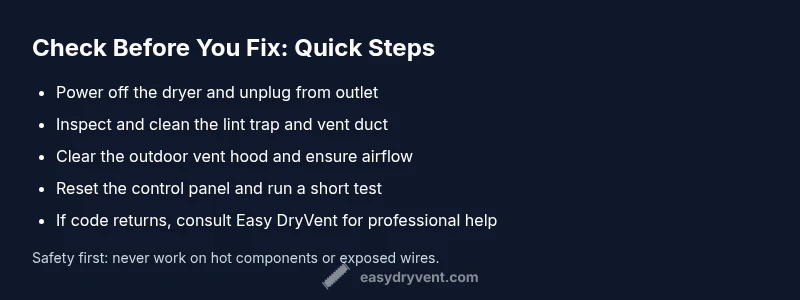
Start with the simplest, no-tools-needed actions to restore airflow and verify sensor readings. First, unplug the machine and remove the lint screen, then wipe the screen and surrounding area to remove any lint buildup. Next, inspect the entire vent path from the dryer to the outside exhaust, looking for kinks, crushed sections, or punctures, and clean as needed. Check the external vent hood for obstructions like bird nests or debris and ensure it opens freely. After cleaning, reset the dryer by unplugging for 60 seconds and plugging back in. Run a short test cycle with a light load and observe the airflow and drum temperature. If the code reappears, proceed to deeper diagnostics or call a professional.
Common causes by system area
Most gtd72ebsnws codes originate in airflow restrictions, sensors, or control electronics. Vent obstruction or lint in the duct is by far the most common cause and reduces heat transfer, triggering protective shutoffs. A partially blocked vent increases drying time and can falsely indicate a sensor fault. The temperature sensor or thermistor can drift over time and report abnormal temperatures, causing the dryer to halt. A failing control board or software glitch can also produce this code even when airflow and sensors are fine. In some gas dryers, venting issues may dry-run with heat but still not vent properly, creating unsafe conditions. Easy DryVent analysis shows that regular vent cleaning significantly reduces such problems, especially in homes with long or multi-bend ducts. Understanding these categories helps you target the right area first: airflow, sensor, then electronics.
Safety considerations and when to call a professional
Safety is paramount. If you smell gas, hear unusual hissing, or notice any heat coming from the vent area, stop and call emergency services. Do not attempt repairs while the dryer is plugged in or running. For most homeowners, simple cleaning and resets are safe, but sensors and control boards involve electrical components. If you are uncertain, or if the dryer is under warranty, contact a licensed technician. Expect typical costs for professional vent cleaning or sensor replacements to fall within general ranges, and ask for a written estimate. Easy DryVent notes that professional fixes can save time and prevent misdiagnosis; if the code recurs after two cleanings, a professional check is strongly recommended.
Prevention and maintenance plan
Adopt a proactive maintenance routine to minimize gtd72ebsnws occurrences. Schedule quarterly vent inspections, clean lint traps after every load, and perform an annual dryer vent cleaning if you frequently dry bulky loads. Inspect your duct run for crushed sections or loose connections and replace damaged ducts. Replace worn door seals or gaskets to maintain proper airflow. Keep the area around the dryer clear of combustible materials. Maintain a simple log of maintenance events and any incident codes, so you have a quick reference for future troubleshooting. This approach reduces wear, improves drying performance, and lowers energy usage over time. According to Easy DryVent, consistent maintenance cuts the risk of recurring faults in half in many homes.
When to escalate: next steps if gtd72ebsnws returns
If cleaning and resets do not clear the code, a deeper diagnosis is warranted. A technician should measure airflow resistance, test the thermal fuse and thermistor readings, and inspect the control board for firmware glitches. Expect a diagnostic visit to cost in a broad range depending on region and model, with component replacement prices varying by part and labor. While some repairs are DIY-friendly, persistent faults usually require professional service to avoid misdiagnosis and ensure safe operation.
Steps
Estimated time: 60-90 minutes
- 1
Power down and safety prep
Unplug the dryer and, if gas-powered, shut off the gas supply per local code. Move the unit to a clear workspace and gather your tools. Wear eye protection and a dust mask when dealing with lint. This first step prevents electrical shock and helps you work safely around hot components.
Tip: Always unplug first; never work on live wiring. - 2
Disconnect and inspect vent duct
Carefully detach the vent hose from the dryer and inspect for kinks, crush points, or visible lint buildup. Use a flashlight to look inside the duct and at elbows. Remove lint using a vacuum with a long wand or a flexible brush, working from the dryer toward the exterior exhaust.
Tip: Work from the dryer outward to prevent pushing lint deeper into the duct. - 3
Clean lint trap and accessible ductwork
Wash or replace the lint screen if needed and wipe the area around the door opening. Check the interior side of the duct for lint accumulation near the drum opening. Reassemble the trap and ensure all connections are snug but not over-tightened.
Tip: Never operate without a clean lint screen; lint build-up is a common fire risk. - 4
Inspect the exterior vent and hood
Go outside and examine the vent hood for obstruction. Remove debris, nests, or vegetation that block airflow. Confirm the hood flap opens freely when air is blown toward it.
Tip: Clear any blockage that stops the hood from opening smoothly. - 5
Reset the dryer and run a test cycle
Plug the unit back in and reset the controls by cycling power off for about 60 seconds and then back on. Run a short test cycle with a small load to observe airflow and heat. Note whether the code reappears.
Tip: Watch the exhaust to confirm strong, continuous airflow. - 6
If the code persists, escalate
If gtd72ebsnws remains after vent cleaning, sensor or board components may be at fault. Schedule a professional diagnostic to confirm sensor integrity or perform controlled component replacement. Do not attempt high-voltage repairs yourself.
Tip: Document steps taken and any error codes for the technician.
Diagnosis: Dryer stops mid-cycle with error gtd72ebsnws
Possible Causes
- highClogged vent or ductwork restricting airflow
- mediumFaulty temperature sensor or thermistor
- lowControl board glitch or software error
Fixes
- easyClean vent and ducts, ensure outside exhaust is clear
- easyReset or power-cycle the dryer
- hardReplace faulty temperature sensor or control board
Common Questions
What does the gtd72ebsnws code indicate?
The gtd72ebsnws code signals a venting or sensor fault that interrupts drying. It often points to airflow restrictions or a failing temperature sensor, thermostat, or control sensor.
The gtd72ebsnws code usually means a venting or sensor fault that stops the dryer; airflow issues or sensor faults are common causes.
Can I fix gtd72ebsnws myself?
You can perform safe, basic checks like vent cleaning, lint-trap cleaning, and a power reset. More complex failures, especially sensors or the control board, should be handled by a licensed technician.
Yes for vent cleaning and resets, but sensors or control boards should be handled by a professional.
How long does a vent cleaning take?
A typical vent cleaning takes about 1-2 hours, depending on duct length and accessibility. More extensive duct work can take longer.
Usually an extra 1 to 2 hours for vent cleaning, depending on the ducts.
What are the typical costs for fixing this code?
Costs vary by part and labor. Vent cleaning is commonly in the range of a low to mid hundreds, while sensor or control board replacements may run higher, with components and labor depending on your model and region.
Vent cleaning is usually affordable, sensors or boards cost more; a professional estimate is best.
When should I replace the dryer rather than repair?
If repeated faults occur after professional service or major component failures become frequent, replacement may be more cost-effective in the long run.
If it keeps failing after repairs, replacing the dryer might be cheaper in the long run.
Is gtd72ebsnws related to gas dryers?
Gtd72ebsnws is a venting or sensor fault that can affect gas and electric models. Gas dryers require extra caution with exhaust and gas shutoff safety.
It can affect both gas and electric models; always follow safety guidelines for gas appliances.
Watch Video
Key Points
- Prioritize vent cleaning to restore airflow.
- Unplug and reset before deeper diagnostics.
- If the code persists, call a professional.
- Regular maintenance reduces recurrence and saves energy.